
Shelby GT performance did more than elevate the Mustang nameplate; it fundamentally reshaped engineering standards, competitive strategy, and the cultural visibility of American motorsport. What began as a focused collaboration between Ford and Carroll Shelby quickly evolved into a breakthrough performance program that shifted industry expectations.
Innovation strategy often shows that breakthrough results come from combining complementary strengths, and the Ford–Shelby partnership is a clear example: Ford provided the roduction resources and scale, while Carroll Shelby and Shelby American contributed racing expertise and performance engineering, creating vehicles that set new benchmarks and forced competitors to recalibrate.
The Shelby GT was not simply a faster Mustang; it was a disruptive engineering achievement that influenced how performance cars were evaluated, marketed, and developed. This guide explores the breakthroughs and motorsport successes that defined its lasting impact.
The Birth of a Motorsport Icon: What Made the Shelby GT Different
The Shelby GT350 was engineered with a singular purpose: to transform the Mustang from a sporty production car into a legitimate competition machine. Shelby’s team reduced weight, recalibrated chassis dynamics, and upgraded every performance-critical system to meet racing requirements. The result was a homologation-ready platform, not a cosmetic variant, purpose-built for dominance on track.
How Shelby’s Engineering Philosophy Redefined the Mustang
Shelby’s performance ethos centered on system-level engineering rather than isolated bolt-on upgrades. Suspension geometry, weight distribution, brake capacity, and steering response were reworked as a unified performance package.
Why Weight Reduction Was Central to Competition Success
Shelby prioritized handling precision and repeatable lap-time performance over headline straight-line numbers. The rear seats were deleted, lighter components were specified, and the front-to-rear balance was tuned to improve turn-in and mid-corner stability. This shift away from pure horsepower challenged Detroit’s prevailing muscle-car formula and established a new development template for American road-racing cars.
When the GT350 Became the Benchmark for American Road Racing
Once the GT350 entered SCCA B-Production, it quickly set the competitive standard. Its consistency, durability, and cornering advantage allowed it to dominate championships and prove that an American-built car could credibly challenge European machinery on technical circuits. From that point forward, the Shelby GT became the reference point for U.S. production-based road racers.
How Shelby GT Performance Changed the SCCA and Trans-Am Landscape
Shelby GT cars became central figures in two major American road-racing arenas: SCCA B-Production and the emerging Trans-Am series. Their success went beyond wins and trophies; they forced sanctioning bodies, rival teams, and manufacturers to take American factory-backed performance programs seriously. In the process, Shelby machinery helped define what a competitive production-based race car was supposed to be.
Why the GT350’s SCCA Dominance Was a Turning Point
The GT350’s run of B-Production championships showed that a properly engineered, production-based Mustang could dominate fields previously shaped by European brands. Its pace and consistency pushed officials to revisit classification rules, weight breaks, and homologation requirements. Other manufacturers recognized that to compete, they would need similarly focused, factory-supported programs rather than lightly prepared showroom cars.
How the GT500 Pushed Detroit Toward Big-Block Performance
With the arrival of the GT500 and its 428-cubic-inch engine, Shelby expanded the conversation from nimble road-course performance to brutal big-block power. This shift accelerated the American horsepower race and influenced Detroit’s broader product planning, encouraging heavier-hitting, high-output street machines. For many buyers, the GT500 became the benchmark for what a top-tier factory muscle car should deliver.
When Shelby’s Cars Influenced Trans-Am Engineering Standards
Early Trans-Am efforts drew directly from Shelby’s experience with chassis tuning, cooling strategies, and suspension geometry. Even as the branding shifted and Ford’s official entries evolved, the engineering DNA remained rooted in lessons learned from Shelby GT development. Brake cooling, tire setup, and roll stiffness balance adopted during this era helped set expectations for how a competitive American muscle car should be prepared for pro-level racing.
Cultural Transformation | How Shelby GT Performance Influenced American Car Enthusiasm
Shelby GT cars changed more than lap times; they changed attitudes. They reframed what “American performance” meant, proving that Detroit could build cars that cornered, braked, and endured at the track, not just accelerate in a straight line. For many enthusiasts, the Shelby name became shorthand for serious performance with a genuine competition pedigree.
How the Shelby GT Became a Symbol of American Engineering Ambition
The GT350’s ability to challenge established European sports cars signalled a new level of technical ambition. It suggested that American engineers and racers could compete and win on their terms, through chassis balance, braking and cooling upgrades, and durability. That narrative resonated with enthusiasts who wanted more than just quarter-mile bragging rights.
Why the Shelby Brand Elevated Mustang to Icon Status
On its own, the Mustang was a successful and stylish sporty car. With Shelby’s involvement, it transformed into a bona fide motorsport icon. The GT350 and GT500 gave the Mustang an authenticated racing backstory that has influenced every high-performance variant since, from Boss and Mach 1 to modern GT350, GT500, and track-package cars.
How Shelby Cars Created a Blueprint for Performance Variants
Shelby’s formula starts with a strong mainstream platform, then systematically re-engineer powertrain, suspension, and braking for competition, becoming the template for performance offshoots industry-wide. Later models followed a similar structure, validating the history of Shelby GT racing as the gold standard for serious performance derivatives.
The Engineering Legacy of the Shelby GT in Modern Performance Cars
The impact of the Shelby GT program can still be seen in how modern performance cars are engineered. Concepts that were radical in the 1960s, integrated chassis tuning, purposeful weight reduction, and functional cooling, are now baseline expectations for any serious high-performance model.
How System-Level Tuning Became the New Industry Standard
Shelby’s approach treated the car as an integrated system, rather than a stock chassis with bolt-on power upgrades. Modern performance cars echo this thinking: stability control calibration, suspension geometry, brake sizing, and aero balance are developed together. This philosophy traces back to programs like the GT350, where lap time, not spec-sheet numbers, became the ultimate measure.
Why Lightweight Strategy Continues to Govern Track-Focused Builds
Shelby proved that cutting weight and improving balance could transform a mass-market car into an actual track weapon. That lesson underpins today’s lightweight packages and carbon-fibre options, where reduced mass and simplified interiors deliver more consistent, controllable performance.
When Aerodynamic and Cooling Improvements Became Performance Expectations
Shelby’s functional scoops, brake ducts, and airflow tweaks demonstrated that cooling and stability were as important as raw power. Today, hood vents, underbody aero, and targeted airflow paths are standard on performance models, reflecting the same priorities Shelby emphasized decades earlier.
How Shelby GT Performance Continues to Shape Motorsport Today

Shelby’s legacy continues to shape modern racing and performance development. The idea of starting with a broadly accessible platform and engineering it into a competition-ready car still defines how manufacturers approach customer racing and factory-supported programs.
Modern Mustang Racing Still Relies on Shelby Principles
Current GT4, GT3, and drag-focused Mustang programs are built on the same foundation Shelby established: robust base architecture, then motorsport-specific suspension, braking, safety, and powertrain calibration. The categories and regulations have evolved, but the underlying method remains familiar.
Collectors, Builders, and Restorers Still Follow Shelby’s Standards
For original cars, details such as correct components, competition-correct ride height, and period-accurate configurations are judged against Shelby-era specifications. The standards set in the 1960s now guide restoration decisions, parts sourcing, and valuation in today’s collector market.
Cultural Impact Extends Beyond Racing
Shelby GT cars are embedded in popular culture through movies, television, museums, and special events. They represent a blend of American ingenuity, risk-taking, and uncompromising performance that continues to attract new enthusiasts who were not alive when the original cars raced.
The Role of Shelby GT Aerodynamics and Structural Reinforcement in Motorsport Evolution
While early American performance cars focused on raw horsepower, Shelby shifted the conversation toward aerodynamic stability and chassis integrity, two engineering pillars that would redefine U.S. road racing. The GT350 and GT500 incorporated functional air scoops, brake-cooling ducts, and revised suspension mounting points, demonstrating that production-based cars could benefit enormously from motorsport-informed structural design.
How Aerodynamic Function Transformed High-Speed Capability
Shelby engineered hood scoops, brake ducts, and controlled airflow pathways to reduce lift and maintain cooling efficiency under prolonged high-speed use. These were not decorative additions, but rather proved that American cars could adopt aerodynamic solutions developed from competitive analysis rather than stylistic preference.
Why Chassis Reinforcement Elevated Road-Race Competitiveness
Reinforced K-members, stiffer springs, and recalibrated suspension geometry dramatically improved rigidity and cornering predictability. In its earliest GT350 form, this level of chassis optimization through Shelby’s suspension revisions and chassis bracing significantly improved rigidity and cornering predictability, marking one of the few American efforts of the era to prioritize road-race handling alongside horsepower.
When Aerodynamic and Structural Changes Influenced Industry Standards
Manufacturers soon followed Shelby’s lead, integrating functional vents, spoilers, stiffer subframes, and strengthened unibody sections in their performance offerings. Today’s “track package” philosophy, lighter weight, functional aero, stronger structure, traces directly back to the blueprint Shelby created.
How Shelby GT Cars Redefined the Business Model of Factory-Backed Racing
Before Shelby’s involvement, factory racing efforts in America were loosely organized and often short-lived. The Shelby GT program demonstrated that engineering, motorsport success, and brand marketing could operate as a unified ecosystem. This holistic model reshaped how U.S. manufacturers approached racing activities and paved the way for structured, long-term factory performance divisions.
How Shelby Created the Template for Factory-Supported Competition Cars
By homologating Mustangs for SCCA and producing race-ready configurations directly from production shells, Shelby established a streamlined path from assembly line to sanctioned competition. This efficiency set a precedent for modern factory programs, where production models are intentionally designed with motorsport variants in mind.
Why Shelby’s Success Shifted Ford’s National Marketing Strategy
Track victories provided Ford with credible evidence that the Mustang was far more than a sporty compact. Racing authenticity became a central marketing pillar, with Shelby wins elevating the Mustang into a serious performance nameplate. This alignment between motorsport success and showroom messaging drove substantial cultural and commercial impact.
When the Shelby Business Model Influenced Rival Manufacturers
Shelby’s accomplishments prompted competitors to invest seriously in factory-backed performance cars. Chevrolet introduced the Camaro Z/28, Dodge brought forward the Challenger T/A, and AMC fielded the Javelin Trans-Am, all designed to counter Ford’s Shelby-led momentum. This arms race became one of the foundational rivalries in American performance-car history.
Experience The Shelby GT Legacy with Revology Cars
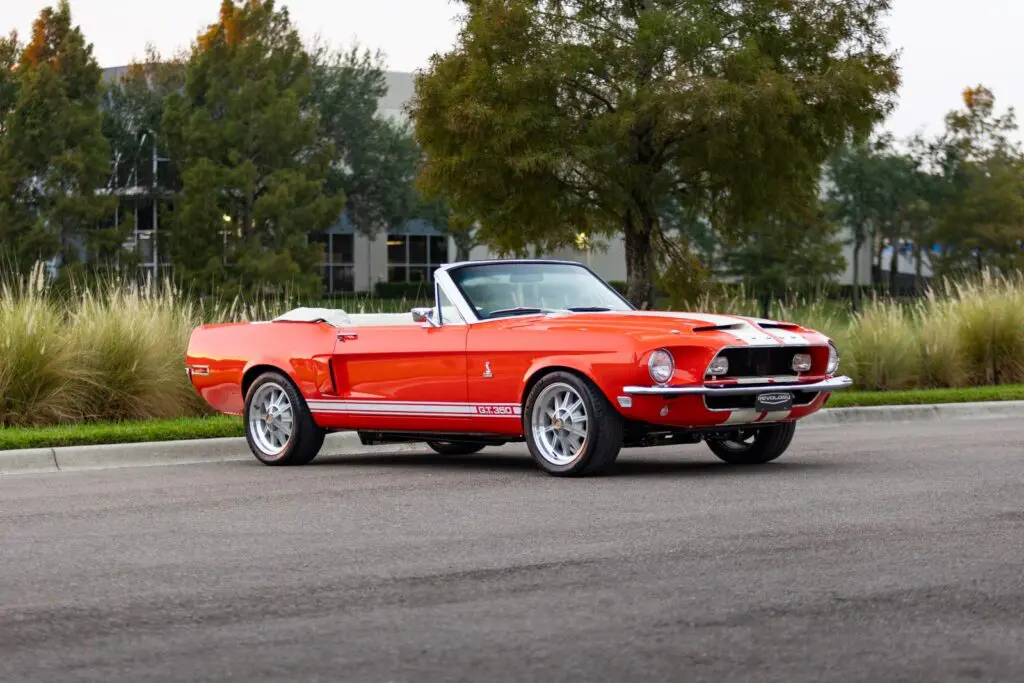
Shelby GT cars redefined what a Mustang could do on the track and set new expectations for American performance. Their focus on lightweight strategy, system-level tuning, and motorsport-grade components created a standard that continues to influence modern Mustang engineering and factory-backed racing programs today.
At Revology Cars, we bring the Shelby GT legacy to life with modern-engineered Mustangs that combine classic design with enhanced performance, reliability, and safety. Our team can help you explore our reproduction Mustangs, customize performance upgrades, or acquire a vehicle built to capture the spirit of the original Shelby GT. Contact us to discover your Revology Mustang and experience heritage-inspired performance on today’s roads.