

The 1967 and 1968 classic Mustang fastbacks are closely related second-generation pony cars sharing the same widened platform Ford introduced to accommodate big-block V8 engines, yet each year carries distinct styling details, powertrain options, interior treatments, and federal compliance updates that set them apart.
This guide covers the 1967 platform’s origins and how it differed from the 1966, the specific exterior and interior changes Ford made for 1968, the engine lineups across both years, the safety and emissions regulations that shaped the 1968 model, period performance testing, collector values, and how both fastbacks translate as reproduction builds.
The 1967 model established the widening of the Mustang body, becoming approximately two inches wider and longer than the 1966 in order to fit the 390 GT. This widened body was carried forward with the 1968 model while refining the front end, side scoops, and interior trim philosophy.
For 1968, Ford added federally required side marker lights integrated into the fenders and quarter panels, expanded engine options including the introduction of the 428 Cobra Jet, and continued offering upgraded interior decor packages such as the Pony Interior, with trim variations depending on option level.
Collector values for both years depend far more on specification, numbers-matching status, and GT, Shelby, or special package designation than on model year alone, with documented 428 CJ fastbacks and Shelby variants commanding the strongest premiums at auction.
Both years also serve as iconic platforms for reproduction. Revology Cars builds new-construction restorations of each, letting buyers choose their preferred year’s period-correct styling with modern engineering underneath.
How Did the 1967 Mustang Fastback Differ From the 1966 Model?
The 1967 Mustang fastback differed from the 1966 model primarily in size, proportions, and engineering capacity. Ford widened and lengthened the platform to accommodate big-block V8 engines, which the original body could not fit. The key changes span dimensions, powertrain capability, and production variety.
How Much Larger Was the 1967 Mustang Than the 1966?
The 1967 Mustang was approximately 2 inches wider and longer than the 1966 model, while gaining nearly 130 pounds in curb weight. According to Mustang Evolution’s community discussion, the 1966 version was described as “slab-sided,” while the 1967 redesign introduced a more muscular body with increased interior space. The front track on V-8 models grew from to allow fitment of big-block engines, while the wheelbase held steady at around 108.0 inches. This widening is what truly separates the two years from an engineering standpoint, not just aesthetics.
How Did the 1967 Fastback Affect Shelby and Special Model Production?
The 1967 fastback body underpinned some of the most collectible Mustangs ever built. Shelby GT500 fastback production reached 2,050 units that year, while the GT350 fastback accounted for 1,175 units. Marti Auto Works, which holds a privileged license to Ford’s complete production database covering the 1967 through 2020 model years, remains the definitive source for verifying these figures by VIN. For collectors prioritizing rarity, knowing exact production numbers matters considerably when assessing value.
What Was the Fastback Name Before It Changed?
The fastback roofline was known simply as the “Fastback” throughout the 1967 and 1968 model years. Ford renamed it the “SportsRoof” in 1969 for models including the Mach 1 and Boss 302, marking the end of the original fastback naming convention, though in practice the word ‘fastback’ remains largely in use today.
How Did the 1968 Mustang Fastback Differ From the 1967 Model?
The 1968 Mustang Fastback differed from the 1967 model primarily through federally mandated safety updates and targeted styling refinements. According to Vintage Mustang Forums, the 1968 model had reflector areas stamped directly into the fenders, which distinguishes it from the 1967 model even though the fenders, doors, and hood are otherwise essentially indistinguishable between the two years. For collectors and restorers, that subtle fender detail is often one of the quickest ways to tell these two cars apart without checking a VIN.
What Exterior Design Changes Separated the 1967 and 1968 Fastback?
The exterior design changes between the 1967 and 1968 Fastback span the front fascia, side body lines, rear taillight treatment, and roofline profile. While the two years share considerable sheetmetal, the differences are precise and identifiable to anyone who knows where to look.

How Did the Front End Design Change Between 1967 and 1968?
The front end design changed between 1967 and 1968 primarily through grille styling and badging details. Ford removed the horizontal grille bar that connected the running pony to its corral for 1968, producing a cleaner, more open grille appearance. The 1967 V-8’s front track was widened from previous years, and that wider stance carried forward into 1968, giving both years a more planted look compared to earlier Mustangs.
How Did the Side Styling and Body Lines Compare?
The side styling between 1967 and 1968 differs most noticeably at the side scoops. According to CJ Pony Parts, the 1967 scoops featured two vents per side with horizontal bars, while the 1968 model replaced them with a narrower, single vertical bar vent for a sleeker, more contemporary look. The fenders, doors, and hood otherwise remain the same between the two years, making the side scoop on the rear quarter panels one of the fastest visual identification points for collectors and enthusiasts.
How Did the Rear End and Taillight Design Differ?
The rear end and taillight design differed between 1967 and 1968 through a federally driven detail: the 1968 model had reflector areas stamped directly into the rear fenders, a change required to meet new safety standards. The stamped reflector integration distinguishes the two cars even though the surrounding sheetmetal is largely shared. Sequential or sequential-style taillight housings retained a similar sequential three-element layout across both years, but the 1968 treatment incorporated the reflector positioning as part of a compliance-driven addition.
How Did the Roofline and Fastback Silhouette Compare?
The roofline and fastback silhouette remained functionally identical between 1967 and 1968, with Ford carrying over the sweeping, low-slope roofline that defined the second-generation fastback’s aggressive silhouette. Both years share the same steeply raked rear glass and flowing C-pillar treatment that distinguished the fastback from the coupe and convertible bodystyles. For collectors, the shared roofline means that the two model years present a consistent fastback profile, and the differences are found in the trim details rather than the overall roofline.
What Engine Options Were Available in the 1967 vs. 1968 Mustang Fastback?
The engine options available in the 1967 vs. 1968 Mustang Fastback span a range of small-block and big-block V8s, with 1968 introducing the landmark 428 Cobra Jet. The sections below cover the 1967 lineup, the 1968 additions, new powertrain introductions, and a direct 390 GT vs. 428 CJ comparison.
What V8 Engines Were Offered in the 1967 Fastback?
The engines offered in the 1967 Fastback included the 200 cubic-inch inline six, the “K-code” 289 cubic-inch Hi-Po small-block V8, a 289 cubic-inch “A-code” 225 hp V8, a “C-code” 289 cubic-inch 200 hp V8, and the FE-series 390 GT big-block at 320 horsepower. The 1967 redesign increased overall size and engine bay space, enabling accommodation of bigger engines.
What V8 Engines Were Offered in the 1968 Fastback?
The 1968 Mustang transitioned from the 289 small-block to the 302 Windsor V8, offered in 2-barrel and 4-barrel configurations (F-code and J-code). The 390 GT FE engine continued at 320 hp, and the 428 Cobra Jet was introduced late in the model year as a high-performance option. The rarer 289 Hi-Po (K-code) was phased out and did not remain a standard 1968 offering.
Ford introduced the 428 Cobra Jet in 1968 as a high-torque, drag-oriented FE engine designed for durability and strong low-end performance. It was officially rated at 335 horsepower but is widely regarded as being underrated in factory specifications. Production numbers for 428 CJ-equipped Mustangs were limited compared to standard V8 models: according to Hot Rod, total 428 Mustang CJ Fastback production totaled around 300 to 350, making it one of the rarest configurations from the 1968 model year.
Did the 1968 Fastback Introduce Any New Powertrain Options?
The 1968 Mustang introduced the 428 Cobra Jet as a major late-model performance option. Ford also transitioned from the 289 small-block to the 302 Windsor V8, which became the new base V8 platform. The 428 CJ featured a 4.13-inch bore and 3.98-inch stroke, producing strong low-end torque suited for street and drag-strip use. As Ford’s top factory FE performance engine in 1968 Mustangs, it provided a more production-oriented alternative to earlier race-focused FE engine programs such as the 427.
How Did the 390 GT and 428 Cobra Jet Compare Across Both Years?
The 390 GT and 428 Cobra Jet compare as two distinct performance philosophies: the 390 GT was a street-oriented big-block available in both 1967 and 1968, while the 428 Cobra Jet delivered significantly greater torque and acceleration potential and was exclusive to 1968. According to HowStuffWorks, the 428 CJ’s actual output was approximately 410 horsepower, despite Ford’s conservative 335-horsepower rating. For collectors and performance enthusiasts today, the 428 CJ Fastback represents a definitive factory performance specification of the 1967-1968 generation.
How Did the Interior Change Between the 1967 and 1968 Mustang Fastback?
The 1967 and 1968 Mustang Fastback interiors differed in trim philosophy, dashboard styling, and available packages. The sections below cover gauge cluster changes, new seating options, and rear interior treatment across both model years.
How Did the Dashboard and Gauge Cluster Differ?
The dashboard and gauge cluster differed primarily in material finish and decorative accents. The 1967 interior featured brushed stainless steel accents and seat back shell trim, giving the cockpit a more industrial, sport-focused feel. For 1968, Ford replaced these finishes with wood-grained trim throughout the cabin, a shift that signaled a move toward a more refined, luxury-adjacent aesthetic. According to MustangWorks, this change meant the brushed stainless steel accents were no longer available on 1968 models.
What Seating and Trim Upgrades Were New for 1968?
The 1968 seating and trim changes continued Ford’s upgraded Interior Decor Group, refining rather than replacing the earlier deluxe-style option. The embossed “pony interior” seat design, associated with earlier Mustang interiors, had already been phased out prior to 1968, with Ford instead offering upgraded upholstery and trim packages that emphasized a more restrained, upscale appearance. The Deluxe package offered a cleaner, more upscale appearance without the equestrian detailing. For collectors who value the embossed pony seats specifically, it is notable that these embossed running horse motifs were dropped after 1966.
How Did the Rear Fastback Interior Treatment Compare?
The rear fastback interior treatment in the 1967 and 1968 Ford Mustang follows the same overall interior evolution rather than a clean “material swap” between years. In both model years, the rear seating area mirrors the front cabin’s trim level and option package. Rather than a wholesale change in materials, subtle revisions focus on the addition of safety features, which will be discussed next.
What Safety and Emissions Changes Affected the 1968 Mustang Fastback?
The safety and emissions changes that affected the 1968 Mustang Fastback were driven by new federal mandates covering lighting, steering, and exhaust output. The sections below cover the specific regulations, how side markers appeared on the fastback body, and how emissions rules began reshaping the engine lineup.
What Federal Safety Regulations Required Changes for 1968?
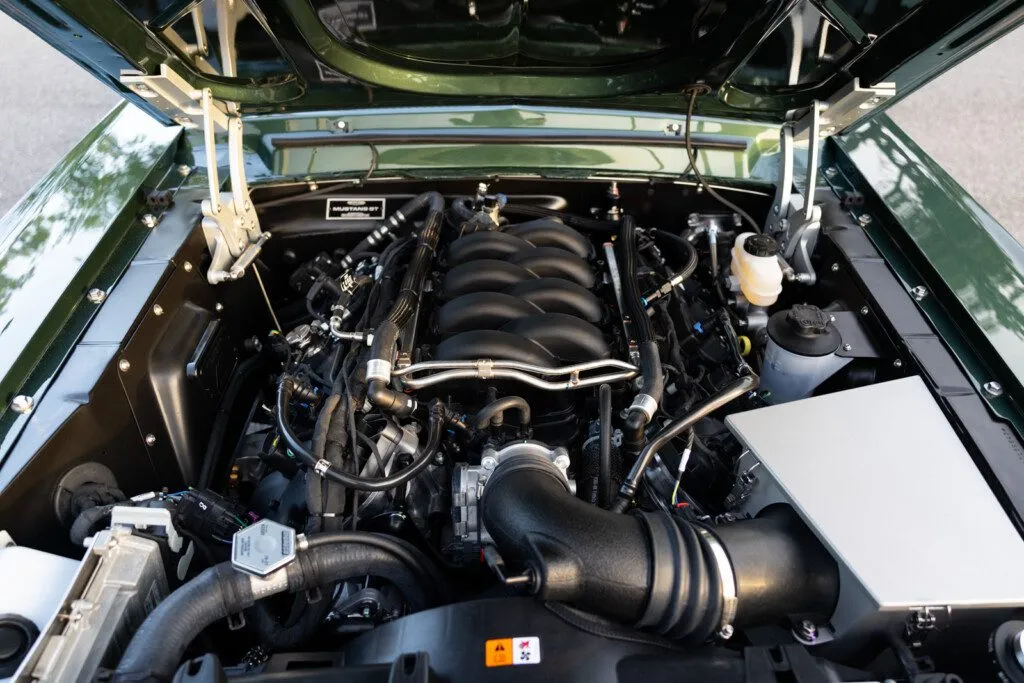
Federal safety standards introduced under the National Traffic and Motor Vehicle Safety Act of 1966 required several design updates for 1968 model-year vehicles. FMVSS 108 mandated the use of side marker lamps and reflectors to improve vehicle visibility from angled approaches at night. FMVSS 203 and 204 established requirements for steering wheel energy absorption and steering column displacement control in crash conditions, leading to improvements in steering system safety design. Congress also mandated minimal emission controls on all 1968 and later cars, with compliance programs focusing on pre-production audit and testing. Together, these rules forced meaningful engineering changes across Ford’s entire Mustang lineup, not just cosmetic updates.
How Did Side Markers First Appear on the 1968 Fastback?
Side marker lights were added to the 1968 Mustang as part of new federal lighting requirements, with integrated units mounted into the front fenders and rear quarter panels to improve vehicle visibility from the side at night. This change was part of early FMVSS 108 lighting standards implementation under U.S. federal safety regulations. The 1967 model carried no such markers, making the stamped reflectors one of the clearest visual tells between the two model years. Ford’s approach integrated compliance into the sheetmetal itself rather than adding separate lamp housings, keeping the fastback’s silhouette intact.
How Did Emissions Standards Begin to Impact the 1968 Engine Lineup?
Emissions standards began to impact the 1968 engine lineup by requiring all engines to meet federally mandated exhaust controls, which added components and restricted tuning headroom across available displacements. The 302 small-block, which Car and Driver referred to as a 4.9-liter engine, remained a durable core offering despite these constraints. Higher-output engines absorbed the compliance burden more visibly, as engineers balanced power delivery against the new limits. For collectors and reproduction builders today, understanding these regulatory pressures explains why factory horsepower figures from this era sometimes understate real-world output.
How Did the 1967 and 1968 Mustang Fastback Perform in Period Testing?
The 1967 and 1968 Mustang Fastbacks performed strongly in period testing, with automotive press consistently recognizing both models as benchmarks of the pony car segment. Motor Trend’s 1967 New Car Issue reported Ford Mustang production at 472,171 units, more than double the Chevrolet Camaro’s 220,917 units, reflecting the buying public’s verdict on the platform. The term “pony car,” which Britannica defines as an American classification for affordable, compact, highly styled coupés with a performance-oriented image, was established by the original Mustang and reinforced by these two model years. Period reviewers praised the expanded engine bay for accommodating big-block options, and the 1968’s 428 Cobra Jet arrival gave automotive press a genuinely fast test subject. That real-world performance legacy is a significant reason both years remain highly sought after by collectors and enthusiasts today.
How Do Collector Values Compare Between the 1967 and 1968 Fastback Today?
Collector values for the 1967 and 1968 Mustang Fastback vary based on model designation, condition, and documented originality. The sections below cover auction pricing trends, the premium carried by GT and Shelby variants, and how numbers-matching status affects value for each year.
Which Year Commands Higher Prices at Auction?
Neither year universally commands higher prices at auction; values depend heavily on specification, condition, and provenance rather than model year alone. Standard fastbacks from both years trade in overlapping ranges on platforms like Bring a Trailer. A customized 1968 Ford Mustang Fastback S-Code 390 recently reached a bid of $36,750 on Bring a Trailer, illustrating where well-optioned examples land. The 1967 model year carries a prestige edge among some collectors as the first year of a more major body redesign that could accommodate bigger displacement engines, while 1968 benefits from rarer, more desirable factory options such as the 428 Cobra Jet. In practice, specification outweighs model year when setting the final hammer price.
Does the GT or Shelby Designation Change the Value Gap?
Yes, the GT and Shelby designation significantly changes the value gap between both years. Shelby GT models command substantially higher prices due to their track-focused engineering, superior performance, and limited production numbers. The 1967 Shelby GT500 fastback, with total production around 2,050 units, and the GT350 with around 1,175 units produced, represent documented scarcity that the collector market prices accordingly. GT-badged examples from either year also sell at a meaningful premium over base fastbacks. Between the two years, Shelby and GT designation matters far more to final value than the one-year difference in model year alone.
How Does Originality and Numbers-Matching Affect Value by Year?
Originality and numbers-matching status affect value significantly for both the 1967 and 1968 Fastback, often more than any single factory option. A verified matching-numbers drivetrain, confirmed through resources such as Marti Reports, which pull documents from Ford Motor Company’s complete production database for the 1967 through 2020 model years, can substantially increase realized auction prices for either year. For 1968, the 428 Cobra Jet’s rarity, totaling just around 1,044 fastback units, makes matching-numbers verification especially impactful. Collectors focused on long-term value preservation should treat documented originality as a foundational requirement regardless of year.
How Do the 1967 and 1968 Fastbacks Compare as Reproduction Builds?
Both the 1967 and 1968 fastbacks compare as reproduction builds in highly similar ways, sharing the same widened engine bay and flexible platform that enthusiasts prize for modern upgrades. The sections below cover platform preferences, the Revology reengineered restoration approach, and key takeaways from this comparison.
Which Year Body Is More Commonly Used as a Reproduction-Style Platform?
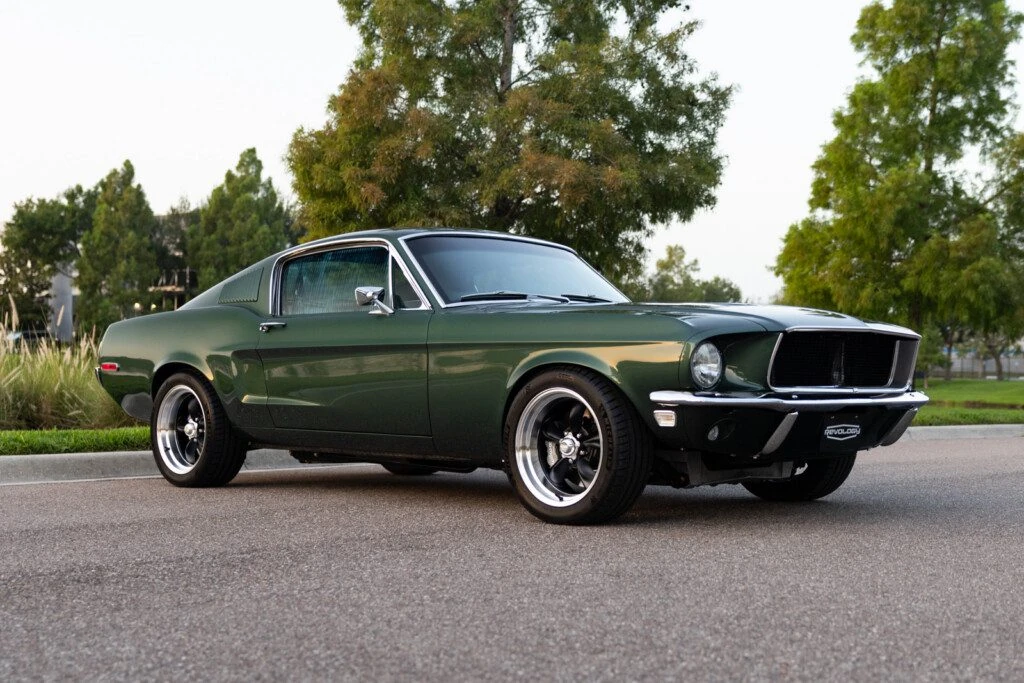
The 1967 and 1968 Mustang platforms are both widely used as foundations for reproduction-style and restomod builds due to their improved chassis packaging and strong aftermarket support compared to earlier models. Many resto-mod and reproduction builders favor the 1967 and 1968 platforms because the widened engine bay accommodates FE-series big blocks and modern engine swaps equally well. While both years are equally popular among builders, the 1968 is noted for introducing updated safety features and late-year performance options such as the 428 Cobra Jet, which was conservatively rated at 335 horsepower but is often regarded as underrated in factory specifications.
How Does a Revology-Style New-Build Restoration Capture Both Years?
A Revology-style new-build restoration captures both years by assembling the body structure entirely from new parts rather than sourcing an aging donor chassis, preserving the authentic fastback silhouette while integrating modern engineering throughout. Revology Cars offers new builds of both the 1967 and 1968 Mustang fastback, allowing buyers to choose the styling details that resonate with them. CEO of Revology Cars, Tom Scarpello, describes the ’68 reengineered restoration as “a muscle car” comparable to “a bodybuilder in a tailored Armani suit,” capturing the balance of classic presence and contemporary refinement that defines the Revology build philosophy.
What Are the Key Takeaways About the 1967 vs. 1968 Classic Mustang Fastback Differences?
The key takeaways about the 1967 vs. 1968 classic Mustang fastback differences are that each year represents a distinct point on the same evolutionary arc, with meaningful distinctions in styling, powertrain, interior, and regulation compliance. Collectors focused on originality should weigh factors such as rarity, numbers-matching status, and specific option codes carefully, as those variables drive value significantly. For enthusiasts who want to drive the car regularly without sacrificing modern reliability, a new-build restoration like those offered by Revology Cars delivers the fastback experience in either year, built to be enjoyed rather than simply preserved. The right choice ultimately depends on whether your priority is collectibility, driveability, or a blend of both.