
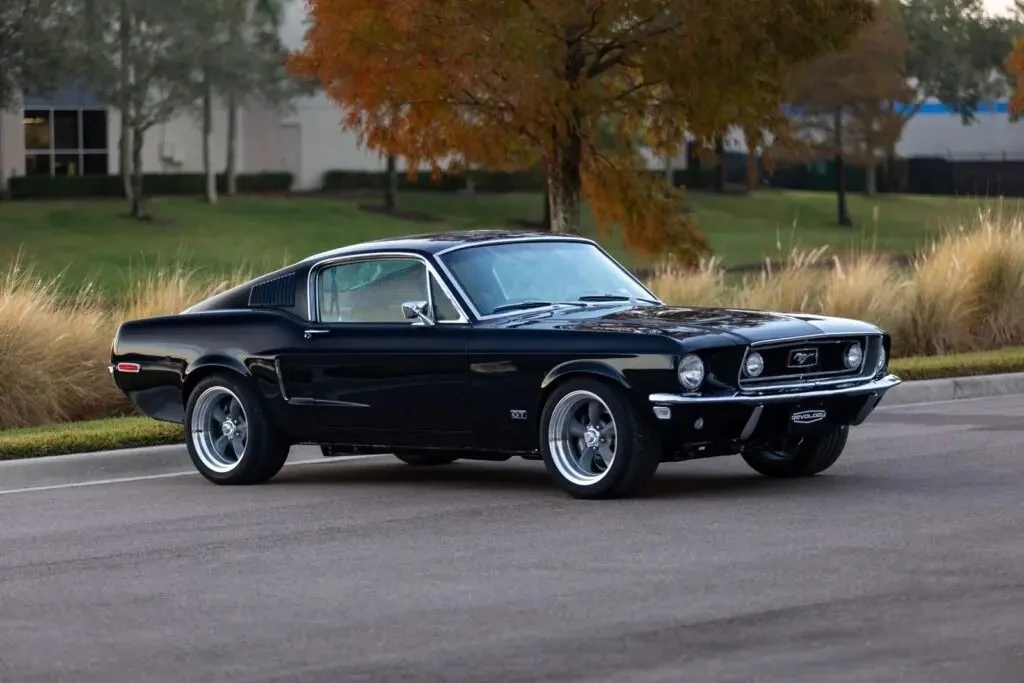
Classic car engine tuning is the process of adjusting, restoring, or upgrading a classic vehicle’s engine components to improve performance, reliability, or drivability. Unlike modern vehicles, which use software-based ECU calibration, classic engines rely on mechanical systems such as carburetors, distributor-based ignition, and manual timing adjustments that require hands-on, component-level work.
This guide covers what classic engine tuning actually means, the main tuning types and core components involved, how tuning is performed in practice, what performance gains are realistic, the most common mistakes to avoid, how modern technology applies to classic builds, and how this all connects to resto-mod Ford Mustang builds.
Classic engine tuning differs from modern ECU tuning in both tools and methodology, demanding iterative, experience-driven adjustments rather than software mapping. The goals pursued range from restoring factory specifications to maximizing output, and neglecting periodic tuning causes progressive mechanical degradation across carburetors, ignition systems, and internal surfaces.
The main tuning types span carburetor adjustment, ignition timing, fuel system work, intake and exhaust selection, EFI conversion, and full engine rebuilds, each targeting a different system with different performance implications. Core components including the carburetor, camshaft, ignition distributor, fuel delivery system, and exhaust collectively shape how power is produced and sustained across the RPM range.
Tuning is performed through structured diagnosis, precise tool use, and systematic calibration, with dyno tuning offering objective verification of output gains. Modern upgrades such as electronic ignition and EFI conversion address the inherent limitations of original equipment, while Revology Cars takes this philosophy further by building reengineered Mustangs around factory-calibrated Ford drivetrains that arrive already optimized.
What Does Classic Car Engine Tuning Actually Mean?
Classic car engine tuning is the process of adjusting, restoring, or upgrading a classic vehicle’s engine components to improve performance, reliability, or drivability. The sections below cover how it differs from modern tuning, what goals it typically pursues, and what happens without it.
How Is Classic Car Engine Tuning Different From Modern Engine Tuning?
Classic car engine tuning differs from modern engine tuning primarily in its tools, hardware, and methodology. Modern vehicles rely on electronic control units (ECUs) that accept software-based calibration, while classic engines depend on mechanical systems, such as carburetors, distributor-based ignition, and manual timing adjustments, that require hands-on, component-level work.
According to Engine Builder Magazine, peak power in a classic carbureted engine requires a consistent air/fuel ratio between 12.8 and 13.2, achieved through physical jet and needle adjustments rather than software mapping. Ignition timing, similarly, must be set mechanically: Hot Rod Magazine notes that initial advance typically falls between 18 and 28 degrees depending on the drivetrain configuration, with total advance optimized in the 36 to 44 degree range.
This mechanical complexity makes classic tuning more iterative and experience-dependent than plugging into a laptop. Getting it right demands deep familiarity with the specific engine, not just the platform.
What Goals Does Engine Tuning Typically Pursue in Classic Cars?
The goals of engine tuning in classic cars typically include restoring lost power, improving fuel efficiency, ensuring reliable starts, and refining drivability across everyday driving conditions. These objectives vary depending on whether the owner prioritizes originality, performance, or street usability.
For collectors focused on preservation, tuning aims to bring the engine back to factory specification. For enthusiasts building for performance, the goals shift toward maximizing output through camshaft selection, carburetor sizing, and ignition curve optimization. The growing investment value of classic vehicles adds further motivation: the U.S. classic cars market is projected to reach USD 25,989.14 million by 2032, growing at a CAGR of 8.82%, according to Credence Research, reflecting how seriously owners take the condition and performance of these vehicles.
What Happens to a Classic Car Engine Without Periodic Tuning?
A classic car engine without periodic tuning degrades progressively across its mechanical systems. Carburetors fall out of adjustment, causing rich or lean conditions that waste fuel and reduce power. Ignition timing drifts, leading to hard starts, misfires, and potential detonation. Neglected engines also accumulate rust, corrosion, and pitted surfaces on internal components, a process Wagamon Brothers describes as requiring chemical treatments, media blasting, and re-machining once deterioration becomes severe.
Left unaddressed, these issues compound: a misfiring engine stresses bearings, fouled jets accelerate wear on valve seats, and corroded surfaces compromise sealing. Regular tuning is not cosmetic maintenance. It is the only consistent barrier between a running engine and one that requires a full rebuild.
What Are the Main Types of Classic Car Engine Tuning?
The main types of classic car engine tuning are carburetor tuning, ignition timing tuning, fuel system tuning, air intake and exhaust tuning, EFI conversion tuning, and engine rebuild and performance overhaul. Each approach targets a different system and suits different goals, from restoring smooth idle to maximizing horsepower output.
Carburetor Tuning
Carburetor tuning is the process of adjusting fuel metering, jet sizing, needle position, and float height to optimize the air/fuel mixture across the RPM range. Because original carburetors drift out of calibration over decades, this is typically the first tuning step on any unmodified classic engine. Proper carburetor tuning restores throttle response, corrects rough idle, and eliminates fuel waste caused by overly rich or lean mixtures.
Ignition Timing Tuning
Ignition timing tuning is the adjustment of when the spark fires relative to piston position to maximize combustion efficiency. According to Hot Rod Magazine, a hot engine backed by an automatic transmission typically requires initial timing between 18 and 28 degrees, with total advance working best in the 36 to 44 degree range. Getting this curve right is one of the highest-leverage tuning adjustments available on a classic engine, directly affecting power, fuel economy, and detonation risk.
Fuel System Tuning
Fuel system tuning addresses fuel pressure, pump capacity, line sizing, and filter condition to ensure consistent delivery under all operating conditions. An aging fuel system with a weak pump or undersized lines creates lean conditions at high load, which limits power and risks engine damage.
Air Intake and Exhaust Tuning
Air intake and exhaust tuning optimizes how efficiently the engine breathes by selecting intake manifolds and exhaust components matched to the engine’s RPM range and use case. According to Hot Rod Magazine, a two-plane intake manifold improves low-RPM torque and idle quality because its smaller average runner cross-section increases velocity at lower engine speeds. On the exhaust side, long-tube headers consistently outperform shorty designs in power output, though shorty headers remain practical where clearance is restricted.
EFI Conversion Tuning
EFI conversion tuning replaces the carburetor and mechanical fuel delivery with an electronic fuel injection system, enabling precise, computer-controlled fueling across all conditions. This upgrade improves cold starts, eliminates vapor lock, and supports consistent air/fuel ratios without manual jetting changes. EFI conversion is well suited to classic cars driven regularly in varied weather conditions where carburetor tuning alone cannot fully compensate for temperature and altitude changes.
Engine Rebuild and Performance Overhaul
Engine rebuild and performance overhaul involves disassembling, inspecting, machining, and reassembling the engine with new or upgraded internal components to restore or exceed original specifications. According to Speedway Motors, a 350 Chevy budget build can produce 300 horsepower, while a purpose-built maximum-performance version of the same engine can reach upwards of 600 horsepower with the right combination of parts. For classic cars with significant age-related wear, a rebuild is often the foundation on which all other tuning work depends.
What Are the Core Components Tuned in a Classic Car Engine?
The core components tuned in a classic car engine include the carburetor, ignition system, fuel delivery system, camshaft, and exhaust. Each component directly influences how power is produced, delivered, and sustained across the RPM range.

What Role Does the Carburetor Play in Classic Engine Performance?
The carburetor plays the role of metering air and fuel into the engine’s intake manifold, making it the primary control point for mixture quality and throttle response. Jet sizing, needle position, float level, and accelerator pump timing all determine how well the engine transitions from idle to wide-open throttle. A mismatched or poorly calibrated carburetor causes symptoms such as hesitation, rich surge, and lean stumble. For most classic builds, selecting the correct CFM rating for the engine’s displacement and intended RPM range is the starting point for any carburetor tune.
How Does Ignition Timing Affect Classic Car Engine Output?
Ignition timing affects classic car engine output by controlling when the spark fires relative to piston position, directly determining combustion efficiency and power delivery. Advancing timing too far causes detonation; retarding it too much sacrifices power and fuel economy. The correct timing curve must account for initial advance, mechanical advance, and vacuum advance working together across all throttle positions and engine speeds. Matching the advance curve to the engine’s compression ratio, fuel octane, and intended use is essential for extracting full output without risking engine damage.
Why Does the Fuel Delivery System Matter in Classic Engine Tuning?
The fuel delivery system matters in classic engine tuning because consistent, correctly pressurized fuel supply is the foundation for accurate mixture control at every load condition. Pressure requirements vary significantly between fuel system types: according to Aeromotive, most carburetors require approximately 6 psi to operate properly, while gasoline TBI, port injection, and direct injection EFI systems require approximately 42 to 75 psi. Running a carburetor at excessive pressure causes flooding; insufficient pressure starves the engine under load. Fuel pump capacity, line diameter, regulator accuracy, and filter condition all contribute to delivery consistency.
How Do Camshaft Specs Influence Classic Engine Behavior
Camshaft specs influence classic engine behavior by determining valve lift, duration, and lobe separation angle, which collectively shape the engine’s power band, idle quality, and vacuum output. A cam ground for low-RPM torque produces strong street manners but limits peak horsepower; a high-lift, long-duration profile shifts power higher in the RPM range at the expense of idle smoothness and vacuum-dependent accessories. According to Billy Godbold of Comp Cams, as reported by Hemmings, a solid roller camshaft delivers the best performance in any pushrod OHV engine because flat-tappet designs are limited in lift and spring load capacity. Matching cam specs to the rest of the engine combination, including compression ratio and induction, is critical.
What Effect Do Headers and Exhaust Have on Engine Tuning?
Headers and exhaust affect engine tuning by controlling how efficiently spent gases exit the cylinders, which directly influences scavenging and volumetric efficiency. Primary tube diameter, length, and collector design all determine where in the RPM range exhaust flow benefits are realized. According to Speedway Motors, shorty headers almost always make less power than long-tube designs due to limited volume and unequal primary tube length, though they remain practical where underbody clearance is restricted. Pairing the right header configuration with appropriate collector sizing and exhaust diameter ensures the engine’s tuning gains upstream are not choked off at the exit point.
How Is Classic Car Engine Tuning Actually Performed?
Classic car engine tuning follows a structured sequence: diagnosis, tool selection, and systematic adjustment of carburetion, ignition, and fuel delivery. The subsections below cover each step technicians use, from initial inspection through the professional-vs.-DIY decision.

How Do Technicians Diagnose a Classic Engine Before Tuning?
Technicians diagnose a classic engine before tuning by conducting a thorough mechanical inspection to establish a reliable baseline. This typically includes a compression test on each cylinder to reveal worn rings or leaking valves, a vacuum gauge reading to identify intake leaks or cam timing issues, and a visual inspection of ignition components such as points, condenser, cap, and rotor.
Fuel delivery is also checked at this stage: a technician will measure fuel pressure at the carburetor inlet and look for signs of flooding, lean stumble, or accelerator pump failure. Any identified mechanical deficiency gets corrected before tuning begins, because adjusting a carburetor or timing on a mechanically unsound engine produces unreliable, and often misleading, results.
What Tools Are Used to Tune a Classic Car Engine?
The tools used to tune a classic car engine include both basic hand tools and specialized diagnostic instruments. A well-equipped classic car tuner relies on the following:
- Timing light: Reads ignition timing against crankshaft marks at idle and under advance.
- Vacuum gauge: Detects intake leaks, valve timing problems, and carburetor issues.
- Compression tester: Measures cylinder-to-cylinder pressure to identify wear.
- Carburetor synchronizer or vacuum gauge: Balances fuel and air delivery across multiple carbs.
- Fuel pressure gauge: Confirms correct pressure at the carburetor inlet.
- Feeler gauges: Sets point gap on breaker-point ignition systems.
- Distributor advance tester (or chassis dyno): Maps the mechanical and vacuum advance curve across the RPM range.
Dyno access elevates tuning precision considerably, as it allows real-load measurement rather than static bench adjustments.
How Is a Carburetor Adjusted During a Classic Engine Tune?
Carburetor adjustment during a classic engine tune begins with selecting the correct carburetor size for the engine’s actual airflow demand, then calibrating jets, needle valves, and mixture screws to hit the target air/fuel ratio across the throttle range. According to Engine Builder Magazine, a typical small-block Chevy runs best on the street with a 650 to 730 CFM carburetor; a larger carb only benefits an engine built to exceed 7,000 RPM with a correspondingly high numerical final drive ratio.
Once sizing is confirmed, the technician sets the float level to stabilize fuel delivery, adjusts the idle mixture screws for the smoothest vacuum reading at idle, and fine-tunes the accelerator pump stroke to eliminate hesitation on tip-in. Main jet sizing is addressed last, targeting consistent combustion across the mid-range and wide-open throttle.
How Is Ignition Timing Set on a Classic Car Engine?
Ignition timing is set on a classic car engine by connecting a timing light to the number-one cylinder lead, starting the engine at the specified idle RPM, and aligning the crankshaft timing mark with the correct degree marking on the balancer or timing tab. The distributor is then rotated to reach the target initial advance and locked in place.
From there, the technician checks the mechanical advance curve by revving the engine and watching total advance climb, and verifies that vacuum advance engages correctly during light-throttle cruising. Hot Rod Magazine notes that initial timing settings of 18 to 28 degrees, with total advance in the 36 to 44-degree range, are common for high-performance classic engines depending on transmission type and application. Getting total advance right matters as much as the initial setting, and this step is frequently skipped in basic tune-ups.
When Should a Classic Car Engine Be Professionally Tuned vs. DIY?
Whether a classic car engine should be professionally tuned or DIY-tuned depends on the complexity of the work, the owner’s mechanical experience, and the intended use of the vehicle. Some guidelines:
- DIY is reasonable for: Basic ignition adjustments (point gap, timing light setting), idle mixture screw tuning, and air filter or spark plug replacement on a mechanically sound engine.
- Professional tuning is recommended for: Advance curve profiling, carburetor re-jetting for a modified engine, vacuum leak diagnosis, EFI conversion calibration, camshaft degreeing, compression or leakdown testing on an engine showing performance loss, or any work requiring a chassis dyno to validate real-load performance.
Owners focused on collectibility and originality should also weigh whether modifications alter the vehicle’s historical accuracy before proceeding with any tuning beyond maintenance-level adjustments.
What Performance Gains Can You Expect From Classic Engine Tuning?
Classic engine tuning delivers measurable gains across horsepower, fuel efficiency, and everyday drivability. The sections below break down what each type of improvement looks like in practice.
How Much Horsepower Can Engine Tuning Add to a Classic Car?
Engine tuning can add anywhere from modest incremental gains to dramatic power increases, depending on the scope of the build. According to Speedway Motors, a 350 Chevy can produce around 300 hp with a budget build and upwards of 600 hp with a maximum performance combination of parts. For less aggressive builds, dyno-based fine-tuning alone can improve engine output by 5 to 10 percent, which according to Classic Motorsports can translate to a half-second improvement in zero-to-60 times. The baseline condition of the engine, carburetor sizing, camshaft selection, and intake configuration all influence how much power is recoverable through tuning.
How Does Tuning Improve Fuel Efficiency in Classic Vehicles?
Tuning improves fuel efficiency in classic vehicles by correcting the air/fuel ratio, ignition timing, and fuel delivery to eliminate waste. A carburetor delivering a rich or lean mixture forces the engine to compensate, burning more fuel to maintain performance. Proper ignition timing ensures combustion occurs at the optimal moment, extracting more energy from each fuel charge. Together, these adjustments reduce fuel waste without sacrificing power, making well-tuned classics noticeably more economical on the road than neglected ones.
Can Engine Tuning Improve Daily Drivability in a Classic Car?
Yes, engine tuning can significantly improve daily drivability in a classic car. Cold-start behavior, throttle response, idle stability, and low-speed torque are all directly affected by carburetor jetting, choke calibration, and ignition advance curves. A correctly tuned vacuum advance system, for example, adds timing at light throttle for smoother highway cruising while pulling timing back at wide-open throttle to prevent detonation. For enthusiasts who drive their classic regularly rather than storing it, proper tuning often makes a more noticeable difference to the ownership experience than any single performance part.
What Are the Most Common Classic Car Engine Tuning Mistakes?
The most common classic car engine tuning mistakes involve ignition timing errors, incorrect carburetor jetting, mismatched compression ratios, and undiagnosed vacuum leaks. Each of these oversights can undermine performance gains or cause lasting engine damage.
What Happens When Ignition Timing Is Set Too Advanced or Retarded?
Ignition timing set too advanced or retarded causes detonation, power loss, or engine damage. Too much total advance at wide-open throttle creates detonation under load, while retarded timing robs power and increases heat.
Getting the advance curve right requires understanding how vacuum and mechanical advance interact. According to Hot Rod Magazine, setting initial advance at 12 degrees at 500 rpm with the vacuum can disconnected produces a safe combination: mechanical and vacuum advance combine during light-throttle cruising, but at wide-open throttle, vacuum drops and only 36 degrees of mechanical advance remains, which prevents detonation.
Many tuners focus only on initial timing and ignore the full advance curve, which is where real damage happens.
Why Does Running the Wrong Carburetor Jetting Cause Problems?
Running the wrong carburetor jetting causes a rich or lean air/fuel mixture that hurts power, increases fuel consumption, and can damage pistons or valves. Jetting controls how much fuel enters the engine across the RPM range, and an incorrect calibration leaves the engine running outside its ideal window at one or more throttle positions.
Lean jetting is particularly dangerous under load, raising combustion temperatures and increasing knock risk. Rich jetting wastes fuel and fouls spark plugs. According to Engine Builder Magazine, peak power requires a consistent air/fuel ratio of 12.8 to 13.2; deviating from this range prevents the engine from reaching its full potential from off-idle to wide-open throttle.
How Can Overlooking Compression Ratio Damage a Tuned Classic Engine?
Overlooking compression ratio damages a tuned classic engine by creating a mismatch between fuel octane requirements and actual combustion pressure. Higher compression produces more power, but it also demands higher-octane fuel to prevent pre-ignition and detonation.
When tuners add performance parts such as a more aggressive camshaft, larger carburetor, or ignition upgrades without recalculating static and dynamic compression, the engine may run fine on the dyno but detonate repeatedly on pump gas. Over time, detonation erodes ring lands, cracks pistons, and damages bearings. Compression ratio is not an isolated variable; it must be evaluated alongside cam timing, head volume, and the fuel available for street use.
What Risks Come With Skipping Vacuum Leak Diagnosis Before Tuning?
The risks of skipping vacuum leak diagnosis before tuning include inaccurate baseline readings, incorrect carburetor adjustments, and erratic idle behavior that cannot be resolved through jetting or timing changes alone. A vacuum leak introduces unmetered air into the intake stream, leaning out the mixture in ways that mimic a jetting problem.
Tuners who skip this step often chase symptoms by richening jets or advancing timing, compounding the underlying issue. Common vacuum leak sources include intake manifold gaskets, carburetor base gaskets, vacuum hose fittings, and brake booster lines. Diagnosing and sealing these before any tuning adjustment is made ensures that every subsequent calibration reflects actual engine behavior rather than a corrupted baseline.
How Does Modern Technology Apply to Classic Car Engine Tuning?
Modern technology applies to classic car engine tuning through three primary upgrades: EFI conversions, electronic ignition systems, and dyno tuning. Each approach addresses a specific limitation of original equipment while offering measurable, real-world improvements in performance and reliability.
What Is an EFI Conversion and Is It Right for a Classic Car?
An EFI conversion is the process of replacing a carburetor-based fuel delivery system with an electronic fuel injection system on a classic engine. Where carburetors operate at roughly 6 psi of fuel pressure, EFI systems require 42 to 75 psi, meaning the conversion involves a new fuel pump, dedicated fuel lines, and an electronic control unit, not just a throttle body swap. For enthusiasts who drive their classics regularly, EFI delivers consistent air/fuel ratios across all operating conditions, cold starts, high altitude, and heat soak included. Collectors focused on originality may reasonably choose to preserve the carburetor, and that is an equally valid position.
How Do Electronic Ignition Upgrades Change Classic Engine Tuning?
Electronic ignition upgrades change classic engine tuning by replacing points-based distributors with systems that deliver precise, repeatable spark timing across the full RPM range. Points systems wear mechanically, causing timing drift that affects both power and fuel economy. Electronic systems eliminate this drift, holding the ignition curve stable under varying loads and temperatures. This matters because ignition advance requirements vary significantly by application: a performance build with an automatic transmission typically needs 18 to 28 degrees of initial advance and 36 to 44 degrees total, according to Hot Rod Magazine. Electronic ignition makes hitting and holding those values far more consistent than a mechanical points system can sustain over time.
What Role Does Dyno Tuning Play in Modern Classic Car Builds?
Dyno tuning plays the role of objective verification in modern classic car builds, replacing road-feel guesswork with measured output data. A chassis dynamometer loads the engine under controlled conditions, allowing a tuner to optimize fuel delivery, ignition timing, and air/fuel ratio simultaneously while reading real-time results. According to Classic Motorsports, this methodical fine-tuning can improve engine output by as much as 5 to 10 percent, which can translate to a half-second improvement in zero-to-60 times or more than a second cut from a lap. Dyno tuning is especially valuable after major component changes, such as a camshaft swap, EFI conversion, or intake upgrade, where the interaction between parts requires systematic calibration rather than individual adjustments made in isolation.
How Does Classic Car Engine Tuning Relate to Resto-Mod Mustang Builds?
Classic car engine tuning relates to resto-mod Mustang builds as the technical foundation that determines whether a reproduction car delivers modern performance while preserving period-correct character. The sections below explore how Revology Cars applies this philosophy and what key lessons readers should carry forward.
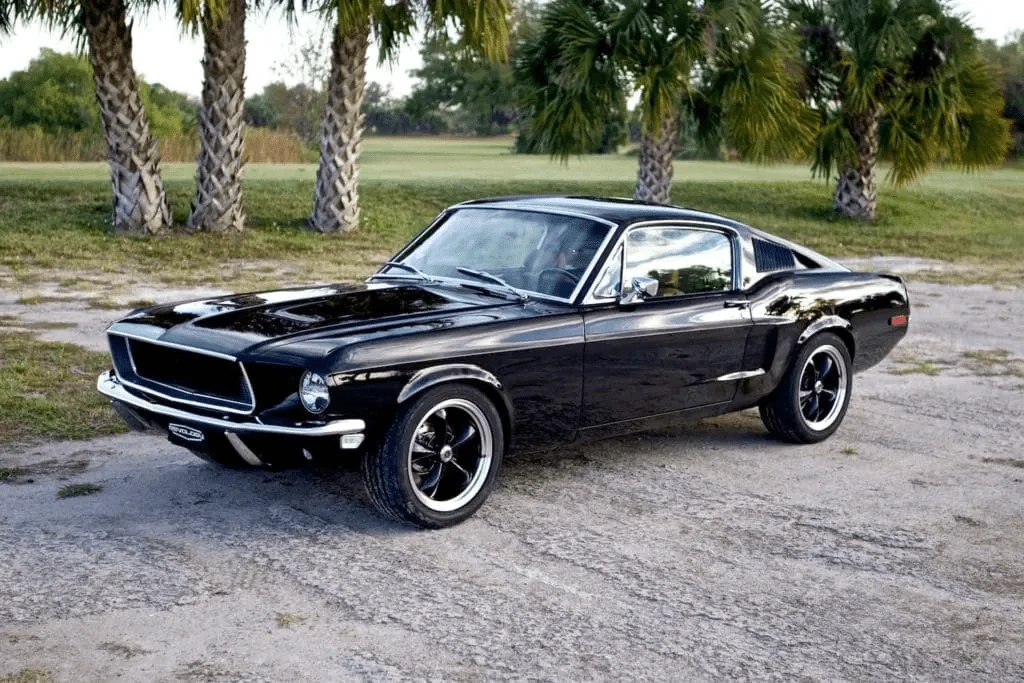
How Do Revology Cars’ Modern Ford Engine Options Redefine Classic Mustang Tuning?
Revology Cars redefines classic Mustang tuning by building each new-build around current Ford-sourced engines and transmissions, eliminating the compromises that traditional tuning attempts to work around. Rather than coaxing more performance from aging carbureted powerplants, Revology integrates electronic fuel injection from the ground up, pairing it with factory-calibrated drivetrain management. Ford’s calibration engineers test these engines and transmissions across varying temperatures, altitudes, and humidity levels, so each drivetrain unit arrives already optimized. This approach bypasses the iterative guesswork of carburetor jetting, vacuum advance curves, and compression ratio matching that defines conventional classic engine tuning. For enthusiasts who want genuine 1960s Mustang proportions and styling alongside dependable, modern power delivery, this architecture makes the tuning question largely resolved before the first mile is driven.
What Are the Key Takeaways About Classic Car Engine Tuning We Covered?
The key takeaways about classic car engine tuning center on matching every tuning decision to a specific goal, whether that goal is preserving originality, maximizing performance, or improving daily drivability. Carburetor sizing, ignition advance curves, camshaft profiles, and exhaust choice each affect different parts of the power band, and no single adjustment works in isolation. According to Classic Motorsports, methodical dyno tuning can improve engine output by 5 to 10 percent, translating to measurable gains in acceleration and lap times. Collectors focused on authenticity rightly prioritize period-correct specifications, while enthusiasts who drive regularly benefit most from modern fuel delivery and ignition systems. Revology Cars represents one end of that spectrum, where reproduction bodywork meets a fully integrated modern drivetrain; an option well suited to enthusiasts who want modern power delivery alongside 1960s Mustang proportions, without dismissing the equally valid choice of preserving an all-original car.