

Classic Mustang handling upgrades are suspension, chassis, and braking modifications that transform the 1965–1970 Ford Mustang’s original ride into a safer, more responsive driving experience.
This guide covers original suspension limitations and common handling problems, the types of upgrades available, how to choose the right kit for your goals, complementary modifications that complete the transformation, and the impact these changes have on ride quality, safety, and collector value.
The factory Mustang suspension relied on soft rubber bushings, single-leaf rear springs, and narrow tires that produced body roll, rear-axle hop under braking, and vague steering feel. Understanding these weaknesses is the first step toward selecting the right fix.
Coilover conversions, upgraded sway bars, adjustable shocks, and polyurethane bushings each address specific handling deficiencies. Front and rear systems require different approaches, and kits range from bolt-on sway bar upgrades to full independent front suspension assemblies.
Matching the right suspension kit to your plans depends on whether the car serves as a weekend cruiser, a daily driver, or a track machine. Model-year compatibility across 1966–1970 variants and the decision between professional installation and a DIY build also shape the final selection.
Suspension alone does not complete the picture. Modern disc brakes, subframe connectors, and properly sized wheels and tires work together with upgraded springs and shocks to deliver balanced, predictable handling.
Every upgrade involves trade-offs between sharp response and ride comfort, and certain modifications can affect concours judging classifications. We also explore how Revology Cars integrates modern suspension engineering into reproduction Mustangs that look stock but handle like contemporary sports cars.
Why Is Handling Important for Classic Mustangs?
Handling is important for classic Mustangs because their original suspension designs prioritize cost and comfort over precision, leaving significant room for improvement. The sections below cover how stock suspension affects performance and the most common handling issues owners encounter.
How Does Original Mustang Suspension Affect Ride and Performance?
Original Mustang suspension and steering systems are designed around a comfort-oriented, mechanically simple architecture that delivers a distinctly analog driving experience. The combination of relatively soft spring rates, compliant rubber bushings, and a recirculating-ball steering system allows noticeable road surface feedback to reach the driver, giving the car a connected and unfiltered feel compared to modern vehicles.
However, this same design also limits precision at the handling limit. Body roll, suspension compliance, and steering system geometry reduce sharp turn-in response and make cornering behavior less predictable when driven aggressively. As a result, while the car can feel communicative in terms of road texture and vibration, it lacks the quick, highly linear steering response and chassis control expected from modern performance platforms.
Year-specific engineering choices compound the challenge. According to Anghel Restorations’ suspension guide, the 1967 Mustang’s lower control arms were slightly lengthened to an overall length of 18.5 inches, a one-year-only configuration that does not interchange with other model years. Details like these make sourcing correct replacement parts difficult and push many owners toward modern aftermarket solutions.
This duality is why classic Mustangs are often described as providing strong mechanical road feel, but relatively modest steering precision by modern standards. For many owners, the stock setup often feels vague and under-damped by modern standards.
What Are the Most Common Handling Issues in Classic Mustangs?
The most common handling issues in classic Mustangs include excessive body roll, rear axle hop under braking, nose dive during hard stops, and wandering at highway speeds. These problems stem from soft factory spring rates, worn bushings, and a unibody structure that lacks the rigidity of modern platforms.
Rear axle behavior is particularly problematic. In 1967 road testing published by Car Life Magazine, the Mustang 390 Fastback exhibited a tendency for the rear end to hop unduly during braking, achieving a maximum deceleration rate of 29 ft./sec². from 80 mph. That instability traces to suspension feel and setup, influenced by parts like the stock leaf spring and shock absorber configuration.
Additional common complaints include:
- Vague steering feel from the original recirculating ball steering box.
- Uneven tire wear caused by limited factory alignment adjustability.
- Flex in the unibody during spirited cornering, reducing predictability.
Understanding these baseline limitations is essential before selecting specific suspension upgrades.
Which Types of Suspension Upgrades Improve Classic Mustang Handling?
The types of suspension upgrades that improve classic Mustang handling include coilover conversion kits, upgraded sway bars and bushings, adjustable shocks and struts, and targeted front or rear component swaps. Each addresses a specific weakness in the original design.
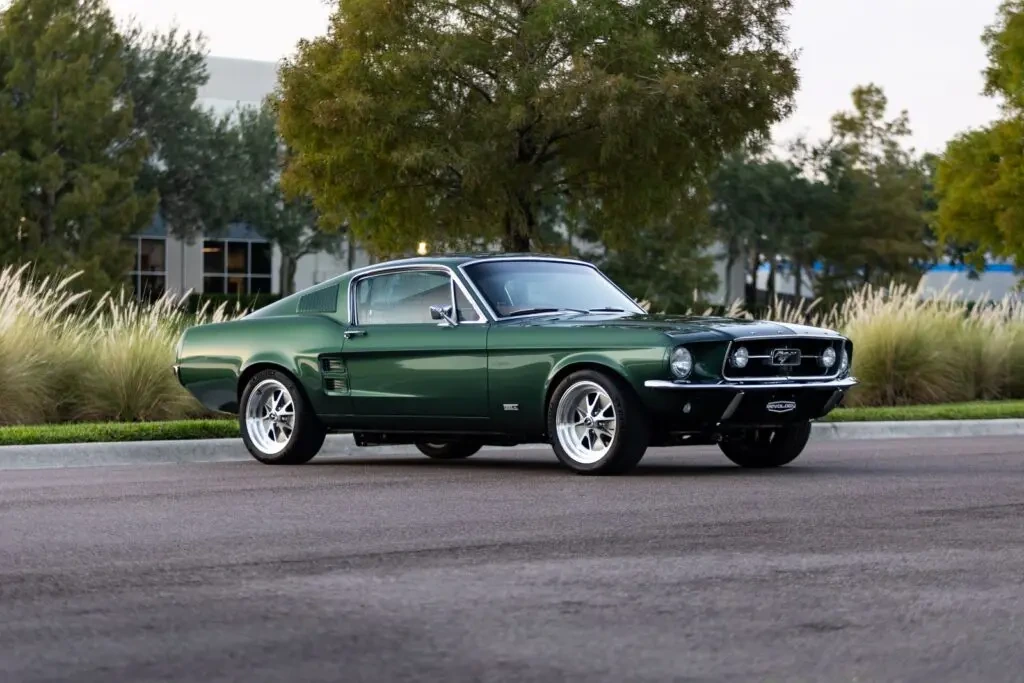
What Are the Benefits of Coilover Conversion Kits?
The benefits of coilover conversion kits are precise ride height adjustment, improved spring rate tuning, and significantly better body control compared to the original factory suspension, which uses coil springs in the front and leaf springs in the rear. Coilovers combine a shock absorber and coil spring into one unit, allowing adjustable damping (compression and rebound, depending on design) and spring preload. This replaces the factory’s one-size-fits-all approach with a system that can be dialed in for spirited street driving or more aggressive weekend use. For owners who intend to drive regularly rather than simply preserve a car for shows, coilovers represent one of the highest-impact single upgrades available for first-generation Mustangs.
How Do Upgraded Sway Bars and Bushings Enhance Cornering?
Upgraded sway bars and bushings enhance cornering by reducing body roll and tightening suspension response during direction changes. A thicker sway bar resists chassis lean more effectively, keeping tires planted through turns. Replacing the original rubber bushings with polyurethane versions further sharpens feedback by eliminating deflection under load. According to Hot Rod Magazine, standard rubber bushings measure approximately 60 to 65 on the Shore A durometer scale, while performance polyurethane options from brands like Energy Suspension and Prothane range in hardness. Durometer scale ratings range from just slightly harder than rubber at around 70-80 Shore A rating, to firm at around 80-90 Shore A rating, to very firm, at around 95 Shore A to the harder Shore D rating. That increased hardness reduces compliance by limiting bushing deflection under load, leading to more consistent suspension geometry and sharper, more predictable chassis response compared to factory rubber-bushed setups.
Can Adjustable Shocks and Struts Make a Noticeable Difference?
Yes, adjustable shocks and struts can make a noticeable difference in classic Mustang handling. The factory dampers were valved for soft, comfort-oriented ride characteristics, offering little resistance to body motion during hard cornering or braking. Adjustable replacements let owners tune compression and rebound damping to match their driving style, tire setup, and spring rates. A firmer setting controls pitch and dive under braking, while a softer setting preserves ride comfort on rough roads. This tunability makes adjustable dampers especially practical for cars that split duty between daily driving and spirited weekend use.
Are There Differences Between Front and Rear Suspension Upgrades?
Yes, there are meaningful differences between front and rear suspension upgrades on classic Mustangs. The front suspension controls steering precision, dive under braking, and turn-in response, while the rear suspension manages traction, lateral stability, and power delivery. Addressing only one end creates an imbalance that can make handling feel worse, not better. Structural reinforcement matters here as well; according to Hemmings, when subframe connectors and torque boxes are purchased as a package, they can improve frame integrity by up to 20 percent. A balanced approach, upgrading both ends together, yields the most predictable and confidence-inspiring results on the road.
What Should You Know Before Choosing a Classic Mustang Suspension Kit?
Before choosing a classic Mustang suspension kit, you should evaluate your driving goals, verify year-specific compatibility, and decide between professional installation or a DIY approach.
How Do Goals Like Daily Driving vs. Track Use Affect Upgrade Choices?
Goals like daily driving vs. track use affect upgrade choices by determining the balance between comfort, responsiveness, and adjustability your suspension kit needs. A daily driver benefits from softer spring rates and compliant bushings that absorb road imperfections, while a car built for spirited canyon runs or autocross events often demands stiffer settings and fully adjustable coilovers.
Bushing material selection illustrates this tradeoff clearly. According to Hot Rod Magazine, standard rubber bushings measure approximately 60–65 on the Shore A durometer scale, whereas performance polyurethane options from brands like Energy Suspension and Prothane range from 75 to 80. Rubber suits relaxed street cruising; polyurethane transmits more road feedback but sharpens steering precision.
For most classic Mustang owners who split time between weekend shows and regular driving, a mid-range polyurethane bushing paired with adjustable shocks offers a well-balanced compromise between improved steering response and retained street comfort.
What Compatibility Factors Matter for 1966-1970 Mustangs?
The compatibility factors that matter for 1966–1970 Mustangs include model-year geometry changes, shock tower clearance, and steering system fitment. Ford revised the front suspension geometry across this production span, and not all aftermarket kits account for these differences.
Key compatibility considerations include:
- The 1967 Mustang uses uniquely sized lower control arms that do not interchange with other model years.
- Cars with big-block engines require different clearances than small-block or inline-six models.
- Steering upgrades, such as rack-and-pinion conversions, must align with the specific subframe and crossmember geometry of your year.
- Spring perch locations shifted between early and late first-generation Ford Mustang models, which affects aftermarket coilover mounting points.
Always confirm that the kit manufacturer explicitly lists your exact year, body style, and engine configuration before purchasing. Overlooking even one mismatch can mean hours of fabrication work or a kit that simply will not fit.
Should You Consider Professional Installation or DIY?
You should consider professional installation if the upgrade involves welding, subframe modifications, or alignment-critical geometry changes. Bolt-on kits, such as drop-in coilovers or sway bar upgrades, are well within reach for experienced home mechanics with proper jack stands, spring compressors, and torque specifications.
More involved conversions that remove or modify shock towers, replace crossmembers, or integrate rack-and-pinion steering typically require professional expertise and specialized alignment equipment. Given that professional shop rates commonly range from $70 to $130 per hour, budgeting for expert installation on complex kits protects both your investment and your safety.
Regardless of who turns the wrenches, a professional four-wheel alignment after any suspension change is non-negotiable. With installation approach decided, complementary modifications can further unlock your Mustang’s handling potential.
What Additional Modifications Complement Suspension Upgrades?
Additional modifications that complement suspension upgrades include modern braking systems, chassis reinforcements, and optimized wheel and tire packages. Each targets a different aspect of vehicle dynamics.

How Can Modern Braking Systems Improve Overall Performance?
Modern braking systems improve overall performance by matching stopping power to the increased grip and cornering speeds that upgraded suspension provides. Stock drum brakes on classic Mustangs were designed for softer suspensions and lower limits, so pushing the chassis harder without upgrading the brakes creates a dangerous imbalance.
Disc brake conversions deliver shorter stopping distances, better heat dissipation, and more consistent pedal feel. For classic Mustang owners who plan to drive regularly, upgrading brakes alongside suspension is one of the most impactful safety decisions available.
Do Chassis Reinforcements or Subframe Connectors Matter?
Chassis reinforcements and subframe connectors matter significantly for classic Mustangs because the original unibody structure flexes under cornering and braking loads. Subframe connectors tie the front and rear subframes together, preserving the intended suspension geometry by reducing the body twist that undermines it.
According to Hemmings, when subframe connectors and torque boxes are purchased as a package, these upgrades can improve frame integrity by up to 20 percent. Bolt-on connectors offer a reversible option, while welded versions provide maximum rigidity. Under Mustang Club of America Modified Class rules, welded subframe connectors receive 8 points while bolt-on versions receive 5 points. Without structural reinforcement, even premium coilovers will not achieve their full performance potential.
What Wheel and Tire Upgrades Best Support Improved Handling?
The wheel and tire upgrades that best support improved handling are wider, lighter wheels paired with modern performance tires. Wider tires increase the contact patch, translating suspension improvements into measurable grip at the road surface.
Key considerations for classic Mustang wheel and tire selection include:
- Wheel diameter and width must clear upgraded brake calipers and suspension components.
- Tire compound and tread pattern should match the intended use, whether spirited street driving or weekend events.
- Proper offset prevents rubbing against fenders or suspension arms.
- Lighter wheels reduce unsprung mass, allowing shocks and springs to respond more quickly.
A well-matched wheel and tire package turns suspension potential into real-world confidence behind the wheel. With braking, chassis, and tire upgrades aligned, the next question is how these changes affect ride quality, safety, and long-term value.
How Do Suspension Upgrades Impact Ride Quality, Safety, and Value?
Suspension upgrades impact ride quality, safety, and value by transforming how a classic Mustang drives, stops, and holds its worth. The trade-offs between handling and comfort, the effect on collector pricing, and the safety gains each deserve careful consideration.
What Are the Trade-Offs Between Handling and Ride Comfort?
The trade-offs between handling and ride comfort center on spring rates, damping firmness, and bushing hardness. Stiffer springs and firmer shocks sharpen cornering response but transmit more road imperfections to the cabin. Softer settings absorb bumps gracefully yet allow more body roll in turns.
Polyurethane bushings reduce deflection compared to stock rubber, which tightens steering feel; however, that reduced compliance can introduce more vibration on rough pavement. Adjustable coilover systems expand suspension tuning capability by allowing changes to ride height and damping characteristics, while spring rates can be selected to suit the desired handling balance. For most classic Mustang owners who split time between cruising and occasional spirited driving, a moderately firm setup with quality dampers and well-matched springs delivers a strong balance without sacrificing livability.
Can Modern Upgrades Increase a Classic Mustang’s Collector Value?
Modern upgrades can increase a classic Mustang’s collector value, but the answer depends heavily on the buyer segment and the type of modification. Concours-focused collectors generally prioritize originality, while driving enthusiasts often pay premiums for well-executed suspension and brake improvements.
Under Mustang Club of America Modified Class judging rules, major modifications such as removed shock towers or welded subframe connectors are each assigned 8 points, while bolt-on parts like subframe connectors or traction bars receive 5 points. These scoring distinctions matter: bolt-on, reversible upgrades preserve judging eligibility more effectively than permanent structural changes. Owners of rare or collectible VINs, such as K-code or Shelby models, should weigh modification decisions especially carefully, since originality carries significant weight in that market segment.
How Do Enhanced Safety Features Contribute to Peace of Mind?
Enhanced safety features contribute to peace of mind by closing the gap between vintage driving dynamics and modern crash-protection capability. Upgraded disc brakes reduce stopping distances substantially compared to original drum setups. Stiffer chassis geometry from subframe connectors and improved suspension geometry provide more predictable emergency handling.
Better shock valving keeps tires in consistent contact with the road during sudden maneuvers, which is particularly valuable on cars originally designed with compliance-heavy suspension tuning. For owners who drive their classic Mustangs regularly rather than trailer them to shows, these safety improvements transform the experience from cautious to confident, making the car something you genuinely want to drive rather than simply admire.
With ride quality, value, and safety considerations addressed, the next step is understanding how Revology Cars integrates these upgrades.
How Does Revology Cars Approach Classic Mustang Handling and Suspension Upgrades?
Revology Cars approaches classic Mustang handling and suspension upgrades by re-engineering the entire chassis with modern components rather than retrofitting individual aftermarket parts. The following sections cover the specific engineering and key article takeaways.

What Modern Suspension and Safety Engineering Does Revology Offer in Their Re-engineered Mustangs?
Revology offers a fully integrated modern suspension and safety engineering package in their re-engineered Mustangs. Each vehicle uses an unequal length control arm front suspension, also known as a double wishbone design, paired with modern shock valving and spring rates calibrated for predictable street handling. Rather than bolting aftermarket kits onto aging factory structures, Revology assembles body structures from new parts, ensuring consistent geometry and structural integrity from the start.
This integrated approach eliminates the compromises that often accompany piecemeal upgrades on original unibodies. For enthusiasts who intend to drive regularly and value modern refinement without sacrificing classic aesthetics, this engineering philosophy delivers a cohesive driving experience that individual bolt-on kits typically cannot match.
What Are the Key Takeaways About Classic Mustang Handling Upgrades: Suspension Kits & More We Covered?
The key takeaways about classic Mustang handling upgrades are that the original suspension architecture has well-documented limitations, and a range of modern solutions exists to address them. Coilover kits, upgraded sway bars, polyurethane bushings, and adjustable shocks each target specific handling deficiencies. Chassis reinforcements like subframe connectors complement suspension work, while brake and wheel upgrades complete the transformation.
According to Top Flight Automotive, a full classic Mustang restoration typically requires over 1,000 hours of labor, with professional rates between $70 and $130 per hour. That cost context underscores why choosing the right upgrade path matters. Whether you prefer preserving originality, installing targeted bolt-on improvements, or opting for a comprehensively re-engineered restoration like those from Revology Cars, the best approach depends on how you plan to use the car.