
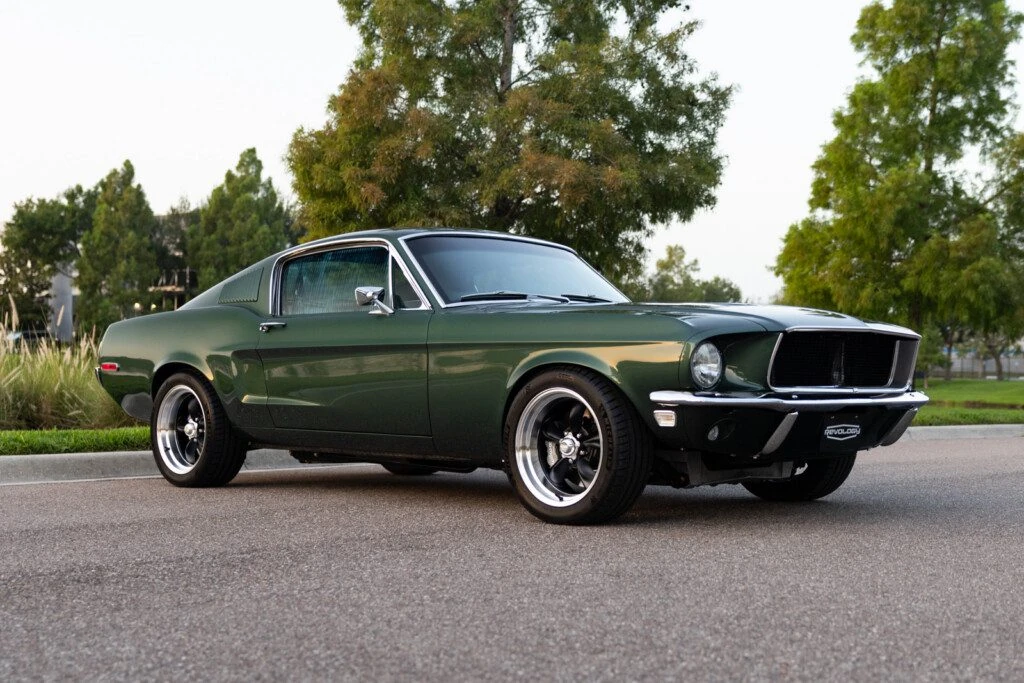
The 1968 Mustang GT is a first-generation icon offered in two distinct body styles: the Fastback and the Convertible. Each shares the same 108-inch wheelbase, the same engine lineup, and the same GT equipment group, yet the two deliver fundamentally different ownership experiences.
This guide covers body style design and engineering differences, driving dynamics across conditions, performance and mechanical specifications, practical ownership factors, pros and cons of each layout, the role of authenticity and styling, and how modern continuation engineering reshapes the classic Mustang GT.
The fastback’s fixed-roof structure adds rigidity that improves handling and saves roughly 100 to 200 pounds over the convertible. That stiffness advantage translates to tighter chassis behavior, less body flex under hard cornering, and a layout better suited to high-performance driving.
The convertible trades some structural rigidity for open-air freedom. Additional chassis reinforcements and top mechanisms account for the extra weight, and weatherstripping maintenance becomes part of ownership. The reward is an unmatched cruising experience with the top folded away.
Mechanically, both body styles accepted every 1968 engine option from the 200-cubic-inch inline six through the 428 Cobra Jet V8. Braking, suspension, and drivetrain configurations carried over identically, so the performance envelope is shaped more by body choice than by what sits under the hood.
On the practical side, cargo space, resale trajectories, and long-term maintenance costs diverge noticeably. The fastback offers up to 18.5 cubic feet with the rear seat folded; the convertible holds 7.5 cubic feet. Auction data shows fastbacks averaging higher sale prices in the performance market, while convertibles hold their own among style-driven collectors.
Modern low-volume production restoration builds from Revology Cars now pair the original 1968 silhouette with Ford’s 5.0L Coyote V8, contemporary suspension, and current safety features, making both body styles viable as reliable daily drivers without sacrificing period-correct looks.
What Are the Key Differences Between a 1968 Mustang GT Fastback and Convertible?
The key differences between a 1968 Mustang GT Fastback and Convertible span body design, structural engineering, and interior layout. The sections below cover how each body style shapes aesthetics, chassis rigidity, and cabin features.
How Does the Body Style Affect Design, Aesthetics, and Presence?
The body style affects design, aesthetics, and presence by defining the 1968 Mustang GT’s roofline, proportions, and visual stance. The 1968 Mustang GT Fastback’s sweeping rear glass creates an aggressive, aerodynamic profile that became iconic, reinforced through appearances in pop culture such as in the film Bullitt. The Convertible’s open-top silhouette projects a more relaxed, cruiser-oriented character.
Production rarity amplifies each style’s presence. According to CJ Pony Parts’ 1965–1973 production data, the Convertible was the rarest body style at just 8.0% of 1968 production, while the Fastback accounted for 14.1%. That scarcity gives both models stronger curb appeal than the common coupe, which represented 78.6% of output. Auction data reflects this visual distinction: Fastback coupes average $45,100 at auction compared to $31,000 for Convertibles, suggesting the market values the Fastback’s aggressive aesthetics particularly highly.
What Are the Structural and Engineering Differences Between Fastback and Convertible?
The structural and engineering differences between Fastback and Convertible center on chassis rigidity and weight. The Fastback’s fixed roof contributes directly to the body’s torsional stiffness, providing better handling characteristics through additional structural support.
The Convertible, lacking that continuous roof structure, requires additional chassis stiffening to approach comparable handling. According to a 2024 CJ Pony Parts comparative analysis, Convertibles weigh approximately 100 to 200 pounds more than Fastbacks due to top mechanisms, motors, and structural reinforcements. Convertibles also carry increased risk of water leaks, seal degradation, and reduced rollover protection over time. Both body styles share identical exterior dimensions at 51.4 inches in height, yet behave differently under load. For buyers prioritizing spirited driving or track use, the Fastback’s inherent rigidity makes it the stronger engineering foundation.
How Do the Interiors Compare in Terms of Comfort and Features?
The interiors compare closely in terms of comfort and features, since both the Fastback and Convertible shared the same core cabin. Bucket seats were standard on all 1968 Mustangs, with an optional center console available across body styles.
The optional Interior Decor Group added a simulated woodgrain steering wheel, bright pedal trim, vinyl grip insert on automatic shifters, and a woodgrain instrument panel insert. One notable difference: the roof-mounted console with map lights included in the Decor Group was available only on closed-roof models, not Convertibles. Cargo capacity also differs meaningfully. The Fastback offers 5.6 cubic feet with the rear seat up and 18.5 cubic feet with the seat folded, while the Convertible provides 7.5 cubic feet with no fold-flat option. For buyers who value versatile interior space alongside period-correct appointments, these practical distinctions often matter as much as the open-air experience.
With body style differences established, the next consideration is how each model actually feels on the road.
How Does Driving Experience Vary Between the Fastback and Convertible Models?
The driving experience varies between the fastback and convertible models in handling feel, cabin noise, and exposure to the elements. Below, each factor is broken down across ride quality, open-air conditions, and weather resilience.

What are the differences in handling, ride quality, and noise levels?
The differences in handling, ride quality, and noise levels stem primarily from structural rigidity. The fastback’s fixed roof adds stiffness to the unibody, producing tighter responses through corners and less body flex under load. Convertibles, carrying approximately 100 to 200 extra pounds from top mechanisms and reinforcements, feel softer and more compliant. According to a 2024 CJ Pony Parts comparative analysis, convertibles require additional chassis stiffening to equalize handling capabilities with hardtop variants. Cabin noise also differs: the fastback’s sealed roofline blocks more wind and road noise, while the convertible’s folding top admits noticeably more sound at highway speeds. For buyers who prioritize composed handling, the fastback delivers a more planted feel.
How do open-air driving and roof-up conditions compare?
Open-air driving delivers an immersive sensory experience that defines convertible ownership. Wind, exhaust note, and ambient sound fill the cabin in a way no fastback can replicate. This is the core reason collectors value the convertible for its iconic styling and open-air character. With the roof raised, however, the convertible’s folding top provides adequate weather coverage but never matches the fastback’s solid roof for insulation or quietness. Visibility also shifts: the fastback’s sweeping rear glass offers a panoramic rearview, while the convertible’s rear window, whether vinyl or glass, is smaller and can cloud with age. Each configuration rewards a different priority: sensory engagement versus sealed refinement.
How does each model perform in various weather conditions?
Each model performs differently in adverse weather due to structural and sealing differences. The fastback’s fixed steel roof and factory-sealed glass resist rain, temperature swings, and road spray with minimal maintenance. Convertible tops, by contrast, face weatherstripping degradation, potential water leaks, and seal issues that worsen over time. Prolonged moisture exposure can accelerate rust in convertible-specific frame areas where water pools around top mechanism mounting points. Cold weather stiffens vinyl tops, and heat degrades their UV resistance. Replacement parts for weatherstripping and top assemblies remain available through suppliers such as CJ Pony Parts and Top Flight Automotive. For year-round driving, the fastback requires far less weather-related upkeep, making it the more practical choice in variable climates.
What Should You Know About Performance and Mechanical Specifications?
Performance and mechanical specifications for the 1968 Mustang GT were shared across body styles, with key differences emerging in chassis rigidity and weight. Below, engine options, braking and suspension setups, and modern engineering approaches are covered.
How do engine options and drivetrain setups differ between Fastback and Convertible?
Engine options and drivetrain setups do not differ between the 1968 Mustang GT Fastback and Convertible. Ford offered the same powertrain catalog for both body styles, although some high-performance engines were rarer on certain body styles. Buyers could choose from:
- The 200 cubic inch I6 – the base economy engine
- The 289 cubic inch V8 – available in 2-barrel or high-performance 4-barrel configurations
- The 302 cubic inch V8 – delivered 230 hp in standard form.
- The 390 cubic inch V8 – produced 320 hp and 427 lb-ft of torque with a four-barrel carburetor.
- The 427 cubic inch V8 – 4-barrel, very rare, mostly special-order
- The 428 Cobra Jet V8 – introduced in April 1968, rated at 335 hp but producing approximately 410 hp in real-world testing
Transmission choices, including the Toploader four-speed manual and C-6 automatic, applied equally to both. Differential options such as the Equa-Loc differential ($79) and Competition Handling Package ($62) were also body-style agnostic. The real performance gap between Fastback and Convertible comes down to weight and structural stiffness, not available hardware.
How do braking, suspension, and chassis differ by body style?
Braking, suspension, and chassis components differ primarily in structural reinforcement between the 1968 Mustang GT Fastback and Convertible. Both body styles share the same core layout: independent front suspension with coil springs, semi-elliptic leaf springs at the rear, and an anti-roll bar.
The critical distinction is rigidity. The Fastback’s fixed roof adds structural support that improves handling precision. Convertibles require additional chassis stiffening, including subframe connectors and torque boxes, to compensate for the absent roof structure. That extra reinforcement, combined with the convertible top mechanism and motors, adds approximately 100 to 200 pounds.
According to a 2024 Hemmings Motor News buyer’s guide, power-assisted front disc brakes were mandatory on regular-production 1968 Cobra Jet Mustangs, regardless of body style. For buyers prioritizing cornering response, the Fastback’s inherent rigidity advantage is worth weighing carefully.
How does modern engineering improve original 1968 Mustang GT performance?
Modern engineering improves original 1968 Mustang GT performance by replacing period-correct mechanical limitations with contemporary components while preserving classic exterior styling. The original 1968 GT, equipped with standard engines like the 289 two-barrel or 302, served best as a relaxed highway cruiser with vague steering and modest acceleration by today’s standards.
Reengineered restoration builds address these shortcomings directly. Revology utilizes a modern Ford 5.0L Coyote V8 produces 460 hp, while supercharged variants reach 710 hp. Double wishbone front suspension replaces the original control arm geometry, and a 10-speed automatic transmission offers refinement the original C-6 could not match. According to a 2023 Car and Driver test of a Revology Shelby GT500, the car achieved 0 to 60 mph in 3.7 seconds and an 11.7-second quarter-mile at 124 mph, virtually identical to modern Mustang performance metrics.
These upgrades make the Fastback or Convertible equally capable as a genuine performance car, not just a period cruiser.
How Do Practical Considerations Influence Your Choice?
Practical considerations influence your choice between a 1968 Mustang GT Fastback and Convertible through differences in cargo capacity, maintenance demands, and long-term resale value. Each factor shifts the equation depending on how you plan to use the car.

How does luggage space differ between Fastback and Convertible?
Luggage space differs significantly between the Fastback and Convertible. The 1968 Mustang Fastback offers 5.6 cubic feet of trunk capacity with the rear seat up, but folding it down expands usable cargo space to 18.5 cubic feet. The Convertible provides 7.5 cubic feet of fixed trunk space with no fold-down option, since the top mechanism occupies the area behind the rear seat. For road trips or weekend getaways, the Fastback’s versatile cargo arrangement is a clear practical advantage. The Convertible’s trunk still handles overnight bags comfortably, though longer journeys require more deliberate packing.
What about ease of maintenance and parts availability?
Ease of maintenance and parts availability favor the Fastback, though both body styles benefit from strong aftermarket support. The Fastback requires less upkeep because it has no convertible top mechanism, weatherstripping seals, or hydraulic motors to service. Convertibles demand regular attention to top components and are more prone to water leaks over time.
General 1968 Mustang parts are widely available. According to a 2024 Hemmings Motor News buyer’s guide on the 1968 Ford Mustang Cobra Jet, early 1968-dated engine blocks, date-coded cylinder heads, and correct carburetors remain expensive and difficult to source, while reproduction body panels and skeletal components are readily accessible from major suppliers. For most owners, routine maintenance parts present no sourcing challenges regardless of body style.
How does resale value compare for both body styles?
Resale value for both body styles depends on whether the market segment prioritizes performance or open-air appeal. The 1968 Mustang GT Fastback commands better resale value in the performance market, driven by its structural advantages, lighter weight, and the cultural cachet of the “Bullitt” film association. Convertibles, while the rarest body style at just 8% of 1968 production, tend to attract buyers seeking the iconic cruising experience rather than outright performance credentials.
For buyers focused on long-term investment, Fastbacks consistently hold stronger value among collectors and enthusiasts. Understanding which buyer pool you would eventually sell into helps clarify which body style aligns with your ownership goals.
What Are the Pros and Cons of Choosing a Fastback or Convertible?
The pros and cons of choosing a Fastback or Convertible center on structural performance, maintenance demands, and driving lifestyle. Below, each body style’s strengths and unique drawbacks are broken down.
What Are the Biggest Advantages of the Fastback Body Style?
The biggest advantages of the Fastback body style are structural rigidity, lower weight, and reduced maintenance. The roof structure adds reinforcement that improves handling and makes the Fastback better suited for racing, autocross, and spirited driving. According to a 2024 CJ Pony Parts comparative analysis, the Fastback weighs approximately 100 to 200 pounds less than the Convertible due to the absence of top mechanisms and added reinforcements.
Fewer seal points mean fewer potential leak issues over time. The Fastback also provides better rollover protection, a practical advantage that compounds with its performance edge. For buyers who prioritize driving dynamics over open-air cruising, the Fastback remains the stronger choice.
What Are the Top Benefits of a Convertible?
The top benefits of a Convertible are the open-air driving experience, unlimited headroom, and iconic American muscle car styling with the top down. Dropping the top transforms the 1968 Mustang GT into a sensory experience no fixed-roof car can replicate; wind, sound, and scenery become part of the drive.
Convertibles excel as relaxed cruisers and weekend drivers. For owners who value the visual presence of a top-down classic on coastal roads or at car shows, this body style delivers something the Fastback simply cannot. That emotional connection often outweighs the performance trade-offs for many enthusiasts.
Are There Any Drawbacks Unique to Either Body Style?
There are drawbacks unique to each body style that reflect their engineering differences.
- The Convertible requires additional chassis stiffening to match the Fastback’s handling, adding cost and complexity.
- Convertible top mechanisms, weatherstripping, and seals demand higher ongoing maintenance and are prone to water leaks over time.
- Many racing organizations do not allow Convertibles to compete without the installation of a roll bar.
- The Fastback’s enclosed cabin limits ventilation options and traps more heat in warm climates.
- Fastback rear visibility is more restricted due to the sloping roofline and smaller rear glass area.
For buyers weighing long-term ownership costs, the Convertible’s top mechanism and seal maintenance represent a meaningful budget consideration. Understanding these trade-offs early helps match the right body style to your priorities.
What Role Does Authenticity and Styling Play in the Mustang GT Decision?
Authenticity and styling play a central role in the Mustang GT decision because they shape both the emotional connection and long-term value of the car. The following sections cover continuation model accuracy, color and trim choices, and the significance of classic Mustang heritage.
How closely do continuation models match the original 1968 cars in both types?
Continuation models match the original 1968 cars closely in exterior styling while integrating fully modern engineering underneath. Revology Cars preserves the iconic 1968 Mustang profiles for both the GT 2+2 Fastback and GT Convertible, retaining period-correct proportions, character lines, and design cues. Beneath that faithful exterior, contemporary components like the Ford 5.0L Coyote V8 producing 460 hp and a 10-speed automatic or six-speed manual replace the original drivetrain.
For buyers who value factory-original, numbers-matching cars, a carefully documented survivor or concours restoration remains the benchmark. Continuation models serve a different purpose: they deliver the 1968 aesthetic with the reliability and performance of a newly manufactured vehicle.
How do color, trim, and customization options influence your choice?
Color, trim, and customization options influence your choice by defining how the car looks, feels, and reflects your personality. Period-correct palettes like Highland Green, Acapulco Blue, and Wimbledon White carry strong visual associations with the 1968 model year. Interior choices between premium vinyl and premium Nappa leather affect both comfort and character.
Fastbacks tend toward aggressive styling cues, including rear spoilers and sport-oriented trim packages. Convertibles often pair well with lighter colors and chrome accents that complement the open-top silhouette. Whether you prioritize originality or personal expression, these selections directly shape the car’s presence and resale appeal.
Why is classic Mustang heritage important for collectors or daily drivers?
Classic Mustang heritage is important because it connects owners to one of the most recognized nameplates in automotive history. According to the Comprehensive Classic Mustang Buyers Guide published by Classic Car Deals in January 2026, the fastback’s association with the 1968 film Bullitt and the convertible’s embodiment of open-air American muscle both drive strong collector interest.
For collectors, heritage translates to provenance, production rarity, and cultural significance. For daily drivers, it means owning a car that turns heads and sparks conversation wherever it goes. That emotional weight is something no specification sheet captures, yet it consistently influences buying decisions across both body styles. With styling choices settled, the next consideration is how modern engineering elevates the ownership experience.
How Does Modern Engineering Enhance the 1968 Mustang GT Experience?
Modern engineering enhances the 1968 Mustang GT experience by addressing the original platform’s limitations in reliability, safety, and everyday usability. The following sections cover available upgrades, how modern conveniences integrate with classic driving feel, and whether a classic-looking Mustang GT can serve as a daily driver.
What reliability and safety upgrades are available on new continuation Mustangs?
Reliability and safety upgrades available on new reengineered restoration Mustangs include contemporary drivetrain components, modern braking systems, and updated structural engineering. Original 1968 Mustangs, while charming, feature vague steering systems and aging mechanical components that demand constant attention. Restoration builds from manufacturers like Revology Cars replace these with current-generation Ford 5.0L Coyote V8 engines producing 460 hp with a standard setup, paired with six-speed manual or 10-speed automatic transmissions. Revology’s modern double-wishbone front suspension upgrades the original unequal-length control arm design with precision-engineered arms, JRI coilover shocks, and constant-rate springs, delivering tighter tolerances, improved handling, and adjustable ride performance compared with the 1968 Mustang GT. Power-assisted disc brakes and modern electrical systems round out the package. For buyers who value originality, a properly restored vintage Mustang remains equally rewarding, just with different ownership expectations.
How do modern conveniences fit into the driving experience?
Modern conveniences fit into the driving experience by solving the original car’s most persistent daily-use frustrations without erasing its character. Period owners note that the 1968 Mustang’s steering “is far from precise” and its exhaust drone can become fatiguing on long highway drives. Contemporary climate control, improved sound insulation, and refined steering feel address these issues directly. The result preserves what owners describe as the unique, invigorating experience of piloting a classic Mustang, where the car “just coasts down the highway” at cruising speed, while eliminating the compromises that once limited seat time. Well-executed modern integration should feel invisible; the driving experience stays analog and connected.
Can you use a classic-looking 1968 Mustang GT as a daily driver thanks to updates?
Yes, you can use a classic-looking 1968 Mustang GT as a daily driver thanks to updates that bring mechanical reliability in line with modern expectations. According to a 2023 Car and Driver test, the Revology Shelby Mustang GT500 delivered a 3.7-second 0-60 mph time and 11.7-second quarter mile at 124 mph, performance virtually identical to current production Mustangs. While these figures are for the GT500 and not the 1968 GT, they illustrate how reengineered restoration models benefit from modern engineering. That level of mechanical competence, combined with modern fuel injection, cooling systems, and transmissions, eliminates the fragility that makes stock vintage Mustangs impractical for commuting. Continuation models bridge the gap between weekend cruiser and weekday transportation without forcing owners to compromise on classic aesthetics.
How Can Revology Cars Help You Choose and Own the Ideal 1968 Mustang GT?
Revology Cars can help you choose and own the ideal 1968 Mustang GT by offering factory-built, newly manufactured Fastback and Convertible models with modern engineering, full customization, and comprehensive support. Below, each aspect of the Revology ownership experience is covered in detail.

What makes Revology’s factory-built, newly-manufactured Mustangs unique compared to restored originals?
Revology’s factory-built, newly manufactured Mustangs are unique compared to restored originals because every body structure is assembled from new parts rather than sourced from aging donor vehicles. Revology offers both the 1968 Mustang GT 2+2 Fastback and the 1968 Mustang GT Convertible with a Ford 5.0L Coyote V8 producing 460 hp, paired with a six-speed manual or 10-speed automatic. A supercharged variant delivers 710 hp. Restored originals carry decades of hidden wear, inconsistent part quality, and the challenge of sourcing correct date-coded components. Revology eliminates those variables with controlled modern parts, upgraded double wishbone front suspension, and contemporary safety features while preserving the iconic 1968 exterior styling.
What support, customization, and warranty options does Revology offer for Fastback and Convertible buyers?
Revology offers Fastback and Convertible buyers a full suite of support, customization, and warranty options designed around modern ownership expectations. Buyers can choose between premium vinyl or premium Nappa leather interiors, multiple options for wheels, and a range of exterior colors and trim levels. Because every vehicle is newly manufactured with newer components, Revology backs each build with warranty coverage that restored originals simply cannot match. The build process also allows buyers to tailor transmission selection and interior appointments before production begins, so the finished car reflects individual priorities, whether that means a Bullitt-inspired Fastback for spirited driving or a relaxed GT Convertible for open-air cruising.
What are the key takeaways about choosing a Fastback or Convertible 1968 Mustang GT?
The key takeaways about choosing a Fastback or Convertible 1968 Mustang GT center on matching the body style to how you intend to use the car.
- The Fastback delivers superior structural rigidity, lighter weight, and aggressive styling rooted in its Bullitt movie heritage, making it the stronger choice for performance-focused driving.
- The Convertible, the rarest 1968 body style at just 8% of the original 317,404 units produced, rewards owners with an iconic open-air experience better suited to relaxed cruising.
- Restored originals carry unpredictable costs and sourcing challenges, while a newly manufactured Revology Mustang provides modern reliability with period-correct aesthetics.
- Your decision ultimately depends on priorities: structural performance and handling favor the Fastback, while the sensory experience of top-down driving defines the Convertible.
For buyers who refuse to compromise between classic design and modern dependability, Revology Cars builds both body styles to the same exacting standard.