
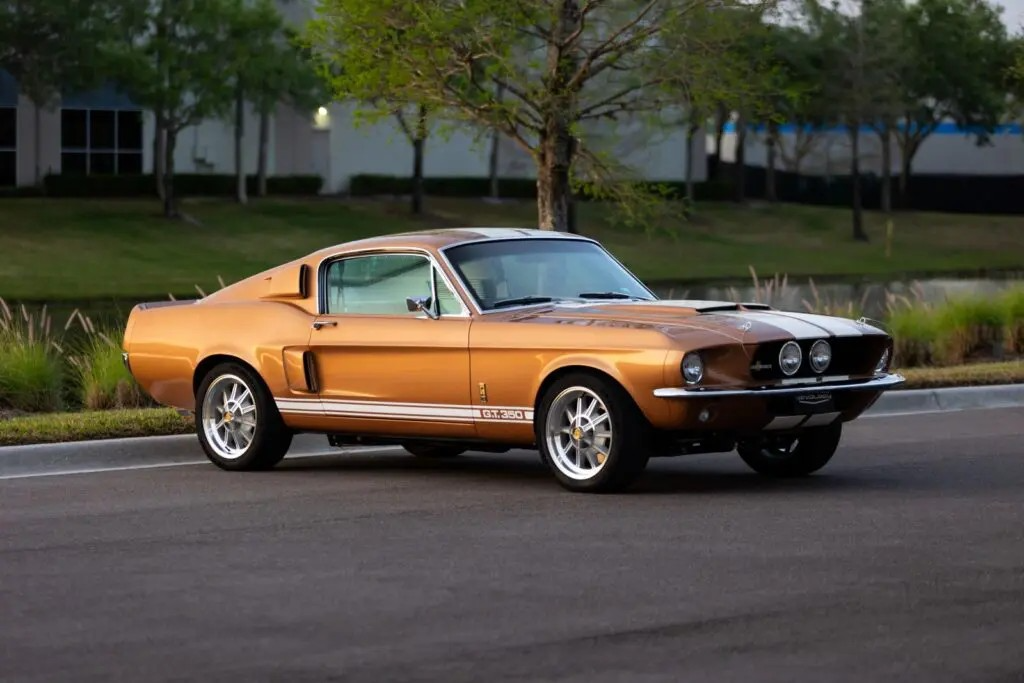
The story of the 1967–1968 Shelby GT Mustangs begins with the visionary Carroll Shelby, whose collaboration with Ford produced some of the most iconic muscle cars of the era. In the early 1960s, Shelby transformed the standard Mustang into a high-performance legend with the original 1967 Shelby GT350 classic. By 1967–1968, Ford and Shelby had perfected their craft, creating race-ready but street-legal machines that competed head-to-head with powerhouses from Chevrolet and Pontiac.
During this time, America was immersed in the famed muscle car wars, where every automaker pushed for more power and flash. Shelby’s role was pivotal, equipping Mustangs with tricked-out engines, suspension tweaks, and aggressive styling that put them on par with the GTO and Chevelle.
According to the Shelby Registry, a combined total of 7,674 Shelby Mustangs rolled off the production line in 1967–1968, leaving a mark on both racing circuits and suburban driveways. Their high-performance reputation only grew through endurance races, drag strips, and street lore.
In essence, the Shelby GT models leveraged Shelby’s racing heritage to make a statement: American muscle could be both powerful and refined, a legacy explored in the history of Shelby GT from racing legend to classic car, challenging the status quo of muscle car culture.
History of the 1967-1968 Shelby GT Models
The story of the 1967–1968 Shelby GT Mustangs is rooted in Carroll Shelby’s visionary collaboration with Ford, which reshaped the automotive world during the height of the muscle-car era. In the early 1960s, Shelby, already renowned for his racing successes, saw potential in transforming the popular Ford Mustang into a potent performance icon, a path that began with the 1967 Shelby GT500 powerful Mustang.
Muscle cars in this era weren’t just about raw power; they symbolized cultural pride and engineering innovation. Shelby American, initially operating out of Venice, California, led the early production before Ford assumed more engineering control in 1967, allowing for larger engines like the 390 and 428 to keep pace with competition.
In terms of production, Shelby’s contribution was exclusive yet impactful. In 1967, a total of 3,240 Shelby GT Mustangs were built: 1,175 GT350 fastbacks, 2,048 GT500 fastbacks, one GT500 convertible, one coupe, and several competition models (Shelby production data). By 1968, production rose to 4,451 Shelby Mustangs, including 933 GT500KR “King of the Road” fastbacks (Shelby production history).
These numbers reflect more than just manufacturing output; they mark Shelby’s influence on the American performance market. The limited-run Shelby Mustangs of 1967–1968 were more than cars; they were status symbols that cemented Ford’s position at the forefront of the muscle-car movement.
The Shelby and Ford Partnership
The collaboration between Shelby American and Ford began in 1964 when Carroll Shelby, seeking to convert the Mustang into a full-fledged race car, approached Ford with a bold proposal. Ford agreed, sending partially assembled Mustangs to Shelby’s Los Angeles workshop, where they received enhanced suspension, stripped interiors, and Husky horsepower upgrades, ushering in the legendary Shelby GT350.
This partnership was built on mutual trust: Ford supplied the base cars, engineering resources, and big-block powerplants, while Shelby brought race-ready modifications, branding, and performance credibility to the project.
By 1967, the alliance matured with the introduction of the GT500, powered by a wear-tested 428-cubic-inch Police Interceptor V8 sourced directly from Ford’s parts inventory. This muscle-car legend combined Mustang’s agile bodywork with Shelby’s chassis tuning and dealership fit-outs, proving powerful enough to go toe-to-toe with rivals like Pontiac’s GTO.
Production for 1968 also shifted to A.O. Smith’s Ionia plant, enabling Ford to scale up production and maintain quality. This move underscored Ford’s deeper integration with Shelby and ensured that Shelby Mustangs, equipped with heavier suspension, disc brakes, and stamped Shelby panels, arrived factory-approved and showroom-delivered.
Evolution from 1965–1966 to 1967–1968
From 1965 to 1968, the Shelby Mustang underwent a dramatic transformation, both inside and out, as the muscle-car arms race intensified.
Styling Transformation
The original 1965–1966 Shelby GT350 featured minimalist racing touches: fiberglass spoilers, side stripes, and lever-style steering wheels. In contrast, the 1967 redesign ushered in a wider grille, sculpted front fenders, and an aggressive chin spoiler to accommodate larger 390 and 428 engines.
Performance Upgrades
Mechanically, the evolution was equally significant. By 1967, Shelby Mustangs boasted heavy-duty suspension: H-grade front springs, thick anti-roll bars, and friction-management Koni shocks that outmatched the competition in handling. The optional 428 Cobra Jet V8 offered output near 400 hp, drastically improved over earlier 289 cubic-inch V8s, resulting in drag strip-ready acceleration with quarter-mile times in the high-14-second range.
Ultimately, the 1967–1968 Shelby Mustangs were not just evolutions; they were revolutions in Ford’s performance strategy. With stronger motors, sharper handling, and unstoppable styling, they cemented Shelby’s dominance during a high-voltage era in muscle-car history.
Key Features of the 1967–1968 Shelby GT Models
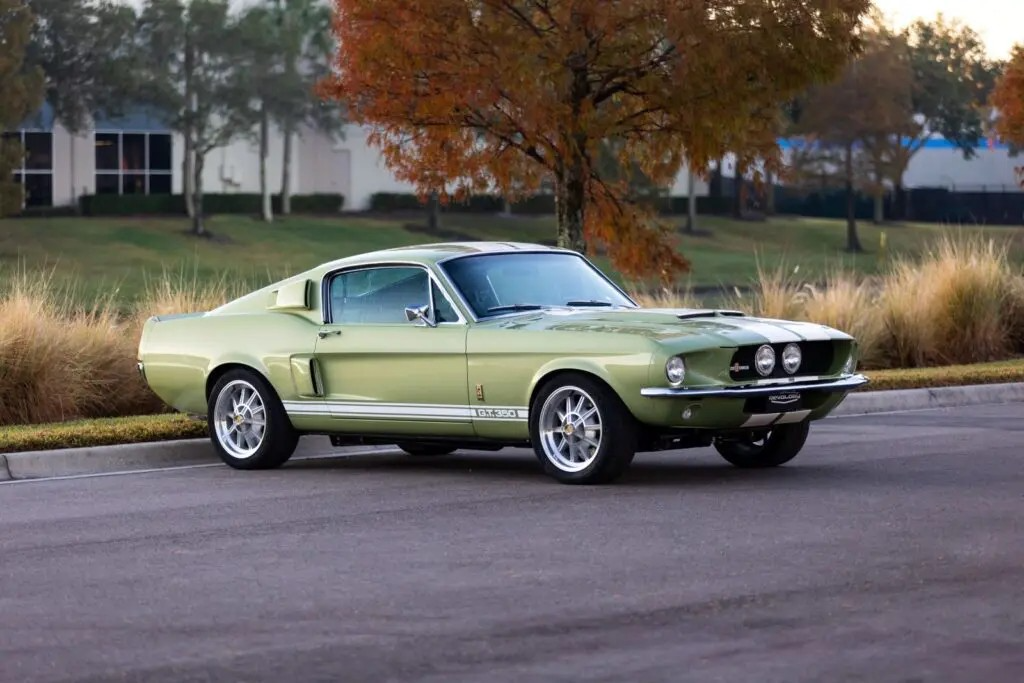
The 1967–1968 Shelby GT Mustangs combined raw muscle with distinctive styling and driver-focused upgrades, creating some of the most sought-after American performance cars of the 1960s. They were available in two main trims: the track-inspired Shelby GT350 and the big-block powerhouse Shelby GT500, each offering unique specifications that set them apart from standard Ford Mustangs.
From engine variety to styling signatures and interior craftsmanship, these cars were designed to dominate the streets while offering an unmistakable Shelby presence.
Engine Options and Performance
The 1967–1968 Shelby GT lineup offered a range of V8 powerplants tailored for different driving personalities, each paired with heavy-duty transmissions and suspension upgrades.
- 289 cu in Hi-Po V8 (GT350): Rated at 306 hp and 329 lb-ft of torque, this high-revving small-block offered brisk acceleration and agile handling, with quarter-mile times averaging 15.3 seconds.
- 390 cu in FE V8 (1967 option): Produced 320 hp with abundant mid-range torque, ideal for spirited street driving.
- 428 cu in Police Interceptor V8 (GT500): Delivering 355 hp and 420 lb-ft of torque, this engine transformed the GT500 into a true highway stormer.
- 428 Cobra Jet V8 (1968): An underrated powerhouse rated at 335 hp (actual output closer to 400 hp) and capable of 13.9-second quarter-mile runs with proper gearing.
Road tests from the era frequently recorded 0–60 mph times under 6.5 seconds for the GT500, putting it in direct competition with the Chevrolet Corvette and Pontiac GTO, strengthening the Shelby GT500 legacy with Carroll Shelby
Design and Styling Features
The Shelby GT’s styling was unmistakable, with aggressive and aerodynamic enhancements that set it apart from a stock Mustang:
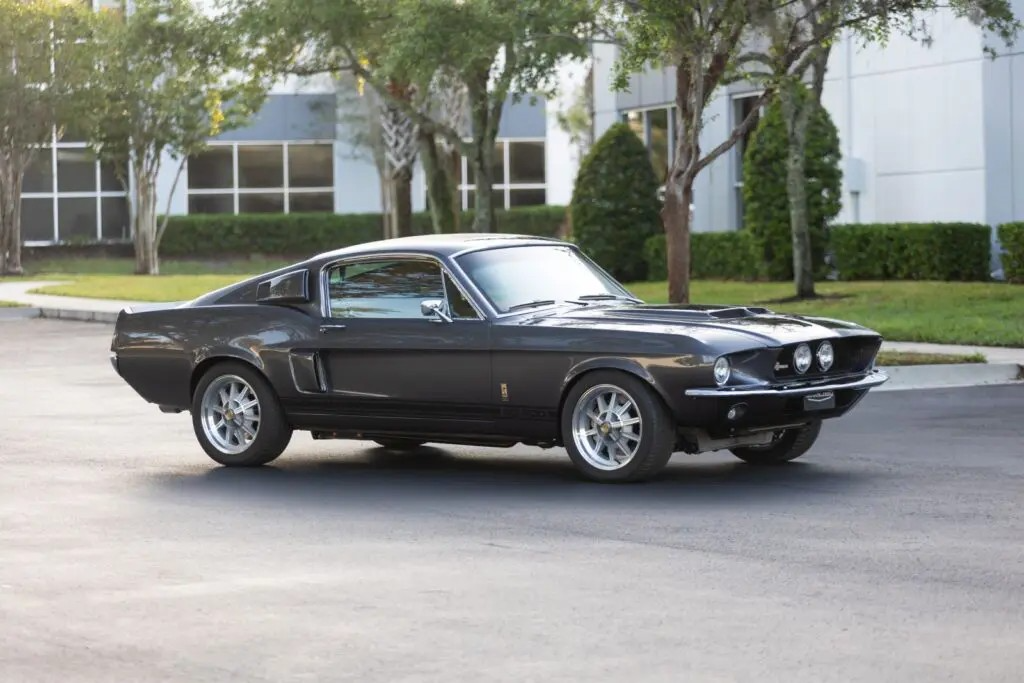
- Custom Grille & Inset Driving Lamps: Unique to Shelby, giving a bold, race-bred front view.
- Fiberglass Hood with Functional Scoop: Improved airflow and cooling for the performance engines.
- Side Stripes & Shelby Lettering: Running along the lower body, instantly recognizable on the street.
- Sequential Rear Taillights: Sourced from the 1965 Thunderbird, adding flair to the rear end.
- Fastback Roofline: Contributing to both aesthetics and improved aerodynamics.
These visual cues gave the Shelby a predatory stance, often described in period reviews as “the Mustang turned heavyweight prizefighter.”
Interior Features and Comfort
Inside, the 1967–1968 Shelby GT blended muscle car aggression with driver-focused comfort:
- High-Back Sport Bucket Seats: Upholstered in premium vinyl for support during high-speed cornering.
- Wood-Rimmed Steering Wheel: A racing-inspired touch for better grip and feel.
- Full Rally Instrumentation: Including 140-mph speedometer and 8,000-rpm tachometer.
- Optional Roll Bar with Harness Belts: To reinforce its racing heritage.
These interior touches elevated the Shelby experience from a standard pony car to a driver’s cockpit, where luxury met high performance.
Performance and Handling of the 1967–1968 Shelby GT Models
The 1967–1968 Shelby GT cars were engineered to be more than just straight-line bruisers; they were designed to handle, brake, and accelerate like true performance machines. Shelby America re-engineered the Mustang platform with stiffer suspension, stronger brakes, and aerodynamic tweaks, resulting in cars that could compete both on the street and on the track.
Some performance figures of Shelby GT models are,
- 0–60 mph: As quick as 6.5 seconds in the 1968 GT500 with the 428 V8 Engine
- Quarter-Mile: Mid–15-second runs at over 105 mph in stock form
When compared to rivals such as the Chevrolet Camaro Z/28 and Pontiac GTO, the Shelby GT often had the edge in real-world acceleration.
Suspension and Handling Enhancements
To transform a standard Mustang into a Shelby GT, Carroll Shelby’s team didn’t just swap engines; they re-engineered the chassis to deliver sports-car-like handling in a muscle car body. The work began with stiffer coil springs and heavy-duty shocks, which significantly reduced body roll during aggressive cornering and improved steering precision.
Both the front and rear ends received anti-sway bars, further enhancing stability through tight corners and high-speed sweepers. These bars worked to minimize lean and keep the tires planted, allowing the Shelby GT to carry more speed through turns than its factory Mustang counterpart.
When compared to the average muscle car of the era, many of which were designed primarily for straight-line drag racing, the Shelby GT’s suspension package stood out. It provided a tighter, more responsive, and more balanced feel, giving drivers a machine that could dominate on the drag strip yet remain composed and predictable in fast, sweeping curves.
Driving Performance and Real-World Experience
Period road tests from respected publications like Car and Driver and Road & Track frequently praised the Shelby GT for delivering a race-ready driving experience without making too many compromises in everyday comfort. Even in traffic or during a relaxed cruise, the car retained an air of purpose, reminding the driver that it was always ready to unleash its full potential at a moment’s notice.
In terms of acceleration, the 428 Cobra Jet found in the ’68 GT500 was a standout performer. Producing immense torque from very low RPMs, it launched the car forward with an urgency that only a few competitors could match.
Braking was another area where the Shelby excelled. Equipped with power-assisted front disc brakes, the GT models offered strong, fade-resistant stopping power. Repeated hard stops during testing showed minimal brake fade, a testament to Shelby’s focus on performance under demanding conditions. For today’s owners, pairing that legacy with the best tires and wheels for 1967 Shelby GT500 restoration ensures the same edge in both safety and spirited driving.
Legacy and Impact of the 1967-1968 Shelby GT Models
The 1967–1968 Shelby GT350 for sale and Shelby GT500 remain among the most iconic and influential muscle cars ever produced, representing the perfect blend of Ford engineering and Shelby American racing expertise. These models did more than just dominate the streets and drag strips of the late 1960s; they reshaped the performance car market and solidified Carroll Shelby’s reputation as a master of turning production vehicles into championship-grade machines.
Their legacy is deeply embedded in American automotive history, with enthusiasts regarding them as the pinnacle of the classic muscle car era. Whether prowling Woodward Avenue or tearing down a quarter-mile strip, the 1967–1968 Shelby GTs became symbols of speed, style, and exclusivity.
Collectibility and Market Value
Today, the 1967–1968 Shelby GT models are among the most coveted classic cars in the collector market. Well-preserved or fully restored examples, especially those with matching numbers and original 428 Cobra Jet or 289 HiPo V8 engines, routinely command six-figure prices at high-profile auctions such as Mecum and Barrett-Jackson.
- GT350 Models: Typically fetch between $150,000–$250,000 depending on originality, mileage, and documented history.
- GT500 Models: Scarce versions, like the 1968 GT500KR (King of the Road), have sold for $300,000+ in concours condition.
- Special Editions: Limited-production cars with rare color combinations or Shelby American factory modifications can exceed $400,000 in competitive bidding.
The collector market for these cars has shown steady appreciation over the last two decades, with a surge in demand driven by Boomer nostalgia, investment potential, and the increasing rarity of untouched examples.
Restoration shops specializing in Shelbys have waiting lists, as enthusiasts are willing to invest heavily to bring these cars back to their showroom glory.
Influence on Modern Muscle Cars
The DNA of the 1967–1968 Shelby GT lives on in today’s Ford Shelby Mustang GT500 for sale, a car that continues the tradition of aggressive styling, high horsepower, and track-capable performance. The Cobra Jet heritage, introduced as a racing engine in the late ’60s, is still celebrated in Ford’s modern drag-strip-focused variants.
Modern suspension systems, advanced aerodynamics, and supercharged engines may have replaced the raw mechanical simplicity of the ’60s. Still, the core philosophy remains unchanged: build a Mustang that outperforms expectations and stands apart from the rest of the pack.
How to Identify a 1967-1968 Shelby GT Model
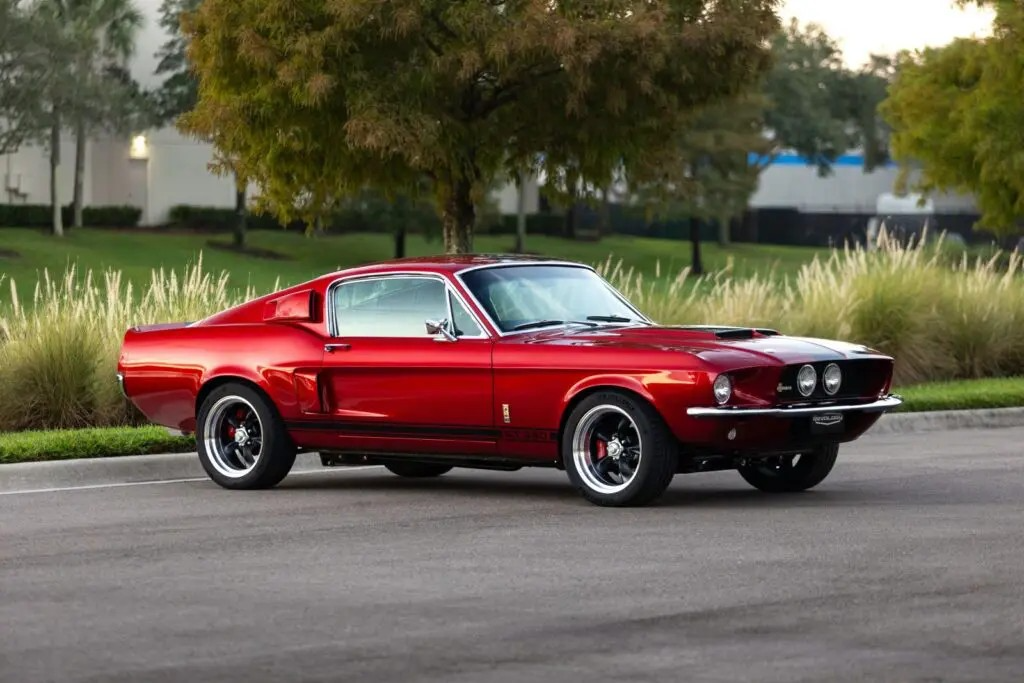
Authenticating a 1967-1968 Shelby GT model requires careful examination of documentation, vehicle identification numbers, and unique physical traits that set it apart from standard Mustangs of the same era. Because these cars are among the most replicated and cloned muscle cars in history, knowing what to look for is essential to avoid costly mistakes.
From decoding factory VINs to spotting period-correct Shelby-specific components, proper identification can make the difference between a genuine collectible and a cleverly disguised replica.
VIN Decoding and Documentation
One of the most reliable ways to confirm the authenticity of a 1967-1968 Shelby GT is by decoding its Vehicle Identification Number (VIN) and cross-referencing it with official Shelby production records.
- Location of the VIN: The VIN can typically be found on the driver’s side dashboard (visible through the windshield), stamped on the inner fender apron, and on the vehicle’s title.
- Shelby-Specific VIN Codes: While the base VIN follows Ford’s Mustang structure, genuine Shelby GT models have unique production numbers assigned by Shelby American. For example, ’67 Shelby VINs often start with “7R” for the San Jose assembly plant, followed by a sequence tied to Shelby’s registry.
- Engine & Build Codes: Decoding will reveal the original engine type, such as the 428 Police Interceptor or Cobra Jet, and other build details like transmission type, body style, and model designation (GT350 or GT500).
- Supporting Documentation – Factory build sheets, dealer invoices, and Marti Reports are critical for verification. Cross-checking these with the Shelby American Automobile Club Registry can provide additional confirmation.
Common Misidentifications
The popularity and high value of the Shelby GT have led to countless clones, restomods, and tribute builds that often fool inexperienced buyers. Common pitfalls include:
- Badge Swapping: Adding Shelby GT emblems and stripes to a standard Mustang is one of the easiest ways to create a fake. Genuine models feature correct placement, size, and style of badges unique to their production year.
- While many aftermarket suppliers produce Shelby-style hoods, scoops, and taillights, the fit and finish often differ from original factory-installed components.
- Engine Substitutions: Some replicas use non-original engines painted and dressed to look period-correct. Authentic Shelbys will have matching engine codes tied to the VIN and production record.
- Over-Restoration: Excessively modernized interiors, digital gauges, or performance upgrades may indicate the car has been heavily modified, which can affect its collectible status.
By studying historical specifications, consulting experts, and cross-referencing data with official registries, buyers can protect themselves from purchasing an inaccurate or misrepresented vehicle.
Restoration and Maintenance of the 1967-1968 Shelby GT Models
Restoring a 1967-1968 Shelby GT model is as much about preserving its historical value as it is about reviving its performance. Whether you’re aiming for a concours-quality rebuild or a subtle performance enhancement, every decision should balance authenticity with drivability.
From sourcing genuine Shelby parts to employing restoration techniques faithful to the era, a well-executed project not only revitalizes the car but also protects its long-term value. Many enthusiasts consult expert guides, such as how to spot a real 1967 Shelby GT350 vs. replica, to ensure they follow proven methods and avoid costly mistakes.
Restoring the Engine and Performance
The engine is the soul of the Shelby GT. Here’s how to restore or upgrade while staying true to its heritage:
- Use date-coded engine components: Seek blocks, heads, carburetors, and manifolds matched to your car’s production year. Catalogs like Shelby Parts and Restoration list verified originals.
- Rebuild to factory specifications: Stick to original bore sizes, compression ratios, and cam profiles unless enhancing for improved longevity (like electronic ignition or high-flow water pumps).
- Discreet performance upgrades: Aluminum radiators, dual-feed carbs, and roller rockers enhance performance without altering the Shelby’s period-correct appearance.
- Dyno validation: After assembly, purpose-built dyno tuning ensures your power band and fuel mixture align with factory performance expectations.
Bodywork and Exterior Restoration
Visually restoring a Shelby GT relies on attention to detail and craftsmanship:
- Authentic panel replacements: Shelby used fiberglass hoods and scoops beginning in 1967. Virginia Classic Mustang’s rear-end assembly details show how correctly refurbishing non-steel parts preserves the right look.
- Period-accurate paintwork: Choose original Ford colors like Wimbledon White or Acapulco Blue and apply traditional single-stage enamel or restored two-stage finishes to replicate the original sheen.
- Correct trim and badging: Use genuine Shelby hardware for rocker panel stripes, tail lamp bezels, grille-mounted fog lamps, and “Cobra” emblems, not aftermarket replicas that lack factory precision.
- Chrome restoration: Rechrome bumpers, mirrors, and trim rather than replacing them, preserving the exact texture and depth of the original finish.
Cost of Owning and Restoring a 1967–1968 Shelby GT Model
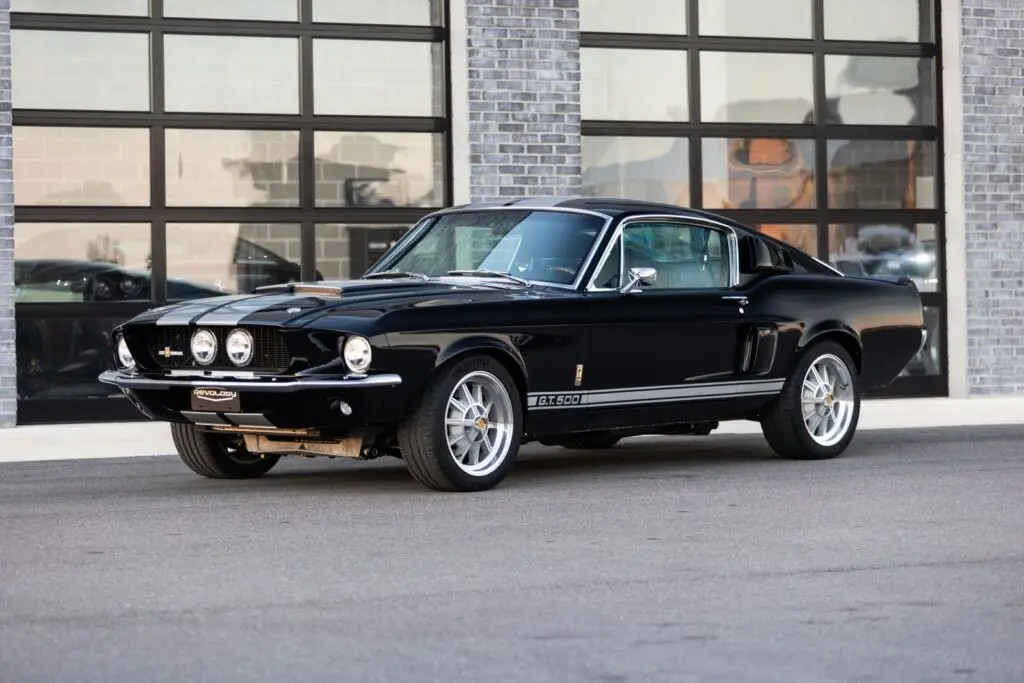
Restoring and owning a 1967–1968 Shelby GT is a labor of love, investment, and sometimes, financial acrobatics. Don’t let its iconic appeal cloud your budgeting; these cars demand serious resources, both initially and over time. Here’s a detailed breakdown, supported by trusted sources:
Restoration Cost Breakdown
1. Engine & Drivetrain Rebuild
Rebuilding a period-correct V8, from the 289 to the 428 Cobra Jet, typically runs $6,000–$12,000, depending on precision machining and performance tuning. A full drivetrain refresh (transmission, differential) can push the total to $15,000+, reflecting the high cost of authenticity and reliability.
2. Bodywork & Paint
A high-quality restoration often includes rust removal, panel alignment, repainting of fiberglass hoods/scoops, and final detailing. According to Hemmings, body and paint costs can easily exceed $30,000, particularly for concours-level finish and attention to detail. Budget restoration shops typically charge $85–$125/hour.
3. Interior and Trim
Restoring seats, dash, consoles, and Shelby-specific hardware can cost $5,000–$12,000, depending on material choices and authenticity of parts.
4. Labor and Hidden Costs
Restoration labor can amount to $40,000–$70,000 for complete builds in professional shops. Especially with concours-quality standards, expect final tallies to exceed $70,000, primarily influenced by labor rates and parts availability.
Market Value and Investment Potential
The 1967–1968 Shelby GT models are not only automotive icons but also highly sought-after collectibles, making them an attractive investment for classic car enthusiasts. Original and fully restored Shelby GT models command premium prices in today’s collector car market.
For instance, a well-preserved 1967 GT350 for sale in excellent condition can sell for anywhere between $250,000 and $350,000, while a restored 1968 GT500 often fetches $300,000 to $450,000, depending on provenance, originality, and included options. But, limited-production variants such as the GT350H (Hertz rental edition) are even more valuable due to their unique history, part of why the 1967 Shelby GT350 is highly desired among collectors today.
Collectors who invest in 1967–1968 Shelby GT models often see strong returns over time. The classic muscle car market has proven resilient, with Shelby GT prices generally increasing 5–8% annually over the last decade. Cars with documented racing history, low mileage, or unique factory options often exceed market averages, making them a solid long-term investment.
FAQs
How much does a 1967 Shelby GT350 or GT500 cost today?
The price of a 1967 Shelby GT350 or GT500 varies widely based on condition, originality, and restoration. A well-maintained GT350 typically ranges from $250,000 to $350,000, while a fully restored GT500 can sell for $300,000 to $450,000, with rare models like the GT350H exceeding $500,000.
What are the most common problems with 1967 Shelby GT models?
Owners often face issues such as rust in floor pans, wheel wells, and lower body panels. Engine wear, including camshaft, valve, and carburetor deterioration, is common, particularly in unrestored cars. Brake and suspension systems may also require attention to maintain safe and reliable performance.
How can I restore my 1967 Shelby GT350 or GT500?
Restoration involves a careful balance of authenticity and performance. Engine rebuilding should use period-correct parts for the 289 V8, 390 V8, or 428 Cobra Jet. Bodywork restoration includes panel repair, chrome trim refurbishment, and repainting in historically accurate Shelby colors. Interior work may involve bucket seat refurbishment, dashboards, and GT-specific badges.
How do I identify a 1967 Shelby GT350 or GT500?
Authenticity can be verified through VIN decoding, engine codes, and GT-specific badging. Matching numbers for engine, transmission, and chassis, along with correct stripes and interior trim, are essential identifiers.
What is the difference between a Shelby GT350 and GT500?
The 1967 GT350 focuses on handling and lightweight performance, powered by a 289 V8 producing around 306 hp, ideal for road racing and spirited driving. The GT500 emphasizes straight-line power with larger engines like the 428 Cobra Jet, producing 355–360 hp, featuring aggressive styling cues such as dual hood stripes, distinctive badges, and hood scoops.
Own a Legendary Piece of Muscle Car History
For enthusiasts, owning or restoring a Shelby GT offers the chance to experience authentic muscle car performance while preserving a piece of automotive heritage. Whether you’re looking to purchase an original model, restore a classic GT, or learn more about collecting these legendary cars, there are resources and experts available to guide every step of the journey.
Take action today to explore the Revology Cars to secure your own Shelby GT masterpiece, ensuring this slice of automotive history continues to inspire future generations.