

The 1967 Shelby GT500 emerged during a period of intense competition among American automakers, when manufacturers pushed engine output, chassis capability, and overall performance beyond previous limits. As power demands increased and engineering programs accelerated, the GT500 distinguished itself through displacement, torque delivery, and authoritative road presence. It became a response to a market that expected measurable improvements in acceleration and high-speed stability.
The late 1960s represented a peak in factory performance development as original equipment manufacturers sought to lead in horsepower and vehicle dynamics. The GT500 arrived as engineers searched for ways to translate racing insights into street-legal performance packages, raising expectations for capability and refinement.
This guide explores the factors that allowed the 1967 GT500 to define performance expectations and why it continues to represent a meaningful milestone in muscle car development.
The Origins of the 1967 GT500 and Its Impact on Muscle Car Engineering
The 1967 GT500 emerged during a period of increasing focus on factory performance. Manufacturers strengthened platforms and powertrain packages as consumer expectations for power and acceleration continued to grow.
Carroll Shelby’s Performance Philosophy
Carroll Shelby prioritized functional performance over stylistic enhancements. His approach centered on extracting measurable gains in acceleration, handling, and braking through race-inspired engineering. Shelby emphasized weight distribution, airflow management, and the use of high-displacement engines to deliver strong torque across the rev range. This philosophy guided early Shelby Mustangs and influenced the development direction of the GT500.
How the GT350 Paved the Way for the GT500
The 1965 GT350 served as the starting point for Shelby’s factory performance program. It introduced upgraded suspension geometry, larger performance-oriented brakes, and improved intake and exhaust flow for higher output. These engineering upgrades demonstrated the viability of street-legal performance tuning and created demand for greater displacement and power, with the GT500 being introduced in 1967.
Market Demand for Bigger, More Powerful Muscle Cars
By the mid-1960s, rising consumer interest in straight-line speed and strong mid-range acceleration drove manufacturers to increase V8 displacement and torque ratings. This market momentum set the stage for the GT500, illustrating how the 1967 Shelby GT500 stands out by delivering significantly greater engine output compared to earlier production Mustangs.
Power that Redefined the Muscle Era
The 1967 GT500 established a new threshold for factory-delivered performance. Its engine configuration, induction system, and drivetrain calibration positioned it among the most capable production cars of its time, shaping expectations for big-block muscle cars.
The 428 Police Interceptor V8
The 1967 GT500 used the 428 cubic inch Police Interceptor V8 sourced from Ford’s heavy-duty engine program. This big-block featured a cast-iron block and FE-series cylinder heads with strong torque characteristics. The 428PI was selected for its durability and strong output potential, making it suitable for high-performance applications.
Dual Quad Carburetion
Shelby equipped the 428PI with two Holley four-barrel carburetors mounted on an aluminum intake. The dual quad arrangement increased airflow capacity, improved mixture distribution under load, and supported higher peak fuel demand at wide open throttle. This configuration allowed the engine to sustain strong torque delivery across the mid-range.
Factory Horsepower and Torque Ratings
The 1967 GT500 carried a published rating of 355 horsepower at 5400 rpm and 420 pound-feet of torque at 3200 rpm. These were SAE gross ratings, reflecting output measured with no accessories attached. Period industry analyses suggest the actual installed output was often higher than published values due to conservative factory reporting practices.
Real World Performance Reputation Versus Published Numbers
Enthusiast testing and period road evaluations frequently recorded performance results that exceeded expectations based on the published horsepower figures. The combination of high displacement, strong torque curve, and efficient induction contributed to performance characteristics that felt stronger than official data suggested. This helped establish the GT500’s reputation for delivering more capability than advertised.
Acceleration Benchmarks of the Era
Period test data from automotive publications recorded approximate zero-to-sixty acceleration in the mid-six-second range and quarter-mile performance in the high fourteen-second bracket. These results placed the GT500 among the quickest factory-produced American cars of 1967 and reinforced its status as a benchmark for muscle car acceleration.
Engineering Innovations that Set New Expectations
The 1967 GT500 demonstrated that factory-produced muscle cars could offer more than straight-line power. Shelby American integrated chassis enhancements, braking improvements, airflow management features, and weight-conscious components to support reliable high-speed performance and handling stability.
Shelby Tuned Suspension and Handling Focus
Suspension upgrades for the GT500 included revised spring rates, heavy-duty shock absorbers, and reinforced suspension components designed to manage the increased mass and torque of the 428 engine. Steering system adjustments improved directional control, and chassis calibration emphasized stability during acceleration and cornering. These refinements contributed to a more controlled ride compared to standard Mustang configurations.
Braking Capability Relative to Competitors
The GT500 incorporated power-assisted front disc brakes paired with larger rear drum assemblies to improve stopping capability under repeated use. The inclusion of front discs distinguished the model from competitors that still used drum brakes at all four wheels. Brake cooling and system durability supported higher performance driving demands and reduced fade under load.
Aerodynamic Upgrades and Functional Hood Scoops
Fiberglass body components such as the hood allowed Shelby to integrate functional hood scoops and air extractors, improving engine cooling and intake airflow. Extended nose styling and revised front-end elements also supported airflow management at speed, slightly reducing lift. These features demonstrated an early factory focus on aerodynamic considerations within the muscle car segment.
Lightweight Components and Performance First Design
Use of fiberglass materials for select body panels reduced mass compared to steel components and enabled more aggressive shape control. These performance-oriented interior and exterior elements prioritized function, focusing on improving airflow, traction, and system durability rather than simply aesthetic embellishment, even though the GT500 remained heavier than standard Mustangs due to its big-block engine and reinforced components.
Design Identity: Why the GT500 Looked Like Nothing Else
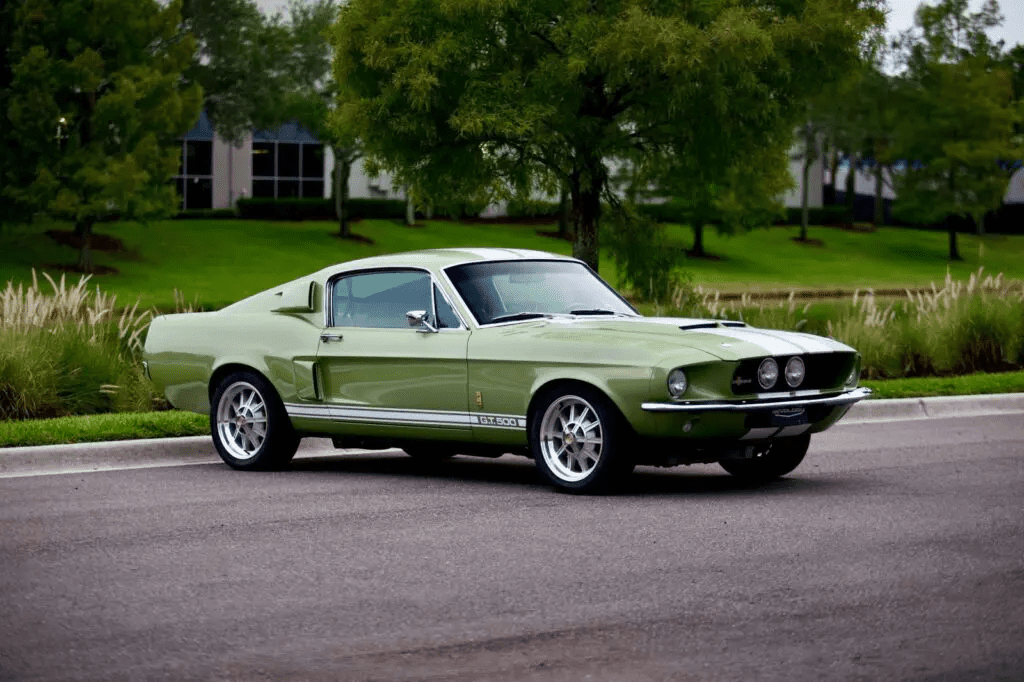
The 1967 Shelby GT500 stood apart visually from other Mustang variants because Shelby American gave it a comprehensive exterior redesign that signaled performance intent. Instead of merely adding cosmetic trim, these functional design choices reflected engineering priorities, such as airflow and cooling, and took a more purposeful stance than the base Mustang.
Long Nose Aggressive Stance
To accommodate the larger V8 and enhance its road presence, the GT500 received an extended front nose section, longer and more sculpted than the standard Mustang body panels. This unique fiberglass nose, with its deeper cowling for the lights and broader hood area, gave the car a visually aggressive stance and balanced proportions suited to its performance character.
Signature Dual Stripes and Racing Aesthetics
The twin longitudinal stripes running from front to rear became an iconic visual hallmark of Shelby Mustangs. While visually striking, these stripes also linked the GT500 to racing tradition and Shelby’s competition heritage. They helped distinguish the car from standard Mustangs and communicated a performance-oriented identity at a glance.
Fiberglass Components
Shelby used fiberglass extensively on the 1967 GT500’s front end, hood, and deck lid to achieve shapes that were not practical with stamped steel and to shave weight where possible. These unique choices are key when comparing classic muscle cars competing with the 1967 Shelby GT500, as fiberglass enabled molded forms that enhanced both aesthetic presence and functional airflow.
Functional Vents and Scoops
The hood scoop on the 1967 GT500 was not purely decorative; it aided airflow to the engine compartment. In addition, side and brake cooling scoops helped with heat dissipation during spirited driving. These functional opening designs reflected a performance mindset in which exterior styling served measurable utility rather than mere visual effect.
What Made the GT500 a Cultural Phenomenon
The 1967 GT500 became more than a high-performance car. Its engineering, aggressive styling, and exclusivity helped it take on symbolic meaning for American performance culture. It represented the ideal of mechanical power and capability that enthusiasts associated with the peak of the muscle car era.
The Emerging Image of the American Performance Hero
Carroll Shelby became widely associated with racing success and American engineering ambition through the Cobra and Ford racing programs of the mid-1960s. The GT500 strengthened that connection by bringing performance attributes once reserved for competition settings into a street-legal package. The car came to represent the idea that American ingenuity and engineering could produce high output vehicles that competed with global performance benchmarks.
Pop Culture Appearances That Cemented Its Status
The 1967 GT500 gained renewed popularity after its appearance as “Eleanor” in the 2000 remake of Gone in 60 Seconds, where it served as the hero car. Although modified for the film, its on-screen role introduced the GT500 to new audiences and reinforced its association with dramatic performance and aspiration among enthusiasts.
Influence on 1960s Enthusiast Communities
During the late 1960s, performance-oriented car clubs and enthusiast groups grew rapidly in the United States. The GT500 became a sought-after platform within these communities due to its big block torque, factory-backed performance identity, and Shelby brand heritage. Owners valued its tunability and performance credibility, which contributed to a strong following and helped establish the GT500 as a reference point for serious muscle car enthusiasts.
Competitive Landscape: How the GT500 Raised the Bar
By 1967, the muscle car market was crowded with factory performance models offering increasingly larger V8 engines and higher output ratings. The GT500 entered this environment as Ford’s most powerful factory Mustang at the time, representing a step toward big block performance in a compact fastback platform.
Comparison with Contemporary Competitors
Automakers across Detroit introduced or expanded big-displacement performance lines in 1967. Chevrolet released higher-output versions of the Camaro, Pontiac introduced Firebird performance packages, and Dodge expanded its midsize performance offerings. These vehicles reflected a growing expectation that factory muscle cars should deliver substantial power and acceleration from showroom floors.
- Chevrolet Camaro SS: The 1967 Camaro SS offered an available 396 cubic-inch big-block V8, positioning it as a factory performance competitor focused on strong straight-line performance.
- Pontiac Firebird 400: Pontiac introduced the Firebird with an optional 400 cubic inch V8 that delivered substantial torque, supporting mid-range acceleration suited to street performance.
- Dodge Charger and 1968 Plymouth Road Runner: Dodge and Plymouth offered big-block-powered intermediate models that emphasized straight-line acceleration, contributing to Chrysler’s expanding late-1960s performance presence.
Why the GT500 Offered Something Others Did Not
The GT500 differed from many competitors by combining a high-displacement big block engine with the styling and compact footprint of a unibody pony car platform. While it shared engine size with intermediate muscle cars, its relatively compact dimensions and Shelby-brand tuning focus positioned it uniquely among 1967 performance models.
How Rivals Responded to Its Arrival
Other manufacturers continued expanding their big-block and high-output engine offerings as the performance competition intensified through the late 1960s. The GT500 contributed to the industry’s momentum toward increased displacement, higher published horsepower ratings, and performance-oriented suspension and brake systems in subsequent model years.
Mechanical Personality: The Experience Behind the Wheel
The 1967 GT500 delivered a driving experience defined by its large-displacement engine, tuned chassis, and mechanical control systems. Drivers felt significant torque response at lower engine speeds, along with the direct feedback common in late-1960s performance cars.
Big Block Power with Street Drivability
The 428 cubic inch Police Interceptor V8 produced strong low and mid-range torque, allowing the car to accelerate confidently without requiring high rpm. Despite its output potential, the engine remained suitable for street use due to smooth torque delivery, relatively flexible gearing, and carburetion that allowed consistent operation in everyday driving conditions.
Race-Inspired Feel but Accessible Performance
Shelby tuning practices drew from experience with racing programs, influencing suspension calibration, braking selection, and airflow design. However, the GT500 remained engineered as a street-legal vehicle that could be driven regularly. This balance between competition influence and street usability helped distinguish it.
Driver Connection Through Raw Mechanical Response
Like many performance cars of the period, the GT500 lacked electronic driver aids and featured mechanical steering, braking, and throttle systems. This produced strong sensory feedback, which is why choosing the best tires and wheels for a 1967 Shelby GT500 is critical for maintaining that direct mechanical engagement between driver and vehicle.
Legacy: The GT500’s Influence on Future Performance Cars
The 1967 GT500 left a measurable legacy, influencing factory power trends, later Shelby development, and modern muscle-car engineering priorities.
Factory Horsepower Escalation in the 1970s
The GT500 responded to consumer appetite for large-displacement performance, contributing to the horsepower escalation among major U.S. automakers in the late 1960s and early 1970s. Manufacturers increased published power ratings and expanded big-block offerings before regulatory pressures and fuel-economy concerns led to widespread power reductions mid-decade.
Blueprint for Future Shelby Models
Key principles from the 1967 GT500 carried forward into later Shelby programs: big displacement engines, racing-inspired functional exterior components, and chassis upgrades that matched power increases. Even when Shelby production shifted away from Ford platforms, the philosophy of performance through integrated engineering persisted, influencing how future Shelby-branded cars were developed.
Influence on Modern Muscle Car Engineering
The GT500 demonstrated that factory cars could combine significant torque, functional aerodynamic elements, and upgraded chassis systems in a cohesive package. This balance of power and control informed later engineering approaches applied across modern muscle platforms that emphasize structure, braking, and airflow alongside raw output.
Ongoing Demand Among Collectors and Enthusiasts
Demand for original GT500 examples remains strong due to their limited production volume, historical significance, and association with Carroll Shelby. Collectors value documented originality, correct components, and provenance, while enthusiasts continue to regard the GT500 as a milestone in the evolution of American performance.
Why the 1967 GT500 Remains the Benchmark Today
The 1967 GT500 continues to be regarded as a benchmark because it demonstrated factory performance engineered with clear purpose and a strong identity grounded in Carroll Shelby’s legacy.
Symbol of American Performance Capability
The GT500 remains closely associated with peak American muscle-car performance. Its large displacement engine, functional exterior elements, and performance-focused chassis calibration reflected the engineering priorities of the era and helped define expectations for factory street performance.
Proof That Power, Engineering, and Identity Can Coexist
The GT500 balanced high torque output with tuning and structural upgrades suited to increased load and a distinctive visual language that immediately communicated performance intent. It showed that a production car could combine mechanical strength with recognizable brand identity.
Enduring Emotional and Cultural Appeal
The raw mechanical character of the GT500 and its connection to Carroll Shelby’s performance philosophy continue to influence enthusiast culture. The car represents a period when factory performance emphasized mechanical engagement and direct driver control.
A Reference Point for Builders, Restorers, and Performance Manufacturers
The engineering decisions embodied in the GT500 continue to inform a range of modern performance practices. Builders and restorers often reference its approach to displacement, airflow, and chassis reinforcement as examples of how a factory performance platform can be developed to deliver power and control in a unified package.
From 1967 to Today: Carrying the GT500 Legacy Forward
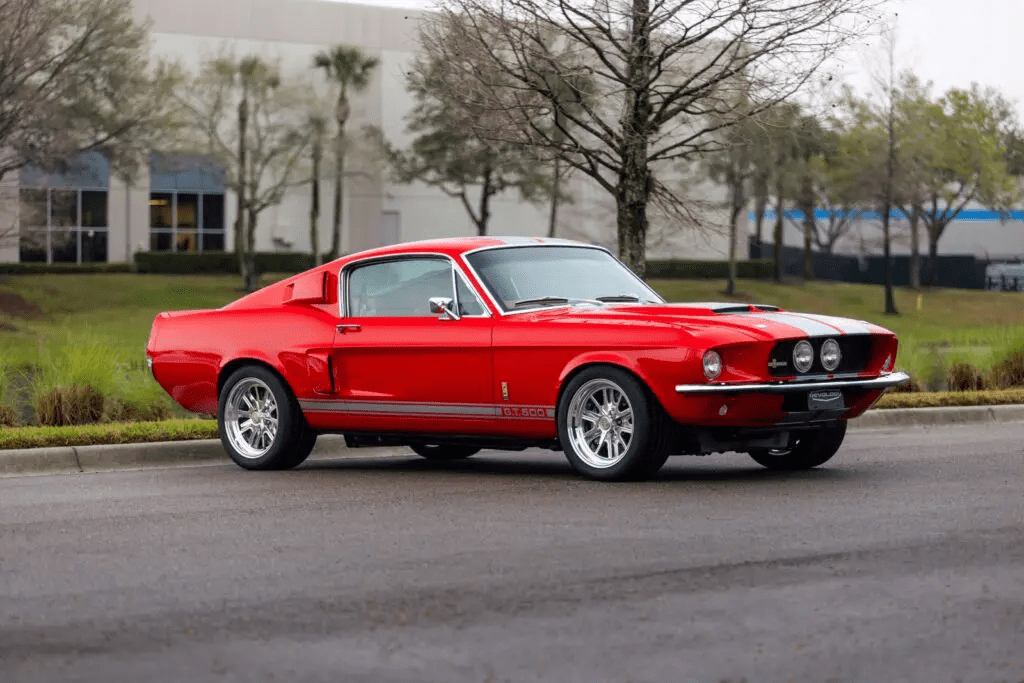
The 1967 Shelby GT500 endures as a benchmark because it united displacement, engineering focus, and distinctive identity in a way that reshaped American performance expectations. Its influence can be traced across decades of enthusiast culture, engineering priorities, and collector demand.
Today, Revology Cars honors this legacy by manufacturing new reproduction vehicles inspired by the 1967 Shelby GT500 and other classic Mustang models. These modern builds retain the iconic 1967 aesthetic while integrating contemporary performance, chassis refinement, and component improvements aligned with modern engineering standards.
Discover how Revology reimagines the 1967 GT500 with modern engineering. Visit Revology Cars to explore model details and available build options.