
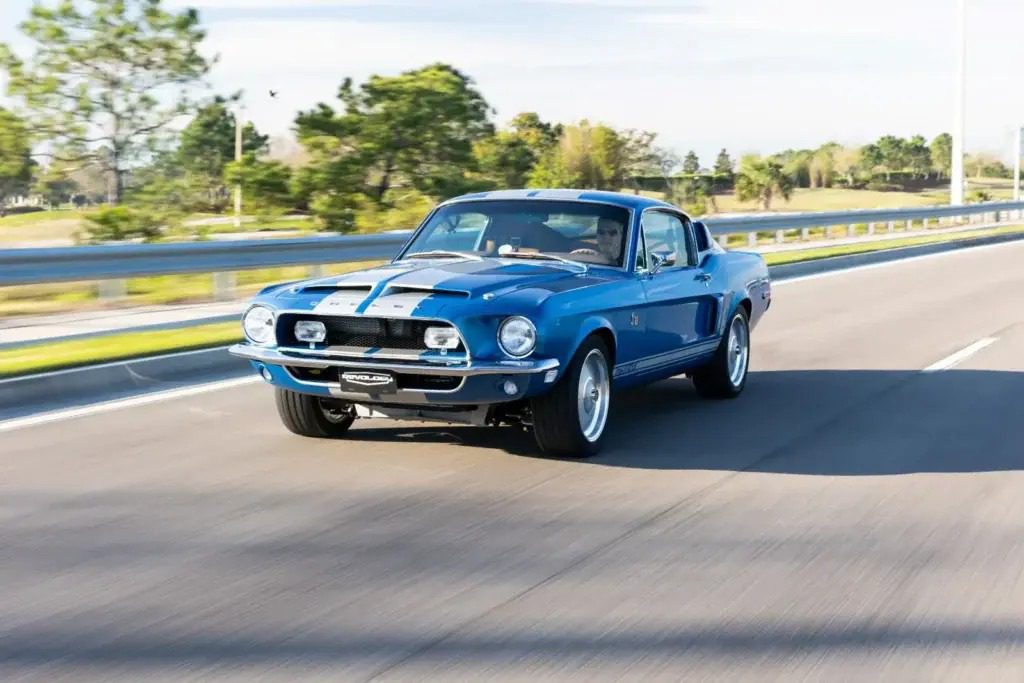
The 1968 Shelby GT350 for sale stands as one of the most revered muscle cars in automotive history, representing the pinnacle of Ford and Carroll Shelby’s collaboration during the golden age of performance vehicles. Born from a partnership that began with Lee Iacocca’s vision to transform the Mustang into a legitimate performance contender, this remarkable machine emerged during a transformative period when raw power met sophisticated engineering.
Carroll Shelby’s racing expertise combined with Ford’s manufacturing capabilities created a synergy that would produce one of the most influential performance cars ever built. What started as a simple plan to enhance the Mustang’s sporting credentials evolved into something far more significant – a vehicle that would define an entire generation’s understanding of what a true performance car could be.
This extraordinary automobile continues to inspire enthusiasts and manufacturers today, serving as a benchmark for how engineering excellence and passionate execution can create automotive legends that transcend their era.
From Racing Vision to Production Reality
Carroll Shelby’s partnership with Ford began in 1964 when Lee Iacocca recognized that the newly launched Mustang needed a performance image to compete in the rapidly evolving muscle car market. Initial collaboration started with the 1965 GT350, which dominated the Sports Car Club of America’s B Production Class and established the foundation for what would become the legendary 1968 model.
By 1968, the GT350 represented a significant evolution in the Shelby Mustang lineage. Ford had taken greater control of production by this time, relocating manufacturing from California to Michigan and implementing more systematic production processes. This transition marked a shift toward more refined manufacturing practices while maintaining the raw performance characteristics that made Shelby Mustangs legendary.
The 302 V8 Powerplant
At the heart of the 1968 GT350 was its meticulously engineered 302-cubic-inch V8 engine, which replaced the previous year’s 289-cubic-inch powerplant. This iron-block engine produced 250 horsepower at 4,800 RPM and delivered 310 lb-ft of torque at 2,800 RPM, providing a perfect balance of power and reliability. Engineers equipped the engine with an aluminum Cobra intake manifold and a Holley 600 CFM carburetor, components that became synonymous with high-performance Ford applications.
What set this powerplant apart was not just its raw power output, but the sophisticated engineering that went into optimizing every aspect of its performance. Engine bay design accommodated the specific requirements of the high-performance V8, with careful attention paid to airflow, cooling, and accessibility for maintenance. This engineering approach reflected a maturation in the Shelby program, moving beyond simple hot-rodding to create a genuinely sophisticated performance machine, proving GT350 racing legend. This attention to mechanical detail showcases the sophistication that made the GT500 stands out among classic Mustangs .
Aerodynamic Form Meets Function
Visual updates for the 1968 model year brought significant enhancements that improved both the GT350’s aesthetic appeal and its aerodynamic efficiency. Front end modifications featured a much larger grille opening and a distinctive twin-scoop hood that not only looked aggressive but served functional purposes in engine cooling and airflow management.
Design elements were not merely cosmetic additions but represented careful consideration of how form could follow function in a high-performance application.
Body modifications extended beyond the front fascia to include distinctive side scoops and the iconic Shelby racing stripes that became a signature element of the brand. Visual cues communicated the car’s performance intentions while creating a cohesive design language that distinguished Shelby Mustangs from their standard Ford counterparts.
Track-Proven Performance Dynamics
Performance capabilities of the 1968 GT350 were extraordinary for its time, with acceleration figures that impressed even seasoned automotive journalists. A combination of the 302 V8 engine with a four-speed manual transmission delivered engaging driving dynamics that connected the driver directly to the machine’s power delivery.
Relatively light weight, combined with its robust powertrain, created a power-to-weight ratio that enabled impressive straight-line performance.
Suspension system received careful attention from Shelby’s engineers, who understood that raw power meant nothing without the chassis dynamics to harness it effectively. Front suspension utilized unequal-length control arms with coil springs and an anti-sway bar, while the rear featured a live axle with multi-leaf springs and tube shocks. This setup provided a balance between performance handling and the comfort needed for street driving.
SCCA Domination and Competition Success
GT350’s for sale racing pedigree was established early in the program’s history, with the model dominating SCCA B Production racing for three consecutive years. Competition success was not accidental but resulted from systematic development work that translated directly to the street cars. The racing program served as a proving ground for engineering solutions that eventually found their way into production vehicles.
1968 model year represented the final chapter of Carroll Shelby’s direct involvement with the Ford Mustang program. By this time, Ford had assumed greater control over production and engineering, leading to cars that were more refined but perhaps less raw than their earlier predecessors. This transition marked the end of an era but demonstrated how the fundamental engineering principles established by Shelby continued to influence the program.
Production Evolution and Quality Standards
Production of the 1968 GT350 reflected a more sophisticated approach to manufacturing than had been seen in earlier years. Ford’s increased involvement brought with it more rigorous quality control processes and systematic production methods.
Evolution represented a maturation of the specialty car manufacturing process, moving from the somewhat chaotic early days to a more organized and repeatable system.
Manufacturing process incorporated lessons learned from the racing program, with particular attention paid to build quality and consistency. Each vehicle underwent careful inspection and testing to verify that it met the performance standards expected of the Shelby name. Attention to detail helped establish a reputation for reliability that complemented the cars’ impressive performance capabilities.
Modern Reproduction Technology
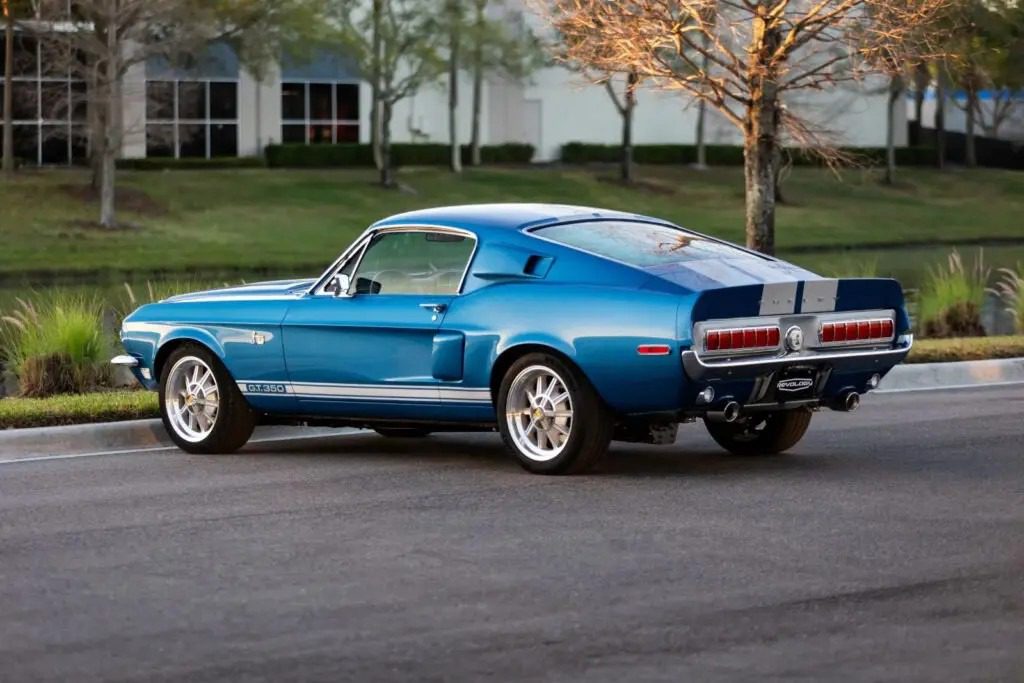
Modern interpretations of the 1968 GT350 concept have taken the original’s engineering philosophy and applied contemporary technology to create vehicles that capture the essence of the original while delivering modern performance and reliability. Companies like Revology Cars have developed sophisticated reproduction vehicles that maintain the classic aesthetic while incorporating modern powertrains, suspension systems, and safety features.
Contemporary reproductions utilize advanced manufacturing techniques and materials that were not available in 1968, resulting in vehicles that deliver superior performance, comfort, and reliability compared to their original counterparts.
The engineering approach involves systematic analysis of every component and system to identify opportunities for improvement while maintaining the character that made the original so compelling.
Revology Cars and the GT350 Legacy
Building upon the legendary foundation of the 1968 GT350, Revology Cars has created modern interpretations that honor the original’s spirit while incorporating five decades of automotive advancement. Each Revology vehicle undergoes meticulous engineering analysis to identify how contemporary technology can enhance the classic GT350 experience without compromising its fundamental character.
Revology’s approach to recreating the GT350 involves comprehensive upgrades to every major system. Modern fuel injection replaces carburetors for improved reliability and performance, while advanced suspension components provide superior handling characteristics.
Climate control systems, modern electrical architecture, and contemporary safety features transform the driving experience while preserving the visceral connection that made the original so compelling.
The manufacturing process at Revology incorporates lessons learned from both the original Shelby program and modern automotive production. Each vehicle receives individual attention from skilled craftsmen who understand the nuances that separate a mere reproduction from a true homage to automotive excellence.
This approach results in vehicles that exceed the performance and reliability of their 1960s counterparts while maintaining the authentic character that enthusiasts demand.
Lasting Impact on Performance Car Development
Influence of the 1968 Shelby GT350 extends far beyond its production run of just 1657 units. Engineering principles and design philosophy established during this era continue to influence modern performance car development. Emphasis on balanced performance, attention to detail, and systematic engineering has become a template for how specialty performance vehicles should be developed.
Legacy is particularly evident in modern reproduction programs that seek to capture not just the visual appeal of the original but its fundamental engineering character. Efforts require deep understanding of what made the original special and how those characteristics can be enhanced using modern technology and manufacturing methods.
Contemporary Buildings and Engineering Advancement
Contemporary reproduction efforts have demonstrated that the 1968 GT350’s fundamental design principles remain sound even when applied with modern technology. Advanced materials, computer-aided design, and sophisticated manufacturing processes allow modern builders to address the limitations of 1960s technology while preserving the character that made the original legendary. This modern approach often leads enthusiasts to seek a beginners guide on how to approach these high-value classics .
Process of creating a modern interpretation involves careful analysis of every system and component, identifying areas where improvements can be made without compromising the vehicle’s fundamental character. Approach requires extensive engineering work and testing to verify that modifications enhance rather than detract from the driving experience.
Why the GT350 Remains Legendary

1968 Shelby GT350 achieved legendary status through a combination of exceptional engineering, distinctive design, and proven performance capabilities. Its influence continues to shape the specialty automotive industry, with modern reproduction efforts demonstrating that the fundamental principles established over fifty years ago remain relevant today.
Enduring appeal lies not just in its historical significance but in its demonstration of how careful engineering and attention to detail can create a vehicle that transcends its era. 1968 GT350 represents a high-water mark in performance car development, combining raw power with sophisticated engineering in a package that continues to inspire enthusiasts and engineers decades after its introduction.
Revology Cars carries forward this tradition, creating vehicles that honor the GT350’s legendary status while incorporating modern technology and manufacturing excellence. 1968 Shelby GT350 stands as proof that when engineering excellence meets passionate execution, the result can be truly legendary – a truth that continues to guide contemporary builders in their quest to recreate automotive perfection.