
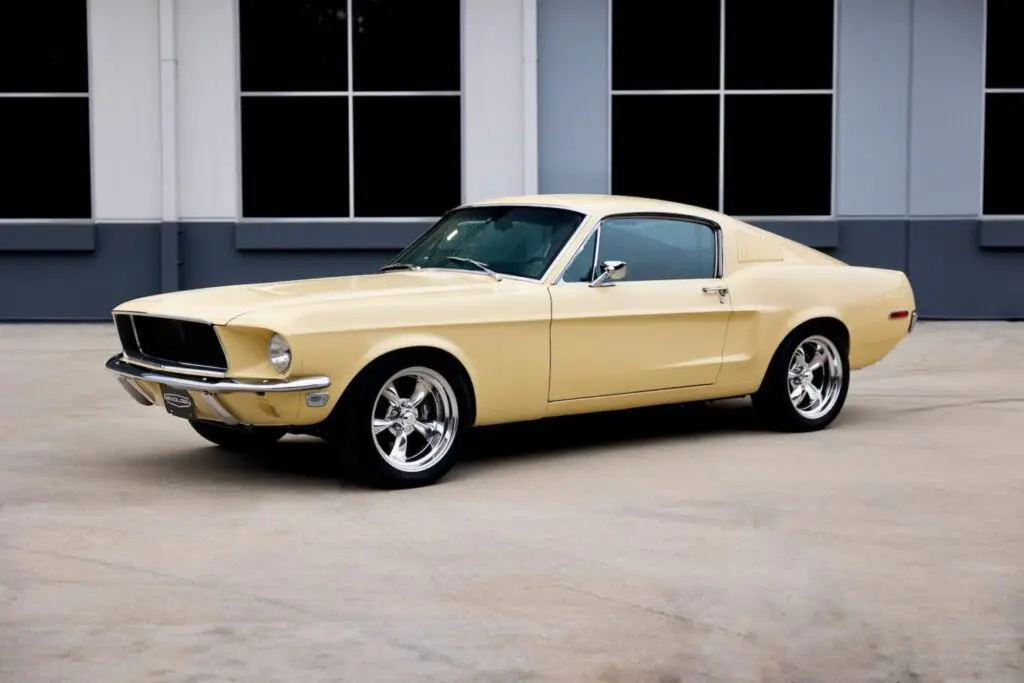
The year is 1968. The air is electric with change, and on the asphalt, a legend is born anew with each roaring V8. The Ford Mustang GT, an icon of muscle, bursts onto the scene, promising exhilarating performance and a bold statementan era perfectly captured Mustang GT Cobra Jet and why is it special. Fast forward to today, and the appeal of the 1968 Mustang GT remains as potent as ever.
Imagine rolling into the heart of the city behind the wheel of a beautifully restored or thoughtfully modernized ’68 GT Fastback. The deep rumble of the engine echoes off the towering buildings, a powerful soundtrack to your arrival.
According to AutoEvolution, the GT’s 390 V8 produced 335 horsepower and 445 lb-ft of torque, launching it through the quarter-mile in just 13.56 seconds at 106.6 mph, figures that made it one of the quickest muscle cars of its era.
But amidst the stop signs, the traffic jams, and the general flow of urban life, a key question arises: Is the sheer power of a 1968 Mustang GT too much for city roads? Can a car engineered for open highways and thrilling quarter-mile sprints truly find its place and purpose in the everyday grind of urban driving? Let’s explore the dynamics of classic muscle in a modern urban setting.
1. The Power Range of the 1968 Mustang GT
To understand the discussion, we must first acknowledge the muscle lurking beneath the hood of a 1968 Mustang GT for sale. Ford offered several engine options, but the big-block V8s embodied the true GT spirit. The standard GT engine was the 390 cubic inch V8, a mighty power plant producing a factory-rated 325 horsepower.
For those seeking even greater thrills, the legendary 428 Cobra Jet engine was available. According to the Mustang 428 Cobra Jet Registry, it was officially rated at 335 horsepower at 5,600 rpm and 445 lb-ft of torque at 3,400 rpm, though enthusiasts often claimed its actual output was even higher. These engines were not just about peak horsepower figures; they generated immense torque, that twisting force that provides the immediate feeling of acceleration.
The torque curve on these engines was broad and strong, meaning a great deal of power was readily available across a wide rpm range. In the late 1960s, these numbers were impressive, translating to excellent quarter-mile performance and the kind of acceleration that pinned you to your seat.
However, take this potent combination of horsepower and torque in the complexities of urban traffic. How does that raw power behave when faced with stop-and-go conditions and lower speed limits?
2. How That Power Feels in Stop-and-Go Traffic
The experience of piloting a 1968 Mustang GT through city traffic is a unique one. With a substantial V8 under the hood, the throttle response is immediate, even at low speeds. For models equipped with a manual transmission, the relationship between the clutch pedal and the engine’s torque requires a degree of finesse.
According to Car and Driver, an automatic‑equipped GT‑390 could sprint from 0 to 60 mph in just 6.3 seconds and complete the quarter‑mile in 14.8 seconds, underscoring the car’s brisk low‑speed responsiveness.
That readily available low‑end pull means you do not need to rev the engine high to get moving from a standstill, which can be beneficial in minimizing unwanted attention or excessive noise in quiet neighborhoods. This sensitivity also demands a measured approach to throttle modulation. An overly enthusiastic foot on the gas can easily result in a surge of power that might feel abrupt in tight urban spaces.
Moving through traffic lights and maintaining smooth progress requires anticipating stops and starts, and carefully managing the engine’s output through precise pedal work. The power is certainly there, but it’s not an untamed beast. With driver awareness and a respectful approach, the ’68 GT can be guided through city streets without feeling like it’s constantly straining at the leash.
3. Dynamics That Matter: Brakes, Suspension, and Safety
Beyond raw engine power, the 1968 Mustang GT package included upgrades to its handling and braking capabilities. Recognizing that increased power needed to be matched with improved control, Ford offered optional power front disc brakes, a significant improvement over the standard drum brakes. These provided better stopping power and were more resistant to brake fade, which is beneficial for repeated stops in city traffic.
The GT suspension package typically included stiffer springs and shocks, along with sway bars, all designed to reduce body roll and improve cornering stability.
According to MotorTrend’s January 1968 comparison (archived by Hot Rod/MotorTrend), the tested 390ci GT fastback was listed at 335hp and “gets performance jobs done without strain.” The GT package and optional front disc brakes improved control versus base models, aiding composure in repeated stops.
In the context of city driving, these features played a large part in getting around tight corners, changing lanes confidently, and providing a greater sense of control during braking, especially in unexpected situations. The steering feel, while not as precise as modern rack-and-pinion systems, still offered a connection to the road, allowing drivers to anticipate and react to urban driving conditions.
4. What Revology Brings to the Table
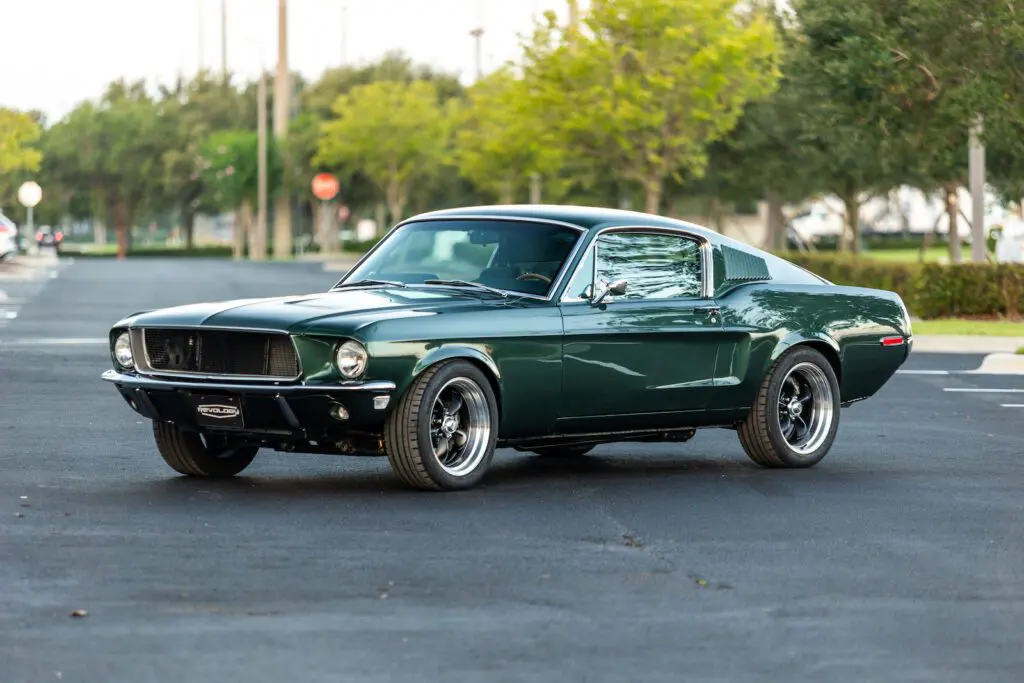
This is where the idea of Revology Cars truly shines. The original 1968 Mustang GT possesses undeniable charm and character, but advancements in automotive technology over the decades have greatly improved driving dynamics and everyday usability.
Revology Cars takes the iconic feel of the ’68 GT and updates it for the modern world, making it not just capable but genuinely enjoyable for urban driving. Imagine the classic lines and the soul-stirring V8 rumble, now paired with the precision of modern rack-and-pinion steering, offering sharper and more responsive handling in city traffic.
The upgrade to four-wheel disc brakes provides greatly improved stopping power and modulation, instilling confidence in even the most congested urban environments.
Modern fuel injection replaces the original carburetor, resulting in smoother idle, more consistent performance, and improved fuel efficiency, all highly desirable traits for daily city use.
Upgraded cooling systems help the engine operate optimally even in stop-and-go heat. Revology’s approach is to retain the iconic spirit of the 1968 Mustang GT while integrating modern engineering to create a restomod that is not only a head-turner but a remarkably drivable and reliable companion for city streets.
As Top Gear explains, Revology builds its cars like an OEM, which was evident throughout a tour of what is its mini assembly plant. There is no ‘let’s take an old Mustang and shove aftermarket bits’ here; there is an agonizing design and build process that has a legacy automaker’s level of scrutiny throughout each stage.
5. Urban Driving Tips for the 1968 GT Driver
Driving a 1968 Mustang GT in the city, whether it is an original or a Revology masterpiece, requires a slightly different approach than piloting a modern economy car. Here are a few practical tips for a smooth and enjoyable urban driving experience:
- Master Smooth Throttle Control. The potent engines respond quickly to throttle input. Practice smooth and gradual acceleration to avoid jerky starts, especially in slow-moving traffic.
- Anticipate and Plan. City driving is all about anticipation. Look ahead, predict traffic flow, and start braking early and gently. This not only makes for smoother stops but also gives you more time to react to unexpected situations.
- Thoughtful Gear Selection. If you are driving a manual transmission, be aware of your gear selection. Lower gears provide more immediate power, but higher gears can offer smoother cruising at moderate city speeds. Pay attention to the engine’s feedback and shift accordingly.
- Respect Noise Levels. The V8 rumble is part of the GT’s charm, but be considerate of your surroundings, especially in residential areas or during early morning or late evening hours. Avoid excessive revving or aggressive acceleration in these situations.
- Give it a Breathing Room. Classic cars, particularly those with powerful engines, can benefit from a bit of open road now and then to run optimally. If your daily commute is entirely stop-and-go, think about taking it for a longer cruise occasionally to keep everything in good working order.
- Be Extra Vigilant. You are driving a classic car. Be extra aware of your surroundings and potential hazards. Be prepared for the attention and admiration your Mustang will attract from other drivers and pedestrians.
6. Noise and Neighbor Sensitivity
The unique exhaust note of a 1968 Mustang GT is a big part of its appeal. That deep, resonant rumble is a superb sound to the ears of many automotive enthusiasts. In the close confines of a city, particularly in residential or densely populated downtown areas, that powerful soundtrack can become something to think about.
The sound is part of the car’s character, but being aware of noise levels is helpful for maintaining positive relationships with your neighbors and the broader community.
Enthusiasts often appreciate the sound, but those less inclined towards classic cars might find the noise level disruptive. If you frequently drive your ’68 GT in noise-sensitive areas, exploring options for slightly quieter mufflers or being particularly gentle with the throttle during early morning or late evening hours can be a thoughtful approach, a balance that reflects the classic muscle cars vs 1967 Shelby GT500 philosophy of performance with civility.
7. When Power Becomes a Feature, Not a Liability
With all the talk of management and control, the power of a 1968 Mustang GT can be a source of immense enjoyment in city driving. Picture this: the light turns green, and with a smooth application of the throttle, you feel that wonderful surge of torque propelling you forward. It is not about reckless speed, but rather the satisfying responsiveness and the effortless way the car accelerates.
On those occasional short stretches of open road between traffic lights, the GT’s power allows you to merge or pass with ease. There’s a certain thrill in knowing that that legendary V8 is ready to perform at a moment’s notice.
It is these fleeting moments of raw power and that iconic V8 soundtrack that remind you why you chose to drive a classic muscle car. It is not just transportation; it is an experience, a connection to automotive history, and a source of personal driving pleasure, even within the urban setting.
8. Power Isn’t Too Much When It’s Honored
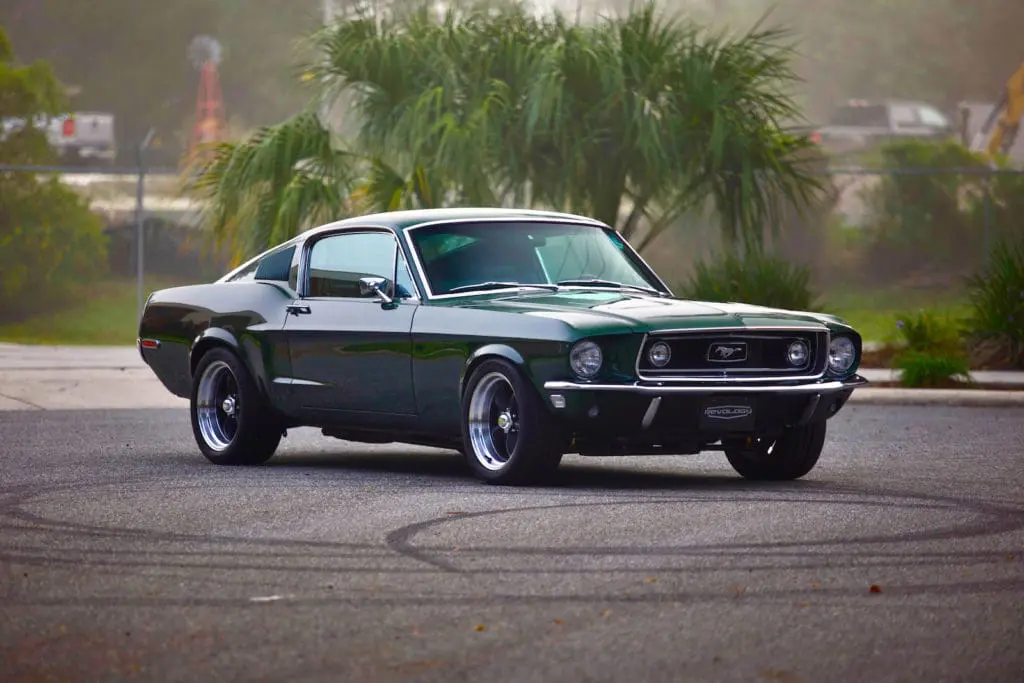
So, is the 1968 Mustang GT too powerful for city roads? The answer lies in respect and awareness. The original ’68 GT certainly demands a degree of driver skill, especially in managing its potent engine in stop-and-go traffic. The thrill of that classic muscle car experience, the iconic design, and the undeniable presence it commands are all part of its enduring appeal.
When you look at the fine craftsmanship and modern engineering brought to the table by Revology Cars, the argument for the ’68 GT being “too powerful” for the city fades even further. Revology’s modernized Mustangs retain the soul and spirit of the original while incorporating contemporary features that improve drivability, safety, and overall urban usability. With responsive steering, confident braking, and refined engine performance, a Revology 1968 Mustang GT is not just manageable in the city; it’s a genuine pleasure to drive an experience that fully embodies Mustang GT Cobra Jet is muscle car legend.
The power is still there, the heritage is intact, but the experience is tailored for the demands of modern roads, urban or open. It shows that timeless power, when honored with skillful driving and thoughtful engineering, can be enjoyed on any journey, making the rumble of that V8 a welcome sound on city streets for generations to come.