
In the celebrated history of Ford’s Mustang and Carroll Shelby’s high-performance vision, the 1968 model year represents a fascinating evolution.
The 1968 Shelby GT350 for sale, in particular, stands as a distinctive machine, a car that built upon the raw excitement of its predecessors while introducing a new level of design sophistication and refinement. It was a year of transition, and the GT350 perfectly embodied this spirit, offering a compelling blend of aggressive styling, potent V8 power, and unique features that continue to captivate enthusiasts today.
A Bold New Face and Form
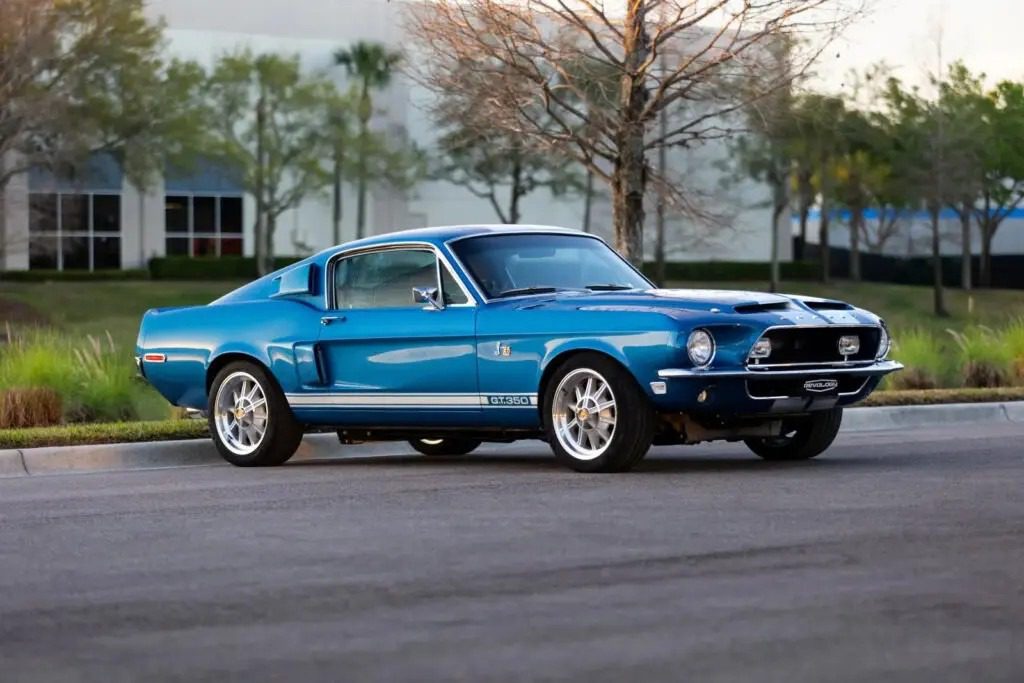
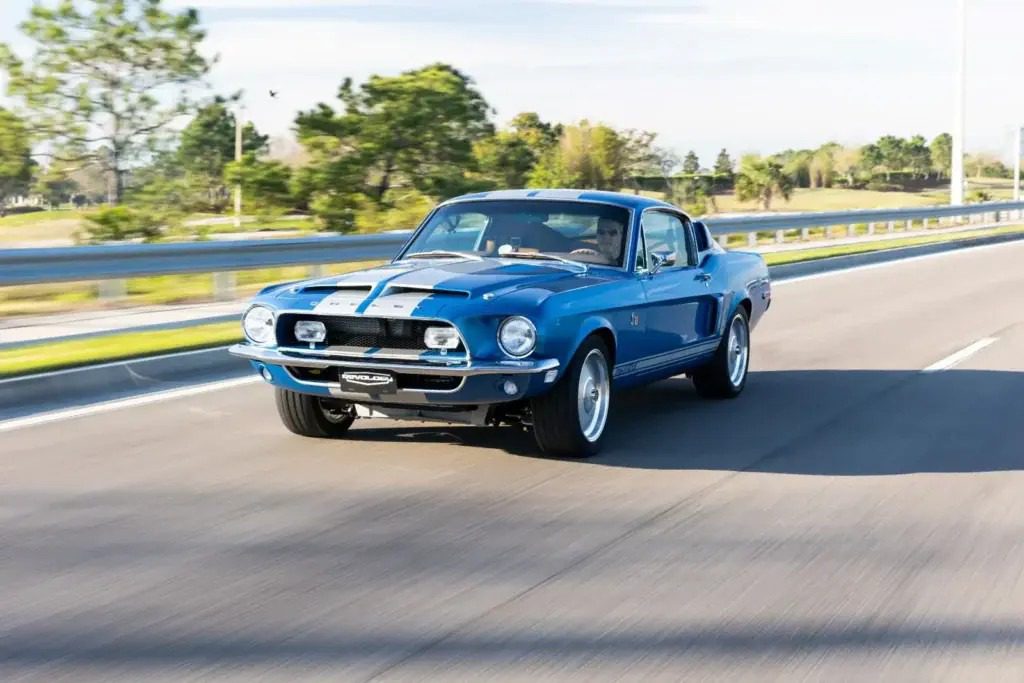
The most immediate aspect that set the 1968 Shelby GT350 apart was its striking appearance. Ford designers, taking cues from Shelby American’s previous work, crafted a more integrated and aggressive look for this model year.
The front end was entirely unique, featuring a wide, assertive grille opening that appeared ready to devour the pavement. This was flanked by rectangular Lucas fog lamps (on earlier production models) or Marchal units later, set within the grille, giving the car a purposeful, competition-inspired visage.
The hood was a key distinguishing element. Longer than the standard Mustang hood, it was made of fiberglass and featured prominent, forward-placed dual air scoops. These scoops, while more for aesthetic statement than pure function in 1968, contributed significantly to the GT350’s for sale muscular character.
Running along the sides, redesigned side scoops were present, upper scoops near the roofline helped vent the cabin, while lower scoops, now non-functional for brake cooling, unlike some prior years, added to the car’s visual dynamism. The clean lines and purposeful stance achieved in ’68 demonstrated a maturing design language that balanced raw power with a more polished presentation.
At the rear, the 1968 models sported sequential turn signals sourced from the Ford Thunderbird, housed within distinctive taillight assemblies. A cleanly integrated fiberglass rear spoiler contributed to the sporty profile.
These design elements, from the determined front fascia to the sleek tail, gave the 1968 GT350 a cohesive and mature performance look, differentiating it clearly from both standard Mustangs and earlier Shelby iterations. The overall effect was one of controlled aggression, a car that looked fast even standing still.
Refined Interior Appointments
Stepping inside the 1968 Shelby GT350 revealed an interior that balanced performance intent with a degree of comfort and style suitable for grand touring. Standard Mustang deluxe interior components formed the basis, but with unique Shelby touches.
A defining feature was the padded roll bar, equipped with inertia-reel seatbelts, a safety and structural element that underscored the car’s performance pedigree. This was not merely an aesthetic addition; it spoke to the car’s capabilities.
The dashboard featured a full suite of gauges, including a tachometer and oil pressure gauge, essential for monitoring the engine’s performance. Many examples included woodgrain appliqués on the dash and door panels, lending an air of sophistication.
A center console, often housing additional gauges and switches, was a common feature. Shelby Cobra emblems adorned the steering wheel and other areas, constantly reminding occupants of the car’s special lineage.
The high-back bucket seats provided support during spirited driving. Overall, the interior of the ’68 GT350 was a thoughtfully appointed space, more refined than the starker, more race-focused cabins of the earliest Shelbys, offering a more complete driving environment.
The Heart of the Serpent
For 1968, the Shelby GT350 was powered by Ford’s 302 cubic inch (4.9L) V8 engine. This was a change from the K-code 289 Hi-Po used in earlier GT350s. The 302, often referred to by its J-code designation, was a robust and capable powerplant. In the Shelby specification, it featured an aluminum high-rise intake manifold and a Holley four-barrel carburetor.
While horsepower ratings of the era can be subject to various interpretations, the engine provided strong, responsive performance, making the GT350 a quick and engaging car to drive. The sound of this V8, a deep burble at idle turning into a roar under acceleration, was an integral part of the GT350 experience, prompting many to ask, what makes GT350 classic?
This V8 was typically paired with a Toploader four-speed manual transmission, offering precise and satisfying gear changes. A three-speed automatic transmission was also available for those desiring a different driving experience. The combination of the 302 V8 and the chosen transmission provided a powertrain that was both exhilarating on demand and manageable for everyday enjoyment. The drivetrain was engineered to deliver reliable performance, a hallmark of Shelby’s approach.
Engineered for Agility and Control

Beyond straight-line speed, Shelby vehicles were renowned for their handling capabilities, and the 1968 GT350 continued this tradition. The suspension system received significant upgrades over the standard Mustang.
This included heavy-duty coil springs at the front and heavy-duty leaf springs at the rear. Adjustable shock absorbers and a thicker front sway bar were also part of the package, contributing to flatter cornering and improved road holding. These modifications transformed the Mustang platform into a more capable performance machine.
Power steering was standard, making the GT350 relatively easy to maneuver despite its performance focus. The braking system was also up to the task, with power-assisted front disc brakes providing reliable stopping power.
These chassis and braking enhancements ensured that the GT350 could confidently apply its power, offering a driving experience that was both thrilling and controlled. The car felt planted and communicative, inspiring confidence in the driver.
A New Chapter in Production
The 1968 model year marked a significant shift in how Shelby Mustangs were produced. Production moved from Shelby American’s facility in California to a two-stage process where Ford built the cars at their Metuchen, New Jersey plant and shipped them to Ford supplier A.O. Smith in Ionia, Michigan for completion.
Ford Motor Company took on a greater role in the overall design, engineering, and assembly process. This transition led to vehicles that were perhaps more standardized in their build quality, though some might argue they lost a touch of the hand-built character of the earliest cars.
Nevertheless, the cars built under this arrangement maintained the core Shelby DNA of enhanced performance and distinctive styling. This shift also streamlined production, making these special models more accessible, though still exclusive.
Convertible Charisma
Adding to the appeal of the 1968 Shelby lineup was the availability of a GT350 convertible. This option combined the open-air motoring experience with the performance and styling cues of the fastback model.
The convertible featured the same aggressive front end, hood scoops, and rear styling, along with the distinctive roll bar (which was a functional part of the convertible’s structure). The GT350 convertible for sale offered a unique way to experience Shelby performance, blending raw power with the pleasure of top-down driving, making it a particularly desirable variant for many collectors. The experience of hearing the 302 V8 with the top down was, and remains, a singular pleasure.
Distinction in the Shelby Lineup
In 1968, the Shelby lineup also included the formidable GT500 and the even more potent GT500KR (“King of the Road”). The GT350, with its 302 V8, occupied a distinct position. It offered a more balanced performance profile compared to the big-block GT500s, which were powered by the 428 Police Interceptor engine.
The GT350 was lighter over the front axle, contributing to what many felt was more nimble handling. It presented a slightly more understated, though still aggressive, form of Shelby performance, appealing to drivers who valued responsive handling alongside strong acceleration. This balance made it a versatile performer, equally at home on a winding road as it was on a boulevard.
The Shelby Identity
Owning a Shelby in 1968 was about more than just horsepower figures or quarter-mile times; it was about being part of a performance legacy. Carroll Shelby’s name was synonymous with victory on the racetrack and engineering prowess.
The unique badging, the distinctive styling, and the enhanced driving dynamics all contributed to an ownership experience that set these cars apart. The “Cobra” emblem became a symbol of high performance and exclusivity, and the GT350 proudly wore this badge. This identity was carefully cultivated and played a large part in the car’s desirability.
Market Reception and Rarity
Upon its release, the 1968 Shelby GT350 was well-received by enthusiasts and the automotive press. It offered a compelling package for those seeking a performance car with a unique identity.
Production numbers for the 1968 GT350, while not as minuscule as some ultra-rare exotics, were limited enough to ensure exclusivity. Approximately 1,253 fastbacks and 404 convertibles were produced for the 1968 model year.
This relative scarcity, combined with the attrition that naturally occurs with performance cars over decades, means that finding well-preserved original examples today requires dedication. This limited availability contributes directly to their collectibility and market value.
Enduring Legacy and Desirability
The 1968 Shelby GT350 remains a highly sought-after classic. Its unique blend of refined styling, capable 302 V8 power, and the undeniable cachet of the Shelby name contribute to its lasting appeal.
It represents a specific point in the evolution of Shelby Mustangs, showcasing a more mature design language while still delivering the performance excitement that Carroll Shelby’s creations are known for. Whether in fastback or convertible form, the ’68 GT350 is a true icon, a car that perfectly captures the spirit of late 1960s performance motoring.
This enduring spirit is what continues to inspire, demonstrating why the DNA of these vehicles is so carefully studied and passionately recreated by specialists like Revology Cars, ensuring that the thrill of driving a legendary design, infused with modern precision, can be experienced by new generations of enthusiasts.