
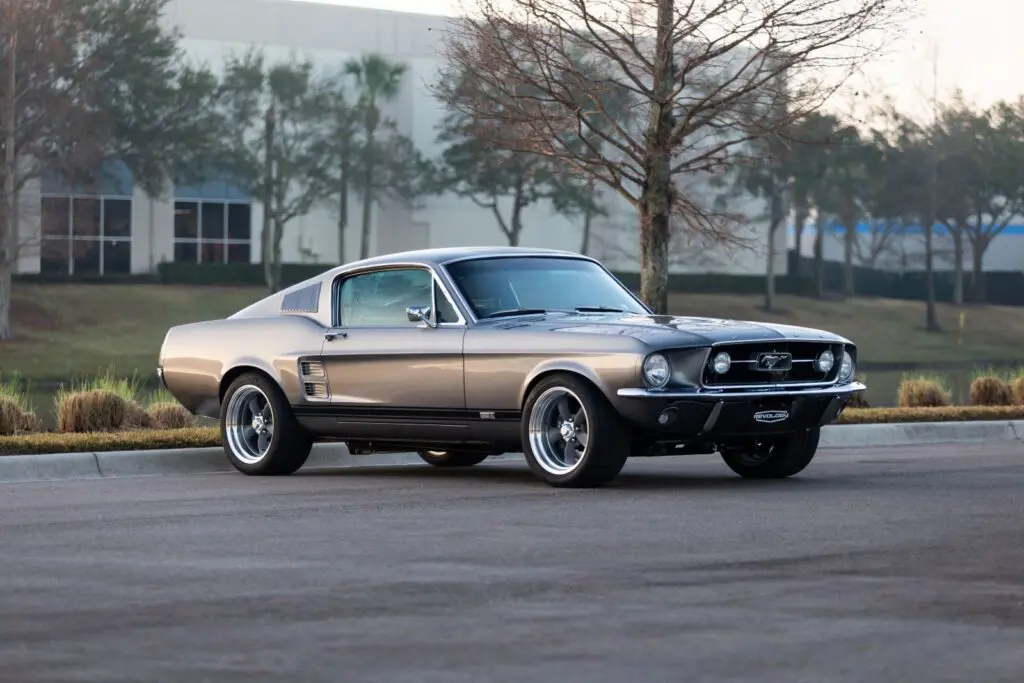
The rumble of a V8 engine, the timeless fastback silhouette, and driving a 1967 Mustang is an experience that connects you to the golden age of American automotive passion.
But bringing that legend onto the roads of 2025 introduces a modern reality: traffic moves faster, stops are more sudden, and today’s driving environment demands a level of responsiveness the original car was never engineered to provide.
This raises a critical question for every classic car enthusiast and owner: Why do better brakes matter on the 1967 Mustang in 2025? From the Revology perspective, the answer is foundational.
A state‑of‑the‑art braking system is not merely an upgrade; it is the cornerstone of safety, driver confidence, and the freedom to enjoy this iconic vehicle’s performance. For instance, deploying ABS-equipped systems has been shown to cut braking distances by up to 25% at 72 km/h under light load, and up to 35% when fully loaded.
The Legacy of the 1967 Mustang
The 1967 Mustang for sale represents a high point in American automotive culture. It was a car that perfectly captured the spirit of its time, offering style, performance, and accessibility to a generation of drivers.
Today, its legacy endures as enthusiasts and collectors continue to restore and cherish these timeless machines. Driving a ’67 Mustang is an experience that connects you to a different era. At Revology, we understand this passion.
Our philosophy is to preserve the soul of the classic Mustang while enhancing it with modern technology. We believe that a vintage car should be driven and enjoyed, and that means ensuring it can perform safely and reliably on today’s roads. This is where the blend of classic design and contemporary engineering truly shines.
Original Braking Technology: Then vs. Now
The original 1967 Mustang was typically equipped with four-wheel drum brakes, a technology that was standard for its time. These systems work by pushing brake shoes outward against the inside of a spinning drum. While functional for the driving conditions of the 1960s, drum brakes have significant limitations.
They are prone to heat buildup, which can lead to a dangerous loss of stopping power known as “brake fade.” They also have longer stopping distances and require more frequent maintenance compared to modern systems.
Today’s vehicles benefit from decades of innovation, with features like anti-lock braking systems (ABS), vented disc rotors for superior heat dissipation, and precisely calibrated proportioning valves that distribute braking force for maximum effectiveness.
Moreover, the Mustang’s original single‑circuit master cylinder leaves the vehicle vulnerable to total brake failure if one line is compromised. Upgrading to a dual‑circuit master cylinder adds a vital safety redundancy, ensuring that even in the event of a failure, the vehicle can still stop safely
The Real-World Driving Problem in 2025
Driving in 2025 is a far cry from what it was in 1967. Traffic flows significantly faster—on arterial roads, the fastest drivers are going 5 to 7 mph faster than in 2009, and instances of drivers exceeding the speed limit by more than 10 mph have climbed 4–5 percentage points to nearly 19%.
Meanwhile, modern distractions pose a grave risk: in 2022 alone, 3,300 people were killed and 289,000 injured due to distracted driving in the U.S.
In fact, texting while driving increases crash risk 23‑fold, while cell phone use roughly quadruples it. Whether you’re navigating traffic, cruising highway on-ramps, or enjoying a winding backroad, the demands on your braking system are immense. The mismatch between a 1967 Mustang’s original specifications and today’s road conditions creates a significant safety risk, similar to what’s discussed in how to restore 1967 Mustang GT Fastback like pro, where modern restoration blends safety with authenticity.
The expectation for drivability and safety has evolved, and your classic car should evolve with it. The ability to stop confidently and predictably is not a luxury; it’s a necessity for anyone who wants to enjoy their vintage Mustang without compromise fully a principle that echoes the why 1968 Mustang GT Cobra Jet is muscle car legend philosophy of balanced performance and control.
Why Factory Brakes Don’t Cut It Anymore
Relying on the factory brakes of a 1967 Mustang today can lead to a number of common and dangerous issues. A “mushy” or unresponsive pedal feel, a long stopping distance that leaves you with little room for error, and the ever-present risk of brake fade are all symptoms of an outdated system.
A comparison test stopping from 60 mph would reveal a startling difference between a classic Mustang and a modern vehicle, a difference that could be critical in an emergency.
Beyond the immediate safety concerns, outdated brakes can have other implications. In some areas, they may not meet inspection standards, and insurance companies may consider them when assessing a vehicle’s risk.
The hidden dangers in an emergency braking scenario are what make this upgrade so essential. It’s about more than just performance; it’s about peace of mind.
Safety First: Brake Technology Has Evolved
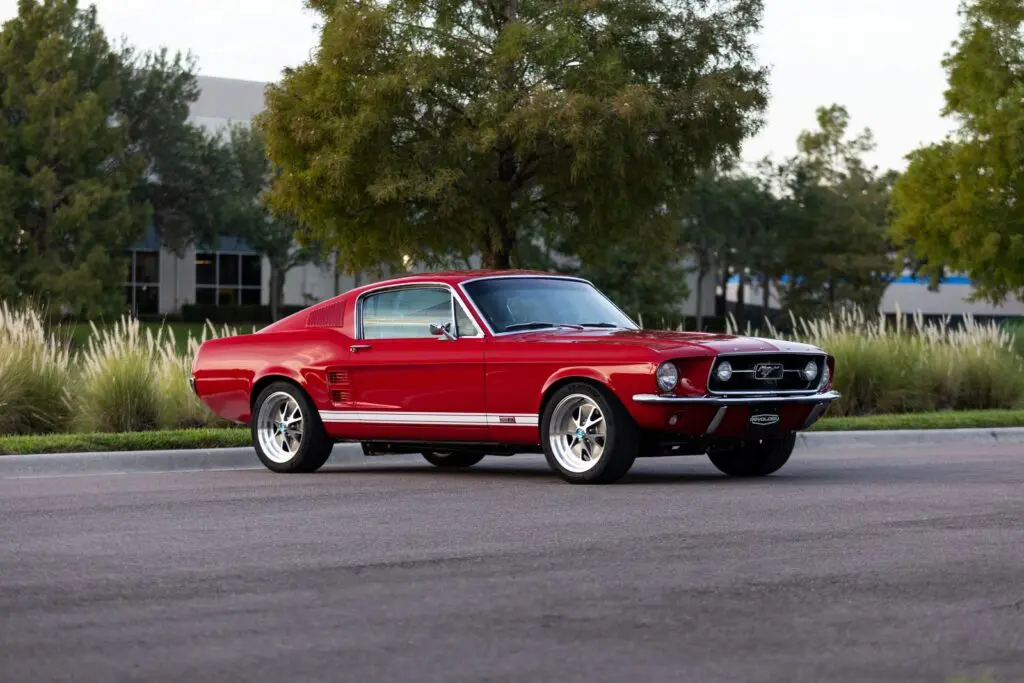
Since the 1960s, braking technology has seen incredible advancements. The introduction of disc brakes as a standard feature, followed by innovations like ABS and electronic stability control, has revolutionized vehicle safety.
These systems are designed to prevent accidents before they happen by providing the driver with superior control and stopping power.
Upgrading your Mustang’s brakes is one of the most significant safety improvements you can make. It gives you the confidence to enjoy your car in a variety of driving situations, knowing that you have the ability to stop quickly and safely when it matters most. It’s about engineering a safer drive, one that allows you to focus on the joy of the open road.
What Better Brakes Mean Today
When we talk about a “better brake system,” we’re referring to a comprehensive upgrade that includes several key components. This typically involves a conversion to four-wheel disc brakes with modern calipers, high-performance rotors, and premium brake pads.
The system should also include a dual-bowl master cylinder for added safety, a power booster (like a hydroboost system) for reduced pedal effort, and a proportioning valve to properly balance the braking force between the front and rear wheels.
These modern components work in harmony with other performance upgrades, such as improved suspension and wider, stickier tires. The result is a balanced and responsive braking system that transforms the driving experience of a classic Mustang.
Disc vs. Drum: The Upgrade That Changes Everything
The most significant brake upgrade for a classic Mustang is the conversion from drum brakes to disc brakes, a change thoroughly discussed in best modifications 1968 Mustang GT 2-2 Fastback. The technical differences are substantial. Disc brakes use a caliper to squeeze brake pads against a spinning rotor, a design that is far more efficient at dissipating heat than the enclosed drum brake system.
Studies show that disc brakes offer better heat dissipation, shorter stopping distances, and improved responsiveness compared to drum brakes, making them a transformative safety upgrade for classic cars, as highlighted in key features 1968 Mustang GT Fastback. This means they are much less susceptible to brake fade.
In real-world terms, this translates to shorter stopping distances, a more consistent and responsive pedal feel, and improved performance in wet conditions. A disc brake conversion is a transformative upgrade that provides a modern level of safety and performance, making your classic Mustang more enjoyable and safer to drive.
Brake Fade and Daily Driving in a Classic Mustang
Brake fade is the temporary reduction or loss of braking power that occurs when the braking system overheats. For a classic Mustang with drum brakes, this can happen surprisingly quickly in city traffic with frequent stops or on long, downhill descents. It’s a dangerous situation that can catch even experienced drivers off guard.
Modern brake materials, such as those found in high-performance pads and rotors, are designed to withstand much higher temperatures, effectively preventing brake fade. This is a crucial advantage for anyone who plans to drive their classic Mustang regularly.
Brake Upgrades Without Losing Authenticity
One of the biggest concerns for classic Mustang owners is maintaining the car’s original look and feel. Fortunately, modern brake upgrades can be done without sacrificing authenticity. Many “OEM+” solutions offer a period-correct appearance with contemporary performance. This can include color-matched calipers, hidden components, and upgrades that are not easily visible from the outside.
At Revology, we specialize in balancing visual integrity with engineering excellence. A classic Mustang should look like a classic Mustang, but perform like a modern vehicle. Our approach ensures that you get the best of both worlds: timeless style and cutting-edge performance.
Driving with Confidence in a Recreated Legend
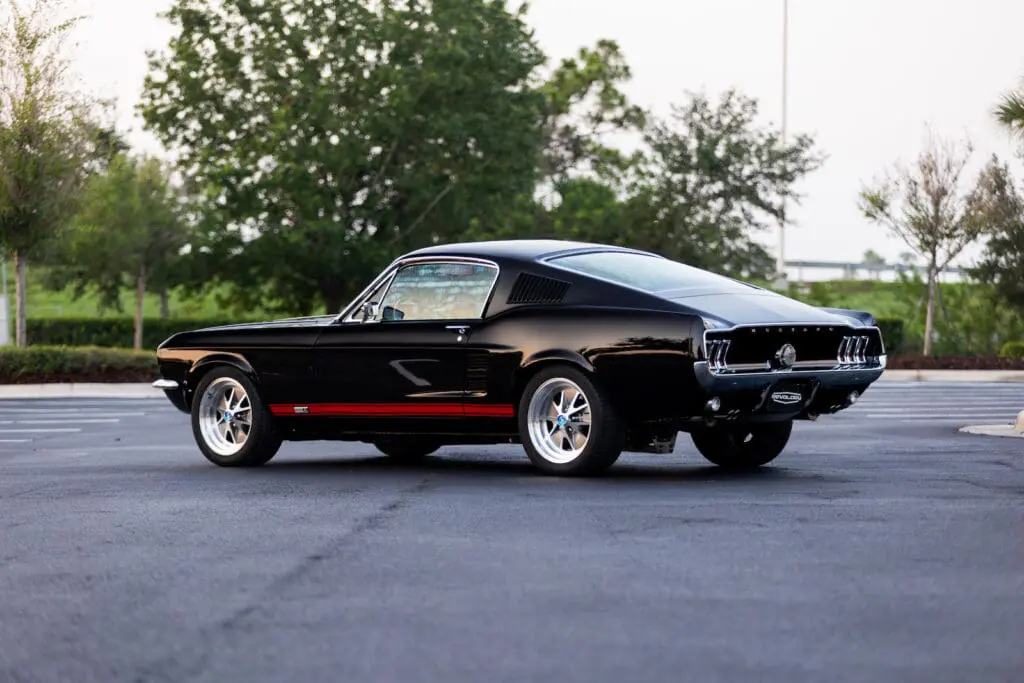
In 2025, owning and driving a 1967 Mustang is an experience to be treasured. But to truly enjoy this classic car in the modern world, its performance must be brought up to today’s standards. Upgrading the braking system is not just an improvement; it’s a necessity. It protects your investment, your safety, and the legacy of the car itself.
By embracing modern technology while respecting the classic design, you can ensure that your Mustang is ready for the road ahead. We invite you to explore the modern Mustang builds at Revology, where integrated brake upgrades are just one part of our commitment to engineering a superior driving experience.