
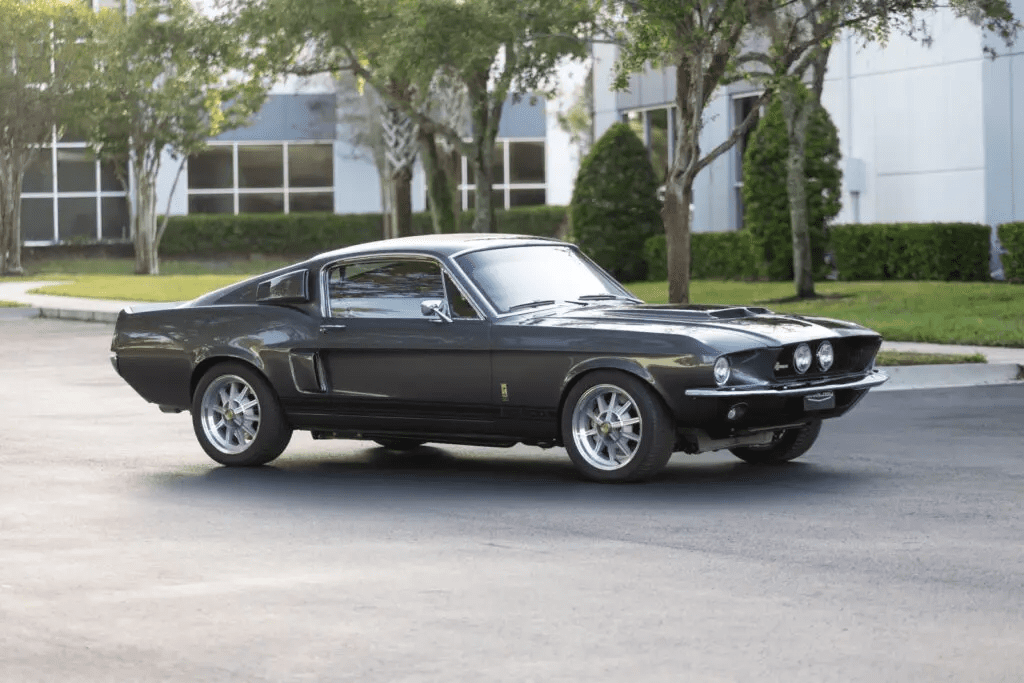
The 1967 Shelby GT500 for sale remains one of the most celebrated examples of American muscle, born from a collaboration between Ford and Carroll Shelby’s performance-focused team. Based on the Mustang, the GT500 combined a large-displacement 428 cubic-inch V8 with dual four-barrel carburetors, reinforced suspension components, functional cooling scoops, and bespoke visual elements that distinguished it from standard production cars of the era.
Enthusiasts recognize the GT500 not just for its straight-line acceleration, but for the way it expressed purposeful design and performance ambition during the peak of the muscle car period.
In this blog, we will examine what made the 1967 Shelby GT500 unique among 1960s muscle cars, from its engineering and design features to its cultural significance and enduring appeal.
How the 1967 Shelby GT500 Stood Apart in Its Era
The 1967 Shelby GT500 differed from many 1960s muscle cars by combining a large-displacement big-block engine with Shelby-specific engineering, styling modifications, and performance-focused features.
Context of the 1960s Muscle Car Competition
During the mid-1960s, American manufacturers competed to deliver higher horsepower and larger V8 engines in midsize platforms. Ford, GM, and Chrysler continually increased displacement and performance ratings to attract buyers seeking faster acceleration. The Mustang created a popular platform in 1964, and by 1967, Ford’s factory lineup included big-block options, creating an environment where Shelby’s enhanced Mustang variants entered a rapidly escalating performance market.
Carroll Shelby’s Performance Reputation
Carroll Shelby was known for modifying production vehicles for improved performance, with earlier work including the AC Cobra and GT350 Mustang. His association with racing success contributed to the GT500’s credibility. Shelby American engineered the GT500 with components selected for durability and power-handling, aligning with the company’s established focus on performance rather than appearance alone and helping differentiate the model within Ford’s lineup.
Demand for Power + Identity in American Cars
Consumers in the late 1960s increasingly pursued vehicles offering strong straight-line performance and distinctive style. Automakers responded by emphasizing horsepower ratings and recognizable visual cues, defining the history of Shelby GT racing and its transition into a consumer icon. This allowed buyers to express their personal identity through vehicle choice while meeting expectations for high torque and aggressive styling.
How the 1967 Shelby GT500’s Engineering Differed from Other 1960s Muscle Cars
The 1967 Shelby GT500 differed from many popular muscle cars by combining a large big-block engine with induction, cooling, suspension, and braking upgrades suited for higher output.
Big-Block 428 V8 and Output Characteristics
The GT500 used Ford’s 428 cubic-inch Police Interceptor V8, a larger-displacement engine than the 289 or 390 V8 offered in the 1967 Mustang GT. Ford rated the 428 at 355 horsepower at the time. The big-block delivered strong torque at lower engine speeds, enabling rapid straight-line acceleration. Accommodating the engine’s physical size and weight required modifications to the GT500’s chassis and under-hood layout.
Dual Quad Carburetors and Power Delivery
Shelby American equipped the 428 with dual Holley four-barrel carburetors mounted on an aluminum intake manifold. This induction setup increased total airflow potential compared with a single-carburetor system. A progressive linkage opened the secondary carburetor under heavier throttle input, supporting fuel-air mixture delivery at higher rpm. This helped the 428 maintain power delivery suited to the big-block’s displacement and torque characteristics.
Suspension, Cooling, and Stopping Enhancements
To support the increased weight and power of the big-block engine, Shelby American upgraded suspension components and cooling capacity compared to those of standard Mustangs. Reinforced front suspension improved load management, and a larger radiator aided heat dissipation under sustained operation. The GT500 also offered power brakes with front discs, improving stopping capability relative to drum brakes common in many muscle cars of the same era.
1967 Shelby GT500 Design and Exterior Identity
The 1967 Shelby GT500 introduced visual and structural changes that distinguished it from the standard Mustang fastback, emphasizing performance intent and bold exterior identity.
Fiberglass Components + aerodynamic intention
The original 1967 GT500 used several fiberglass exterior components, including the hood, nose extension, and deck lid. These pieces allowed longer front-end proportions and styling not possible with factory steel tooling. The extended nose and molded hood accommodated the big-block 428 engine and dual carburetor configuration while contributing to a sleeker, more aggressive profile compared with the production Mustang.
Functional Scoops, Stripes, and Shelby Badge Identity
The GT500 featured functional or semi-functional scoops on the hood and rear quarter panels to support airflow and cooling needs. Dual Le Mans-style racing stripes and rocker panel striping became part of the car’s recognizable appearance. Shelby badging, including Cobra emblems and unique grille treatments, reinforced its identity as a performance-modified vehicle produced by Shelby American rather than a standard Ford Mustang.
How styling differentiated it from the standard Mustang
Compared with the 1967 Mustang fastback, the GT500 adopted a more aggressive stance with larger front openings, inboard high-beam lamps mounted toward the center of the grille, and an integrated rear spoiler. Tail lamp assemblies differed from Ford’s production units, using designs adapted from other Ford models. Together, these changes visually communicated that the GT500 was a Shelby-engineered variant emphasizing higher performance.
How the 1967 Shelby GT500 Interior Differed from the Standard Mustang
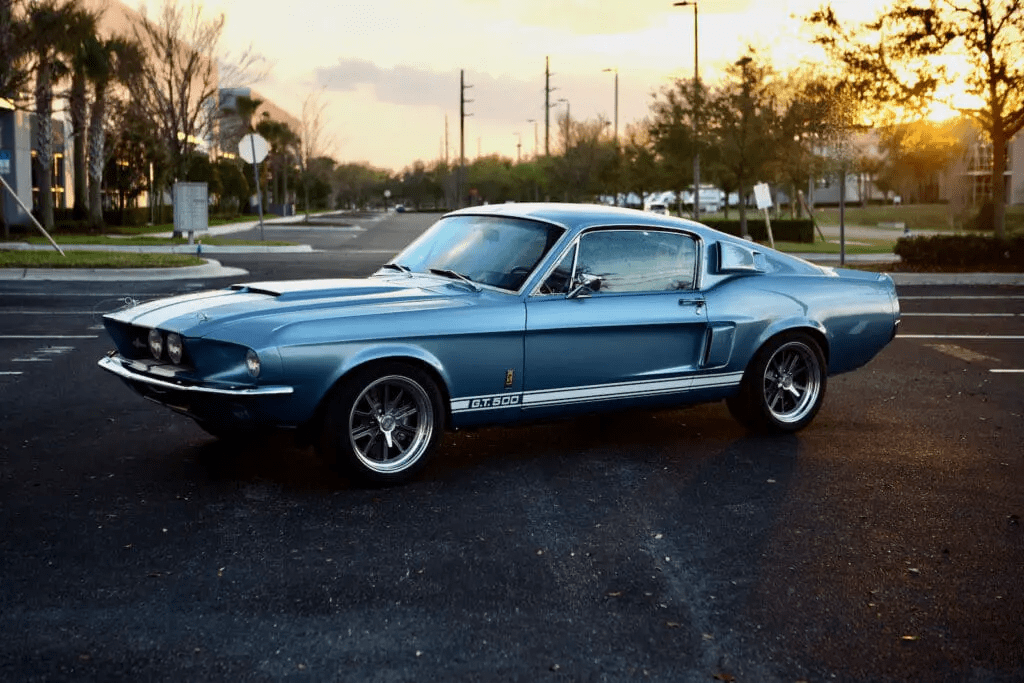
The interior of the 1967 Shelby GT500 incorporated features and visual cues that distinguished it from a standard Mustang fastback, emphasizing performance orientation and Shelby identity.
Carroll Shelby branding inside the cabin
The GT500 incorporated Shelby-specific interior elements, including Cobra emblems, dash badging, and unique identification plates indicating build sequence. These branding cues reinforced its status as a Shelby-modified vehicle rather than a factory Mustang trim level. Door sill plates and steering wheel centers commonly featured Shelby identifiers. While the basic cabin layout remained Mustang-derived, these branded components signaled a distinct model lineage to the driver.
Gauges + handling-focused instrumentation
Compared with the standard Mustang instrumentation, the GT500 included extra Stewart Warner oil pressure and ammeter gauges to monitor engine functions. These additions reflected Shelby American’s emphasis on driver awareness, illustrating how the 1967 Shelby GT500 stands out by complementing the suspension and powertrain upgrades introduced in the program.
Cultural and Legacy Significance of the 1967 Shelby GT500
Beyond engineering upgrades and performance capabilities, the original 1967 Shelby GT500 earned lasting recognition for its limited production, distinctive identity, and influence on American car culture.
Limited original production and rarity appeal
Shelby American produced about 2,048 units of the 1967 GT500, which made it uncommon compared with many other muscle cars offered in the late 1960s. The small production volume contributes to its desirability among collectors today. Because original examples are fewer in number, vehicles that retain period-correct parts and documentation often command higher prices at auctions and in private sales.
Influence on Enthusiast Culture and Later Performance Car Standards
The 1967 GT500 drew attention from drivers and collectors for its large-displacement V8, aggressive exterior design, and Shelby branding. It has been featured at automotive shows, in restoration communities, and in print and film media, helping maintain its iconic status. Many performance cars introduced in later decades aimed to capture a similar appeal by combining high power output with a distinctive visual identity, a formula strongly associated with the GT500.
What Makes the 1967 Shelby GT500 Important Today
The original 1967 Shelby GT500 remains important to enthusiasts because of its limited production, strong period performance, and ongoing influence on the American muscle car legacy.
Collector Demand
The model’s relatively low production volume and association with Shelby American make surviving examples desirable among collectors. Interest in auction markets has remained steady, especially for cars retaining original components and documentation. Many owners seek restorations that preserve period-correct specifications, supporting continued demand for parts and expertise related to the 1967 GT500. This collector interest helps maintain the model’s visibility more than five decades after its introduction.
Engineering Influence
The 1967 GT500 demonstrated that large-displacement engines, when paired with purposeful suspension, braking, and cooling upgrades, could elevate performance on a production-based platform. Later performance cars followed a similar formula, combining high torque output with functional enhancements to manage added power. The GT500 is often referenced in discussions of classic American performance engineering because of its role in this development trend during the muscle car era.
Cultural presence
The GT500 continues to appear at automotive events, in publications, on enthusiast forums, and in restoration communities. Its recognizable shape, performance history, and association with Carroll Shelby contribute to its prominence in popular culture. The model’s frequent representation in media, including film and printed features, reinforces its identity as a symbol of late 1960s American muscle performance and preserves interest among new generations of enthusiasts.
Modern Interpretation of a 1967 Performance Legend
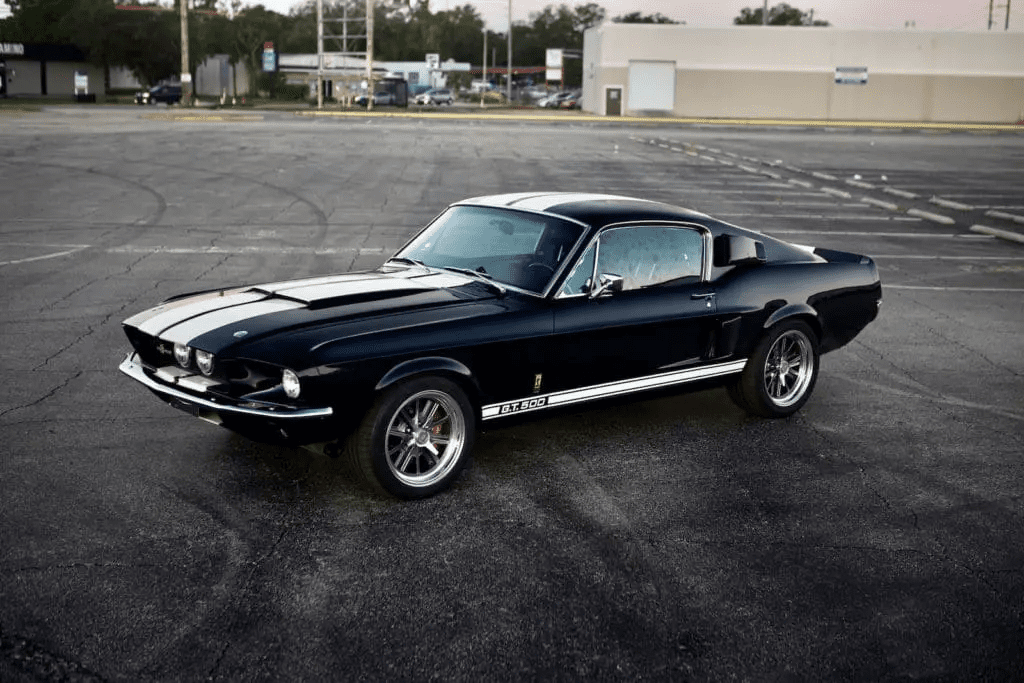
The 1967 Shelby GT500 combined a 428 cubic inch V8, dual carburetors, suspension, cooling, and brake upgrades, fiberglass body components, added instrumentation, and unmistakable Shelby branding to create a muscle car that stood apart from the standard Mustang. Its limited production, period performance, and lasting cultural relevance continue to define it as one of the most important American performance cars of the late 1960s.
That legacy continues at Revology Cars. By preserving the visual character and mechanical spirit of the original GT500 while applying modern engineering, materials, and manufacturing standards, Revology delivers a driving experience that reflects the intent of the 1967 car with the confidence and usability expected today.
Explore Revology’s GT500 models to see how classic Shelby performance is reimagined for modern roads, with detailed specifications, build options, and engineering insights available directly from Revology Cars.