
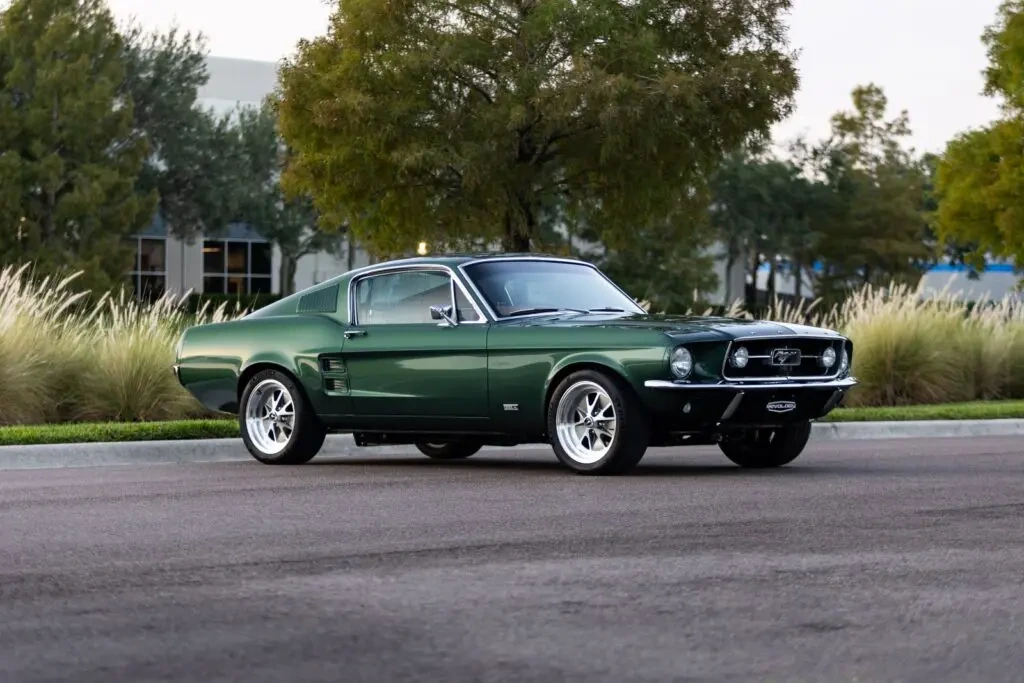
The 1967 Ford Mustang GT represents a pivotal moment in automotive history. It wasn’t simply a cosmetic refresh of the original pony car; it was a deliberate, engineered response to the escalating muscle car wars. While the wider bodies, revised roofline on coupes and fastbacks, and aggressive grille are the features everyone remembers, the true story of the 1967 GT lies beneath the sheet metal.
For the discerning enthusiast, the hidden engineering features of the 1967 Mustang GT that boosted performance, adjustments to chassis dimensions, available high-performance hardware, and packaging revisions, are what truly separated this model from its predecessors. These invisible upgrades laid the groundwork for big-block power and improved handling dynamics.
Revology Cars views these original engineering intents not just as history, but as a foundation. By understanding what Ford engineers achieved in 1967, one can appreciate how far the envelope has been pushed today.
The Hidden Engineering of the Original 1967 Mustang GT
The 1967 model year brought about significant changes that were not immediately visible on the showroom floor. Ford engineers had to tackle new challenges regarding engine size, handling stability, and chassis rigidity.
The 2.1-Inch Track Expansion: Stability through Geometry
One of the most significant hidden engineering features was the widening of the front suspension track. Ford engineers increased the front track width to 58.1 inches. When compared to the previous V8 models (56 inches), this represented a functional increase of 2.1 inches.
This dimensional change directly boosted performance by improving stability. The wider stance reduced the center of gravity’s leverage over the roll center, inherently increasing the car’s resistance to body roll during cornering. It allowed for slightly longer control arms, which improved the camber curve, the angle of the tire contact patch relative to the road, during suspension compression.
The Widened Engine Bay Architecture
To accommodate the “Thunderbird Special” 390 V8, the 1967 Mustang platform featured a wider engine bay than its predecessor. As documented in MustangSpecs’ model guides, the front suspension was redesigned, and the engine bay was widened specifically to accommodate the big-block FE engine, a critical structural evolution for the 1967 model year.
This hidden dimensional shift is the only reason the 1967 GT could house the big-block engines that defined its performance character. Without this widening of the unibody structure, the Mustang would have remained limited to the small-block 289, leaving it vulnerable to the Chevrolet Camaro and Pontiac Firebird. This change was the key engineering feature that allowed for boosted straight-line performance.
The Legendary Ford 9-Inch Rear Axle (When Equipped)
Hidden beneath the rear of 1967 GTs equipped with the 390 V8 was the automotive world’s gold standard for durability: the Ford 9-inch rear axle. While standard 289 Mustangs utilized the lighter 8-inch unit, the torque of the big-block necessitated this heavy-duty upgrade.
The 9-inch axle is engineeringly distinct because of its removable third member (carrier) and a pinion gear supported by three bearings instead of two. This feature prevented driveline failure under hard launches, a common issue in other muscle cars of the era. It provided the structural backbone necessary to transmit the 390’s 427 lb-ft of torque to the pavement reliably, ensuring the increased power actually translated to performance.
The Special Handling Package (GT/Optional)
Buyers of the 1967 GT received the “Special Handling Package,” a factory-integrated suite of upgrades designed to manage the increased chassis weight. This package, which includes upgraded performance features, typically included stiffer spring rates, a larger diameter sway bar, and heavy-duty shock absorbers compared to the standard models. These components were “hidden” but are part of what makes the 1967 Mustang GT a true classic because they drastically altered weight transfer.
The stiffer springs reduced brake dive and squat during acceleration, while the thicker sway bar fought the Mustang’s natural tendency to understeer, providing a firmer, more controlled ride.
Functional Aesthetics: The Dual Exhaust Layout on the GT
The 1967 GT featured a redesigned rear valance with specific cutouts for dual exhaust tips, a feature necessitated by the high-performance engine options. While the concave taillight panel was a styling choice, the lower valence modification was an engineering necessity for the GT Equipment Group to properly route the exhaust.
The 390 and high-performance 289 engines (minus the 200 HP 289) commonly used high-flow dual exhaust systems. The specific routing of the 1967 exhaust, up and over the rear axle and exiting through the valance, was designed to maximize ground clearance while maintaining the necessary pipe diameter for flow.
This integrated design prevented the exhaust tips from dragging during hard cornering or on steep driveways, blending form and function.
Stopping Power: Optional 4-Piston Disc Brakes
1967 was a breakout year for power front disc brakes, which were included in the GT Equipment Group or available as a standalone option. The braking system featured Kelsey-Hayes 4-piston calipers on the front discs, a massive leap forward from the drum brakes standard on base models and a superior design to the cheaper single-piston “floating” calipers. This gave the 1967 GT repeated stopping power that was essential for a car capable of 120+ mph speeds, reducing the brake fade that plagued earlier drum-brake-equipped muscle cars.
The Tilt-Away Column and Driver Accessibility (Optional)
A hidden luxury-performance feature available on the 1967 model was the optional “Tilt-Away” steering column. When the door was opened, the steering column would pivot to the right, allowing easier ingress and egress for the driver. Once seated, the driver could pull it back into position. This was an early attempt at driver-centric ergonomics, acknowledging that a performance car should fit the driver, not the other way around.
How Revology Cars Evolves the 1967 Platform

Revology Cars’ reproduction 1967 Shelby GT350s and GT500s for sale honor the legacy of the original while radically evolving the platform through modern technology, materials, and manufacturing methods. The company takes the original engineering concepts, stability, rigidity, and power, and pushes them to their modern logical conclusions.
Perfecting the Geometry: Double-Wishbone Front Suspension
While the 1967 widening was an improvement, it was still compromised by the limitations of 1960s suspension technology. The original coil-spring-on-upper-arm architecture, while robust, suffered from compromised geometry, bump steer, and limited alignment adjustability.
Revology features a completely re-engineered front subframe equipped with a modern double-wishbone suspension. By utilizing unequal-length upper control arms, more precise control of camber gain, roll center, and wheel motion can be gained, improving grip and steering response compared with the original Mustang design.
As detailed in reviews by major automotive publications like Top Gear, this setup ensures that the tire maintains optimal contact with the road surface throughout its range of travel, regardless of body roll. Coupled with a modern power rack-and-pinion steering system, the result is turn-in precision that the original engineers could only dream of.
Packaging the Modern Coyote V8
Today, the challenge of packaging high-performance engines remains, but the solution has evolved. The expanded engine bay architecture is utilized to house the Ford 5.0L Ti-VCT “Coyote” DOHC V8.
Because the double-wishbone suspension eliminates the intrusive factory shock towers, critical width is freed up in the engine bay. This re-engineering enables the installation of the wider Coyote V8 engine, reaching 460+ hp in naturally aspirated form and 710 hp in supercharged form. Unlike the original 390 GT, where changing spark plugs could be a nightmare, a Revology Mustang is designed with serviceability in mind.
Unibody 2.0: The Power of Structural Adhesives
Structural rigidity is the holy grail of vehicle engineering. While the 1967 model utilized heavier gauge steel in certain areas for stiffness, it was still spot-welded using 1960s tolerances—a small detail consistent with why classic car fans love the raw character of the original. Revology Cars has revolutionized this process.
Rather than simply restoring old bodies, the company builds brand-new, licensed steel unibodies using structural adhesives, which is a major factor when buying a 1967 mustang gt / gta or Shelby model designed for modern performance. During assembly, modern structural adhesives are applied to the weld flanges before welding, and the body is then baked at 350°F. This process bonds the panels on a molecular level, increasing the body’s torsional rigidity by 40% to 60% compared to a standard spot welded body.
Eliminating Wheel Hop with a Three-Link Rear
Spring rates and sway bars are only part of the equation. The biggest limiting factor of the 1967 Mustang’s handling was the archaic leaf springs, which caused “wheel hop” under load.
Revology eliminates this compromise by replacing the leaf springs with a modern three-link rear suspension design. A heavy-duty torque arm is employed to handle the acceleration and braking forces, effectively eliminating wheel hop. A panhard rod is utilized to locate the axle laterally for precise cornering, while coilover shocks are added to provide modern damping capabilities. This setup, combined with a Ford 8.8-inch rear end and Traction-Lok™ limited-slip differential, delivers significantly improved traction and predictability compared with the original leaf-spring suspension.
Sound Engineering: Tuning the Coyote’s Growl
While respecting the iconic look of the GT dual exhaust, the system demands more than just flow. Revology partners with Borla Exhaust to engineer a stainless steel system specifically tuned for the Coyote engine. Modern engines have different resonant frequencies than vintage pushrod V8s. Engineers worked with Borla to tune the mufflers and resonators to eliminate “drone” frequencies while preserving the signature American V8 growl. The optional Performance Exhaust system features lower restriction mufflers to provide more power and a more aggressive tone. The exhaust tips still exit through the rear valance, maintaining the authentic 1967 GT aesthetic, but the sound quality and durability are purely modern.
Braking Evolution: 6-Piston Calipers for Supercar Performance
With 460 to 710 horsepower on tap, stopping power must exceed the capabilities of the 1960s hardware. Revology utilizes massive 6-piston forged aluminum calipers in the front and 4-piston calipers in the rear, clamping down on slotted and vented rotors.
This modern hardware delivers two critical advantages: vented rotors for consistent thermal management, and hydraulic ratios engineered for a firm, progressive pedal feel.
Interior Re-Engineering: Comfort Meets Classic Style
The concept of driver ergonomics has been taken to new levels. One of the biggest complaints about original Mustangs is the seating position. Revology re-engineers the interior packaging, including features like improved pedal locations and a sourced modern tilt steering column that allows for better driving posture.
Furthermore, the seats may look like classic low-back buckets, but they use modern materials, with aggressive bolstering designed to hold the driver in place during high-G cornering. Even the seat tracks are engineered to allow for greater legroom, and modern power windows are integrated, seamlessly hidden to maintain the vintage aesthetic, offering a level of convenience the original 1967 designers could only imagine.
Experience The Revology Difference
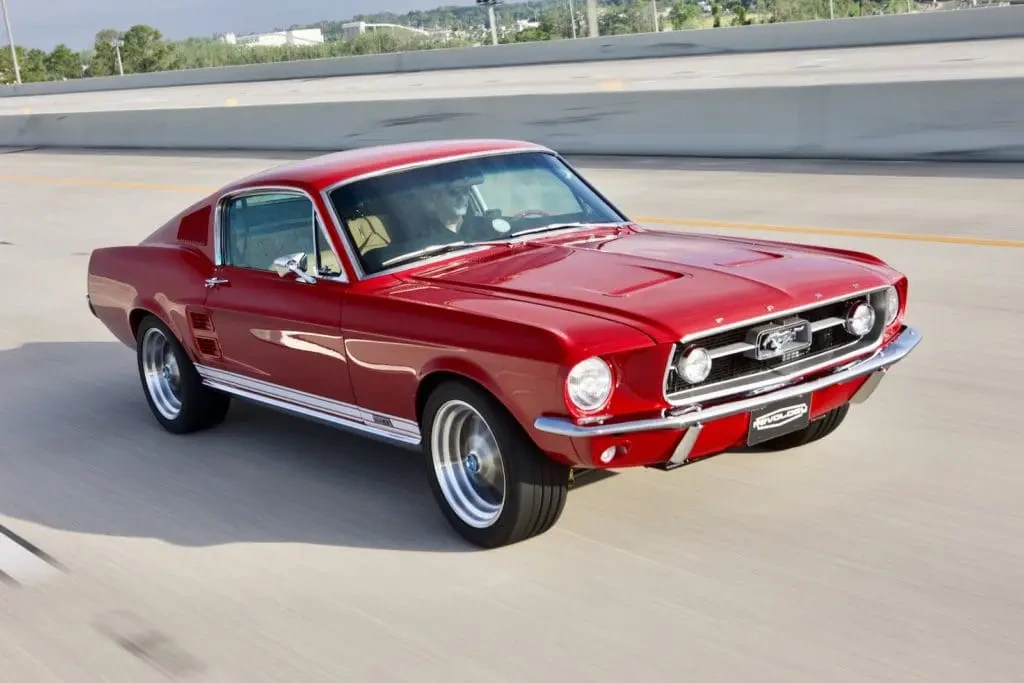
The 1967 Mustang GT was a marvel of its time because it hid its performance engineering beneath a beautiful body. Revology Cars acts as the custodian of this legacy. Rather than just restoring cars, the company reproduces them with the hindsight of 50 years of automotive evolution.
By retaining the classic aesthetic and integrating it with modern unibody construction, structural adhesives, Coyote power, and advanced suspension geometry, Revology delivers the car enthusiasts remember, but with the performance and reliability expected from a modern daily driver.
Ready to experience the evolution of an icon? Configure your own 1967 Shelby GT350 or GT500 for sale at RevologyCars.com.